The strange but true story of the Daddy Cool disco divas
Warring egos, studio shenanigans and bad blood taken to the grave: after a turbulent career, the band are bringing their farewell tour to Ireland
M aizie Williams sits in her hotel room at Prague airport, fresh off a plane and thinking about another time and another flight. “We didn’t know what to expect,” she says. “We thought, ‘Oh God ... going to Russia ... communist Russia!’”
The singer with Boney M is rewinding to December 1978, when the 1970s hit machine created history as one of the first western acts to perform behind the Iron Curtain, playing 10 concerts to packed crowds across the Soviet Union and shooting a video on Red Square, in Moscow.
They were welcomed with open arms, and a precondition. Boney M were forbidden, upon pain of banishment, from bashing out their hit Rasputin , a four-minute-40-second recap of Russian history that chronicled how, in the early years of the 20th century, the eponymous mad monk inveigled his way into the confidence of the tsarina, bedded half the court and precipitated the collapse of the Romanov dynasty. It was, as the tune astutely observes, “a shame how he carried on”.
“We had 10 shows in five days. Plus recording on Red Square, Mary’s Boy Child. It was amazing,” Williams says. “All 10 concerts were full. All the dignitaries came. We didn’t know how they were going to react. We didn’t know if we should get them out of their seats.”
The Soviet Union took Boney M to its heart, and they retained a loyal following in Russia through their many ups and downs in the decades to follow. If anything their stock was higher there than in the West, where there was, in the 1970s, a tendency to regard Williams and her bandmates as a novelty act, a cash-grab riding through on the coat tails of disco.
But that’s no longer the case. At some point in the past decade, Boney M became inescapable. Today it can be a challenge to sit through an ad break without encountering Daddy Cool, the 1976 stomper now repurposed as the soundtrack of commercials for banks, detergents and soft drinks.
Hand in hand with that tune’s revival has been the comeback of Rasputin, whose Ra-Ra-Rasputin chorus has proved imp-imp-impossible to avoid thanks to prominent placement on the soundtracks to Dr Who and Black Mirror, and which has Cossack-danced its way to 1.5 billion streams.
What a turnabout. Just as Abba went from kitsch embarrassment to beloved pop pioneers, so Boney M have been rehabilitated as first-rank disco geniuses. It’s in this guise that Williams, who is now 75, will bring Boney M to Guinness Cork Jazz Festival and to the National Stadium, in Dublin, this month as part of a farewell Final Curtain tour.
Their rehabilitation is remarkable, and not simply because, as well as being caught up in the homophobic and racist backlash against disco, they were considered forgettable fodder in the 1970s. There is also the soap-opera aspect to their story, one involving warring egos, studio shenanigans and bad blood taken to the grave.
The band’s creative genius and full-time agent of chaos was Frank Farian, an eccentric German producer who assembled Boney M on the fly after chalking up a disco hit in the Netherlands by accident and finding that he needed to put a face to his music. In a certain sense he was Boney M: he wrote and produced all the songs and sang lead vocals on some of their biggest hits.
But he was also a middle-aged Rhinelander, with the complexion of porridge left out too long in the rain, and he knew he couldn’t possibly front a disco group whose music was steeped in reggae and calypso.
Enter Williams, born in Montserrat, raised in Birmingham, and a successful model when she was approached at a nightclub in Hanover and asked whether she would like to front a German pop project.
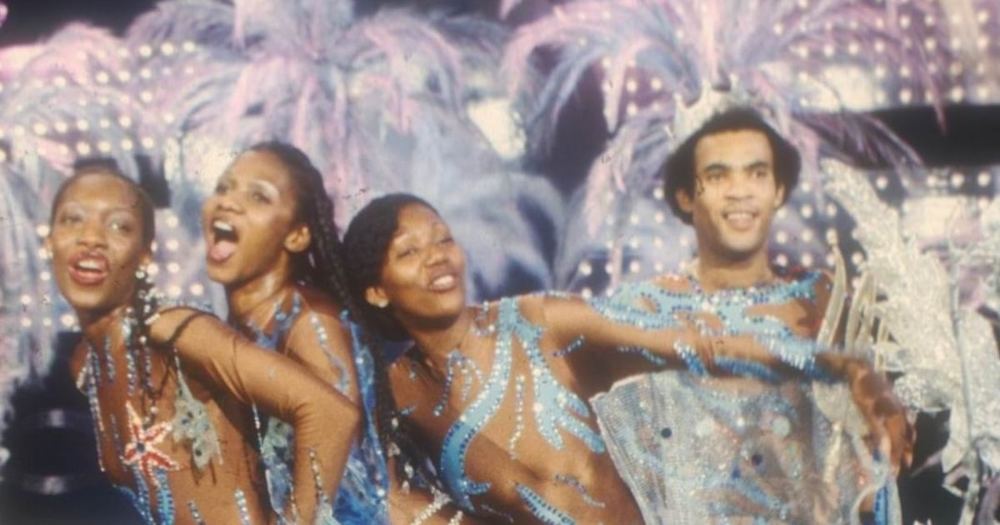
This was the beginning of Boney M, which would become a unique proposition in 1970s music, a disco outfit led by four singers of Caribbean heritage: alongside Williams were Bobby Farrell, from Aruba, and Marcia Barrett and Liz Mitchell, from Jamaica.
“I’m a Birmingham girl. I wanted to be in the entertainment industry, so I moved to London, because there were more possibilities there for me. I was holding down a nine-to-five job at the same time. That’s where the break came to go to Germany,” Williams says.
“They sent me to Germany to do a show over there, which was really a fashion show. Lo and behold, the rest is history. That’s where they approached me to see if I wanted to be part of a group they were trying to put together.
“At first I was a bit sceptical. Then I thought, ‘Oh, what have I got to lose?’ Whenever I finished what I was doing there, I would have to go back to London and back to my nine-to-five job. I gave it a chance, to see what was going to happen.”
Williams wasn’t exactly blown away by Farian at their first meeting. He had rudimentary English and was quiet and unassuming, though that would change as they became successful.
“He was a very ordinary, easygoing guy. So it was really easy to communicate with him, quite frankly. He spoke very little English. He knew the normal words, like hello and how are you and things like that.”
Williams recalls being the first to meet Farian in the studio and being upfront about what needed to happen if she was to join Boney M.
“I said, ‘If you want me to stay in Germany, then I don’t know how I’m going to survive. I’m running out of money. I have no place to stay.’ He said, ‘No worries. I’ll give you per diems so you can buy food.’ The agent had an office. It had a showroom in the corner and a sofa bed. And that’s where I stayed until I could get my own apartment.”
If Farian was outwardly easygoing, he had a clear sense of what he wanted from the project. He had sung and recorded Boney M’s first hit, Baby Do You Wanna Bump?, from 1975, all on his own. He saw no reason to change the formula. And so, while Williams and Farrell would front the band, and perform when they were on the road, in the studio they were shut out.
As often happens with successful people, Farian altered as one hit followed another, Williams says.
“I don’t know if the right word is ‘control freak’. He became a little bit changed later on.”
[ Christmas hit songs: How much money can you make from a Yuletide tune? Opens in new window ]
His hands-on approach caused considerable tension, especially with Farrell, who was also upset at being denied what he saw as his share of the royalties. “The guy is stinking rich. He’s got a studio,” he protested. “I don’t have millions. Frank Farian’s a stinking millionaire.”
Farian later relented, allowing Farrell to perform on their 1981 song We Kill the World. He also surrendered the spotlight to Barrett, who sang on Mary’s Boy Child, that perennial of shopping-mall Christmas choirs around Ireland, and Belfast, a somewhat starry-eyed appeal for peace and understanding in the North.
The latter went to number one in Ireland, but Farian would later regret its naivety. (It could have been worse: the song’s initial title was Londonderry.)
“We have sung about Ma Baker”, Kate Barker was the matriarch of an American gang of outlaw brothers, “we have sung about Rasputin, let’s do a song about a real problem, Belfast, which was very bad at the time,” Farian told the British media in 2004. “But it was not a big hit. I think this was not the right theme for Boney M, too serious. I think this was a little mistake.”
[ Fighting words: Frank McNally on the best and worst songs of the Troubles Opens in new window ]
Farrell died in a St Petersburg hotel on December 30th, 2010-94 years to the day after Rasputin was shot dead in the city.
Farian died in 2024. In some ways his work with Boney M was eclipsed in the late 1980s by that with Milli Vanilli, a fake R&B duo that ended in a lip-syncing scandal.
But Boney M continue, with Williams taking the band across the world. Why does she think the group’s music is still so beloved today?
“There’s something for everyone there. A little bit of Caribbean, a little bit of reggae, a little bit of jazz, a little bit of soul, a little bit of everything. It’s quite commercial, so everyone can relate. And, also, our lyrics are very ‘storytelling’. We tell stories about different characters in the past and all that. We crossed over into a different level, where we were not typical disco, but we were disco at the same time.”
Boney M play Cork Jazz Festival on Saturday, October 24th, and the National Stadium, in Dublin, on Sunday, October 25th