‘I’m 42 and I’ve spent my entire adult life held captive by Bibi’, can Israel finally break free of Netanyahu, as Hungary did of Orbán?
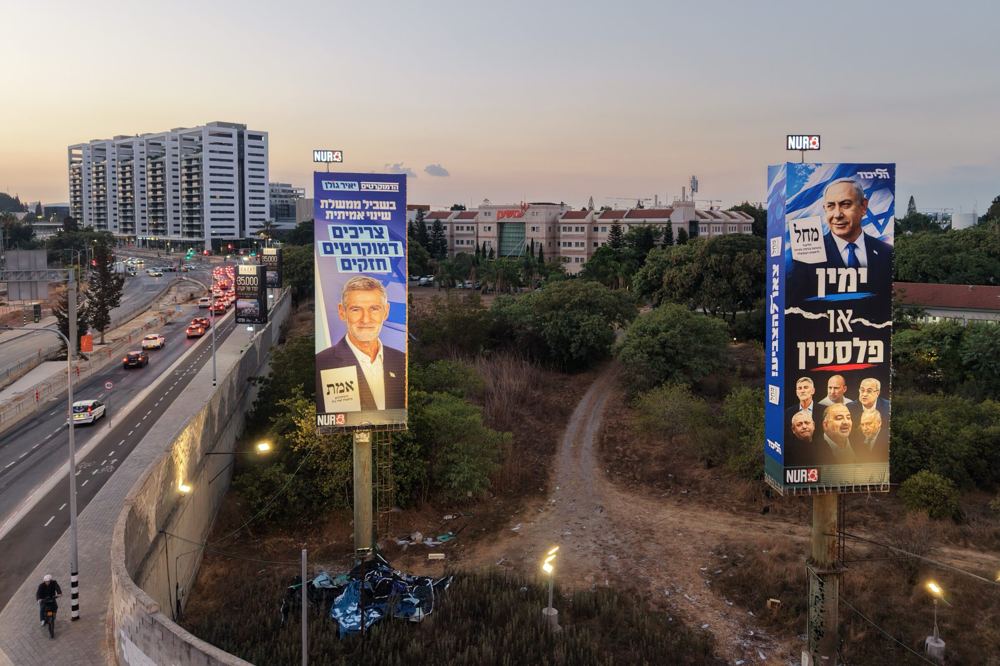
Benjamin Netanyahu has not been Israel’s prime minister for every one of those years. Yet even out of office, Israeli politics rarely escaped his gravitational pull. Hungarians know something about that feeling.
Over coffee, an Israeli woman I know began to cry. “I’m 42,” she said, “and I’ve spent my entire adult life held captive by Bibi.”
Benjamin Netanyahu has not been Israel’s prime minister for every one of those years. Yet even out of office, Israeli politics rarely escaped his gravitational pull.
For him or against him, public life kept arranging itself around his presence.
Netanyahu is Israel’s longest-serving prime minister, having previously held office from 1996 to 1999 and from 2009 to 2021, and from 2022 onward.
Hungarians know something about that feeling. For 16 years, Viktor Orbán was not merely Hungary’s prime minister but the organising fact of Hungarian politics. Institutions bent around him, opponents defined themselves against him, and arguments somehow ended up being about him.
Péter Magyar’s insurgent Tisza party defeated Fidesz after 16 uninterrupted years in power. The final results gave Tisza 141 of parliament’s 199 seats, a two-thirds majority.
The temptation is to tell a simple story of liberation: the dominant leader fell, the spell broke, democracy returned. But political systems leave habits behind, and Orbán’s most durable legacy may prove to be the way Hungarians learned to imagine politics itself.
Opposition movements confronting personalised systems often conclude that they, too, need a protagonist capable of gathering diffuse grievances into a political force.
Yet the qualities that help an insurgency win are not necessarily those needed to build a pluralist order afterwards. Campaigns reward concentration, and democracy depends on dispersing authority.
A challenger may have to become indispensable in order to win. Governing democratically requires eventually proving that he is not.
For people my age, Orbán’s rise was a rupture because we remember other governments and possibilities. Many of my students, now in their 20s, do not. Their political adulthood unfolded almost entirely under Fidesz. Orbán was simply there, as unavoidable as the weather.
Power can come to look distant and durable, participation noble but futile, and institutions captured or irrelevant. Politics becomes something done to you rather than something you do.
I know how deeply that can lodge itself in the mind. For five years, I have had countless conversations with Orbán in which I argued with him and tried to persuade him to change course. All of them took place in my dreams.
Supporters and opponents experienced Orbán’s system differently, but both learned to orient themselves around the same centre of gravity. Loyalists read its signals, while critics watched it constantly and defined themselves against it.
Parties that spend years confronting a dominant machine tend to centralise themselves. Message discipline becomes existential, disagreement can look like sabotage, and restraint like something to discuss after victory.
That is why Hungary’s challenge is larger than reversing Orbán’s policies.
A government elected to repair democratic institutions has to accept restraints precisely when it can most easily avoid them: strengthening parliament even when it dominates it, protecting independent media when they attack the government, and creating institutions whose authority does not depend on proximity to the prime minister.
Older Hungarians understandably speak about restoration: rebuilding institutions, restoring judicial independence, returning to democratic normality.
But “return” means something different when you are 25. You cannot return to a political world you never inhabited. For younger Hungarians, democracy cannot merely be recovered; it has to become real for the first time.
That distinction matters beyond Hungary. Opponents of personalised populism often offer restoration as their programme.
Yet generations raised amid democratic erosion may have little memory of the normality they are being asked to recover. Democratic politics has to show that dispersed power need not mean ineffective government, that disagreement need not threaten the state, and that losing an election need not mean losing the country.
Success should also mean making politics less consuming. Most democratic life is not election night but local meetings, newspapers and arguments about schools, budgets and public space.
A healthy political order allows citizens to pay less attention to the leader because fewer things depend on what that leader wants. Personalised rule teaches the opposite lesson. Even resistance can become dependence.
This is where Hungary’s experience returns me to my conversation about Israel.
Israelis are due to vote on 27 October in an election in which Netanyahu once again occupies much of the political landscape.
Whatever voters decide, Hungary suggests a question that will remain whenever his long political era eventually ends: can political life be reorganised around institutions and competing interests rather than around the presence, or absence, of one man?
Removing a dominant political figure does not remove the habits formed around him. Supporters have to imagine their politics without the leader they regarded as indispensable, while opponents have to decide what they stand for when opposition to him is no longer enough to bind them together.
Hungary’s experience suggests that this is where democratic renewal really begins - not with replacing one dominant figure with another, but with building institutions and political movements that no longer require one.
My friend’s tears were for the time she felt had been taken from her. Hungary’s younger generation, now free of Orbán, cannot mourn in quite the same way, because many have no memory of political adulthood against which to measure what was lost.
Their challenge, now, is not to recover an old normal but to create something they have never experienced: a public life in which politics belongs to citizens without consuming them, and in which no leader becomes so indispensable that an entire country must organise itself around him.
Tibor Dessewffy is the director of the Digital Sociology Research Center at Eotvos Lorand University in Budapest and a council member of the European Council on Foreign Relations (ECFR).