Three Shadowy Figures Came to My Tent in Alaska. What Happened Next Changed How I Saw the Land.
During an excavation in Cooper Landing, Alaska, a strange nighttime encounter opened the door to Dena'ina spiritual lore, sleep paralysis, and the tradition of shadow people. The post Three Shadowy Figures Came to My Tent in Alaska. What Happened Next Changed How I Saw the Land. appeared first on Outside Online .
It was a polite enough question, but under the circumstances, an incredibly intrusive one. It was the summer of 2016, and I was sleeping in a wall tent at a horse camp in Cooper Landing, Alaska, a small town on the Kenai Peninsula 100 miles from Anchorage. I fell asleep while reading Michael Punke’s The Revenant, a revenge drama set on the American frontier in 1823. A revenant, mind you, is a person who returns from the dead.
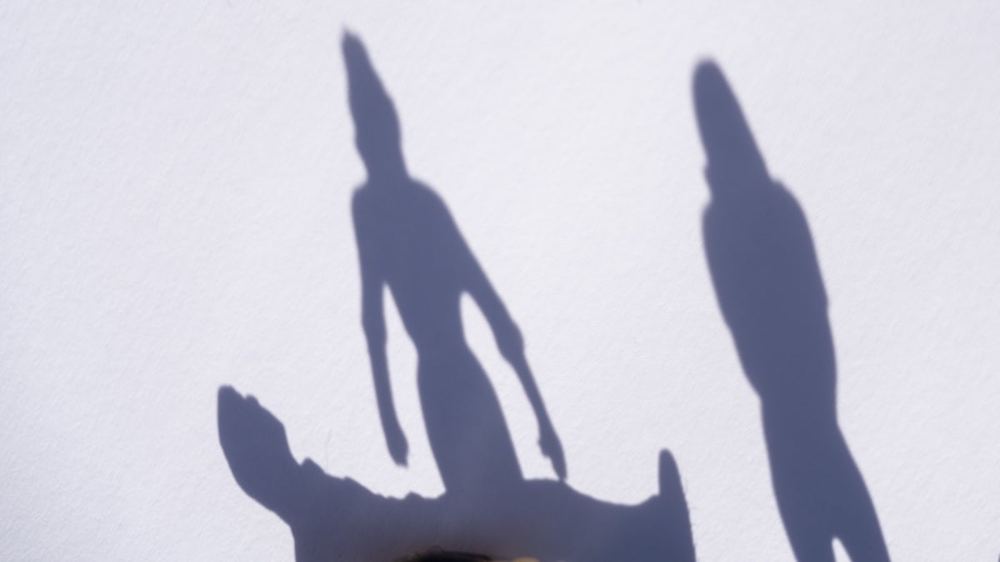
The voice woke me up, but in that fuzzy, sleep-paralysis kind of way. I looked to the tent door and saw the outlines of three tall, slender, and shadowy figures against the Alaskan night twilight. I wasn’t quite awake, but I wasn’t asleep either.
“I don’t think that’s appropriate,” I responded, my heart pounding.
The next thing I remember, I was awake. It had clearly been just a dream.
Around 6:00 A.M., I pulled my XtraTuff boots and Carhartt work pants up and headed into our group kitchen. We were a ragtag team of archaeologists, Kenaitze Indian Tribal members, and U.S. Forest Service workers who were working together on an excavation at Crescent Creek Campground in the Chugach National Forest . Today, the campground has nine tent sites, but it once served as an important living and cache point for the ancient Denai’na culture.
Over coffee, I told Robert Bearheart, our cultural guide and archaeological worker, about my dream.
“That’s a visit,” Bearheart told me. Spiritual entities or figures need permission to enter, he added. This dynamic creates a sense of “give and take” between humans and the spiritual world.
“In your case, the three figures coming to the outside of a tent needing permission to be able to come in, that’s something that I’ve heard of quite often,” Bearhart told me on a recent phone call. “Even though these spiritual things have a lot of power, they still need permission to be able to do these things.”
Many cultures have legends of so-called shadow people, supernatural dark silhouettes that resemble living human shadows. They usually appear opaque or pitch-black, and lack distinct facial features or clothing. Depending on the culture or tradition, people sometimes interpret these shadow people as demons, aliens, or disembodied spirits. Internet forums are rife with accounts of shadow people, including from people who claimed to have seen them in their peripheral vision or, in my case, during a case of sleep paralysis.
In Middle Eastern theology and folklore, shadow figures are associated with Djinn, shapeshifting entities that dwell in corners. Navajo tradition describes Chindhi as ghost-like avenging spirits that linger near burial grounds and cause illness. American lumberjacks even have their own version: the Hidebehind, a nocturnal creature known for its ability to stay out of sight.
The Dena’ina are a Native Athabaskan people who are the traditional inhabitants of southcentral Alaska . They arrived in the region roughly 1,000 to 1,500 years ago, and they lived almost exclusively on the coast. Areas like Crescent Creek and Cooper Landing were used by the Dena’ina seasonally to harvest fish and berries and store them in cache pits buried in the ground throughout the winter.
They also held a strong cultural belief in leaving no trace behind. Personal items pick up an individual’s spiritual scent, they believed. Our team excavated ancient middens, essentially trash pits filled with fish bones and other daily-use items. So, it made sense that the spiritual scent may have followed me back to my tent that night.
Crescent Creek is part of the larger Sqilantnu Archaeological District, which is so dense with history that “you could probably throw a rock and hit at least one [site] in any direction,” Bearheart told me. It was an important area not just for the Dena’ina, but for many other cultures over time because of its beauty and abundant year-round fish resources, he added.
In some cultures, dreams are powerful omens or touchpoints with the spirit realm. They’re tied to cultural landscapes, even when we may not individually feel connected to that place, according to Bearheart.
“Sometimes we say one thing and mean another, but our thoughts are more powerful than our words most of the time,” Bearheart said. “From my perspective, to the individual, these experiences are going to be as real as they are going to be. Your dreams in that state, they exist for you.”
Although time has long since buried these homes and in-ground refrigeration systems, Bearheart told me that they still hold power for the people who made a life there.
“Even though you might not be able to see their house anymore, or you just see that footprint, that’s still very real to them, that’s still their space,” he said.
Gen Carey-Hurst was the assistant archaeologist on the Crescent Creek project in 2016. We’ve known each other for 20 years, and at her encouragement, I worked on the project as a journalist . We recently revisited our time at Crescent Creek, and she told me that, for millennia, storytelling has passed information between generations.
“A story can describe a landscape, and allows you to visit that landscape whether you’ve physically been there or not, and see and connect to different elements of place,” she told me. “For ancient cultures, these stories allowed them to learn to take care of that place, and learn from elders.”
According to some lore, spirits are also attracted to stories. While at Crescent Creek, my role was to teach teenagers participating in the archaeological excavation how to document facts journalistically, write authentic stories, and take photos. In other words, I was the resident storyteller.
Some interpretations suggest that reading a book late at night could be a spiritual invitation to join the storytelling.
“It’s proven that stories have that power to transform our brain because of what they’re able to hold,” Carey-Hurst said. “Just taking that time to listen is powerful, and a story can be expanded based on what we continue to learn and understand and experience.”
Places talk to us in different ways, and each of our own individual experiences reflects the stories they share. It’s been a decade since I was visited, and I often retell my dream to anyone willing to listen over a campfire. Storytelling has always been, and always will be, a core part of my life, and my relationship with the outdoors deepens through my ability to interpret the landscape.
Although the three shadow figures didn’t enter my tent that night, their story stays with me wherever I go.