Prix Pascal: New French literature prize launched for books co-written with AI
A new literary award has just been launched and aims to recognise work written in collaboration with AI. Its timing is problematic, to say the least.
A new prize for AI-written books has launched this week in France, and the timing couldn't be worse.
The Prix Pascal de Littérature IA comes after weeks of controversy over the use of AI by finalists for a number of literary prizes, including the Prix Goncourt, France's most prestigious literary prize.
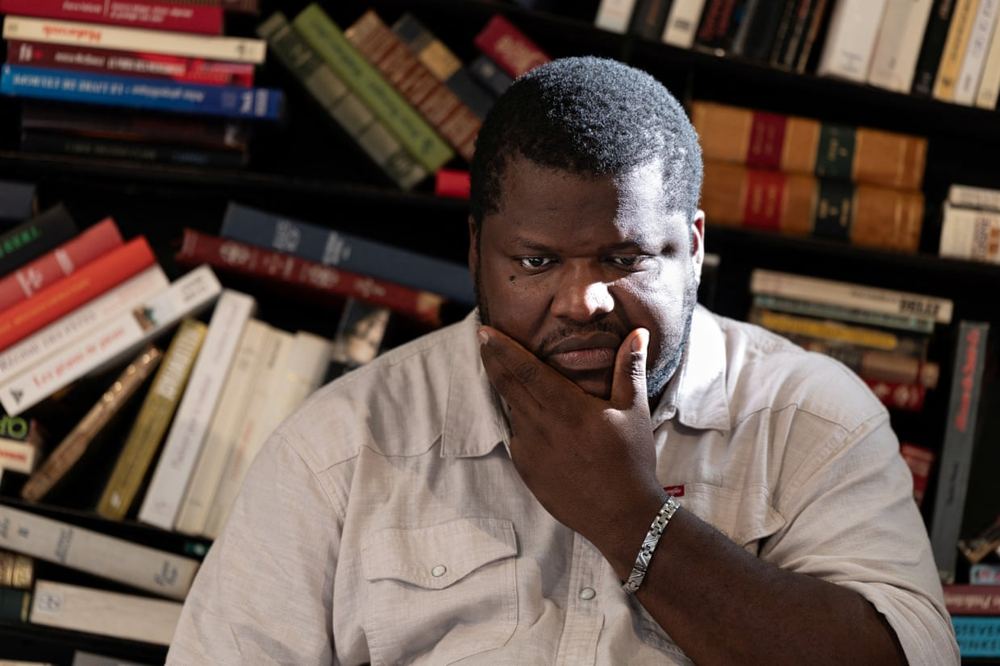
Since September, the French literary world has been rocked by the Thélyson Orélien affair, triggered by allegations of extensive use of AI in the Canadian-Haitian author’s novel, "C’était ça ou mourir".
Yesterday, Orélien's Canadian publisher confirmed that AI had indeed been used in the writer’s book and dropped the author. Orélien continues to deny the allegations and spoke to Libération journalist Rachid Laïreche, telling him that he drew on external souces for historical research.
“I said that I wrote the book; it’s not as if AI wrote it,” he insists. “Just as when translating languages, I used tools,” adding that he “didn’t expect any of this”.
Now, the Prix Pascal is openly encouraging the use of AI, whilst insisting on its website that the prize "is not a technology competition".
"AI is already present in writing workshops, in manuscripts and in bookshops, often unnoticed," states the website. "The Pascal Prize asks the question aloud: what constitutes a work of literature when the author and the machine collaborate?"
Entrants must submit a manuscript, as well as a technical dossier specifying the algorithmic assistance used. All major language models are allowed, including ChatGPT, Claude, Gemini and LLaMA.
“Whilst others hunt down AI using conflicting detection tools, the Prix Pascal asks authors to declare its use: no proselytising, no lawsuits, transparency as the basis for debate and collective intelligence,” say the award’s organisers.
“The prize is open to anyone who writes in French, anywhere in the French-speaking world, regardless of nationality or place of residence, and without the need for a publisher,” state its founders Philippe Rodriguez, Albin Serviant and Gilles Mentré - all technology entrepreneurs. Rodriguez is a founding partner at the mergers and acquisitions advisory firm Avolta; Serviant is the former chair of the LGBTQ+ magazine Têtu; and Mentré teaches at Harvard and the University of Paris 1 Panthéon-Sorbonne.
“The jury is looking for an unpublished work that is useful or thought-provoking,” they added.
A call for entries was launched yesterday, and the composition of the "jury of five prominent figures" is due to be revealed at the end of the month. The winner of the 2026 prize will be announced in mid-December. No prize money is at stake, although assistance with publication will be provided.
Considering French law neither regulates nor prohibits the use of AI to write a literary work, the prize remains legitimate. However, it has been launched at a time when creatives are speaking out against the use of AI and demanding regulations and safeguards be put in place.
The new prize is named after French mathematician and philosopher Blaise Pascal, with the Prix Pascal website stressing that Pascal "is the only Western thinker to have been both a pioneer of mechanical devices and a master of language."
His quotation "À mesure qu'on a plus d'esprit, on trouve qu'il y a plus d'hommes originaux" is also cited - "The more wit one has, the more one realises there are original people."
What are the odds the celebrated polymath and author of "Pensées" is spinning in his grave right now?