Brussels is moving to ban street advertising by fossil-fuel firms, the EU officials who live there should take note
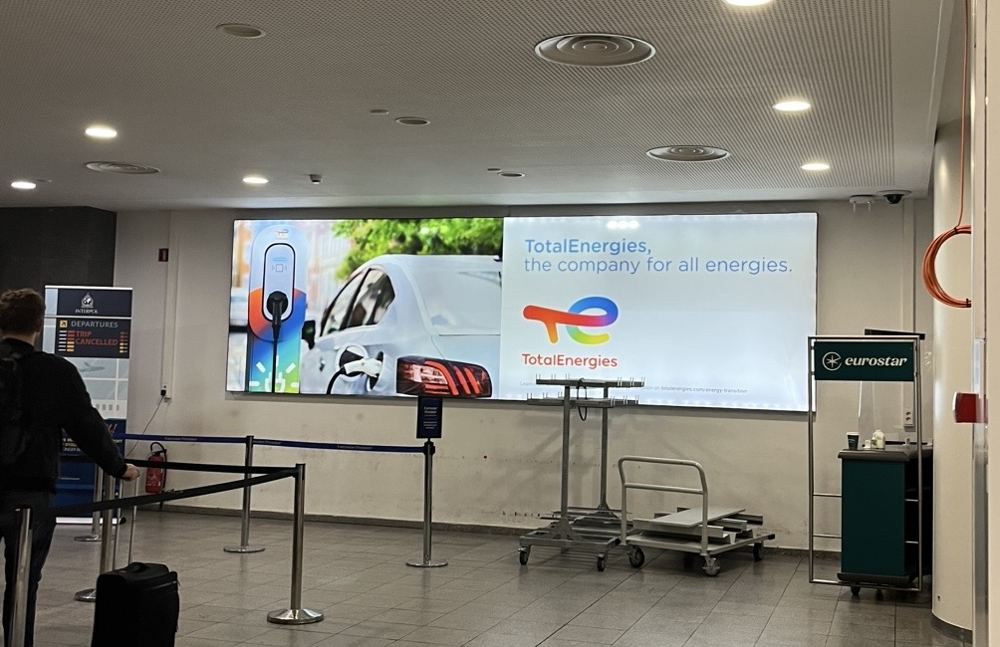
Five Brussels municipalities, home to nearly one-in-three of the city's residents, have now voted to drive fossil-fuel advertising off their streets. In the city where Europe's climate laws are written, the industry's grip on billboards and on lawmakers has to be broken together.
Four of those five votes came in the space of just four months, and together, these municipalities are home to roughly 370,000 people: one-third of the Brussels-Capital Region’s population.
While local politicians are taking the lead, the outlook a little higher up the chain looks less promising.
Everyday tens of thousands of officials, MEPs, assistants and diplomats brave Brussels morning rush hour on their way to work on the laws that will decide whether Europe meets its climate targets.
Along the way they pass numerous temptations, bus shelters and metro walls selling them petrol cars, weekend flights and gas contracts, normalising the ongoing mass-consumption of these products.
Once they reach their offices, they meet the same industry again, this time in person. The seven biggest oil and gas companies alone have declared lobbying budgets of almost €64m.
Fossil Free Politics research shows EU Commissioners and their cabinets had nearly 900 meetings with fossil fuel lobbyists in the last term. That’s nearly once every working day, showing just how embedded the industry is in the daily rhythm of Brussels life.
Some files come under particularly heavy pressure, with one egregious example being how a secretive alliance of eleven large multinational enterprises worked to tear down the EU’s flagship human rights and climate law last year, the Corporate Sustainability Due Diligence Directive (CSDDD).
The fossil fuel industry is currently mounting an extremely intense lobbying campaign to delay and dilute the EU Methane Emissions Regulation over the past year.
Over 80 percent of all commission meetings with external interest representatives on this regulation involved fossil fuel lobbyists, and the European Parliament is no better. All 17 MEPs who called for the methane regulation to be reopened in an April 2026 letter to the commission had met with fossil fuel lobbyists in the preceding year.
Safe to say, the real total is almost certainly higher. According to new research by Reclaim Finance , on two out of every three days, the fossil-fuel lobbyists present at the European Parliament had no meetings scheduled with MEPs. They roam the corridors and cafés in the building, aiming to bump into the MEPs they wish to influence.
"The summer of 2026 was a painful awakening to the harsh reality of the consequences of the climate crisis," said Mathias Gyselen, the Ecolo-Groen councillor who tabled Schaerbeek's motion in September.
"Heatwaves, heat islands and heat deaths are unfortunately becoming the new normal in the city. Doing nothing is no longer an option."
Residents, community groups and civil society organisations cannot match the industry's firepower. They do not have the budgets, the staff or the open doors that put them across the table from lawmakers week after week.
But the message is also addressed to the institutions on the other side of the Rue de la Loi.
If the streets of Europe's capital are being cleared of fossil fuel promotion, the corridors of its institutions should be too. That means limiting the industry's access to decision-makers, closing the revolving door, and rejecting fossil fuel sponsorship and partnerships, just as the EU did with tobacco.
The municipalities of Brussels have shown what local democracy looks like. Now it is up to the region and the EU institutions to show that Europe's capital is not for sale; not on its billboards, and not in its corridors of power.
Nathan Stewart is the coordinator of Fossil Free Politics, a coalition of 200 organisations working to end the fossil fuel industry's influence over political decision-making.