Potholes, bus fares and headphone dodgers: will Burnham’s strategy of ‘everyday fixes’ succeed?
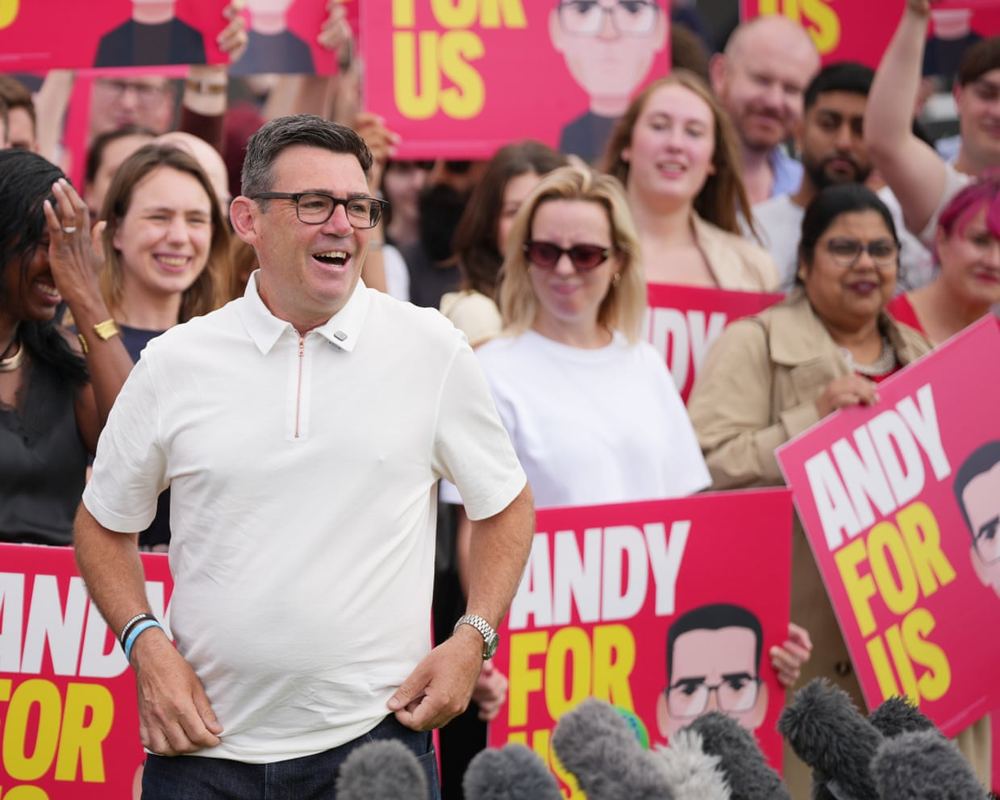
New PM has prioritised small fixes to show voters Labour can make a real difference, and government insiders are delighted at the public’s reaction In the first episode of Armando Iannucci’s political satire The Thick of It, the hapless minister Hugh Abbot is in the back of a taxi, frantically brainstorming for an on-the-hoof policy he can announce to the assembled national press. “So you want something sexy and eye-catching, and that is free and universally popular and instantly applicable. No one can possibly object to it,” says the addled junior adviser Ollie Reeder. “Well, really, you shou
New PM has prioritised small fixes to show voters Labour can make a real difference, and government insiders are delighted at the public’s reaction
I n the first episode of Armando Iannucci’s political satire The Thick of It, the hapless minister Hugh Abbot is in the back of a taxi, frantically brainstorming for an on-the-hoof policy he can announce to the assembled national press.
“So you want something sexy and eye-catching, and that is free and universally popular and instantly applicable. No one can possibly object to it,” says the addled junior adviser Ollie Reeder. “Well, really, you should have said something before then, because I’ve got a file about that fucking thick of that back in the office.”
After a three-month micro-policy blitz from Downing Street, the question now being asked is: did Reeder pass said file on to the government’s battalion of special advisers? In the past week Andy Burnham has vowed to clamp down on social pariahs blaring out TikTok videos on public transport, outlaw “rip-off” private car park fines and, on Thursday, fill in potholes in 7,000 miles of England’s roads.
The idea is simple, says one policy adviser. “People expect the government to be able to do something about things which are unfair, big or small,” they said. “It sends a message that the government is on people’s side, its ready to act, and it can genuinely make a difference.”
Government insiders say the policies are not the product of standing around in a circle, throwing a stress ball and shouting out ideas. “There isn’t someone with a whiteboard brainstorming new bicycles for special constables,” says one, furthering the Thick of It comparison. Instead, the everyday fixes were a central policy strategy from Burnham’s first day in office. “We did this sort of thing under Keir too,” said another source. “But under Andy it’s a whole different thing; he’s put rocket boosters under it.”
In the first days of his premiership, Burnham gave his close ally Louise Haigh, the first secretary of state, the job of establishing taskforces for three core areas, cost of living, public control and regeneration. One government source said: “There is a very intentional drumbeat of those because they do make a difference, but also it’s constantly showing people that we understand where those frustrations and low-level pressures are.”
Ideas are “kicked around” between the cost of living taskforce in the Cabinet Office and the policy unit in No 10, with all departments encouraged to feed in. “There’s a sort of filtering up process,” the source said. “It’s quite a sprawling sort of cross-government approach.”
Another said that while some departments were better placed to find “not hugely spendy” fixes, every minister was encouraged to contribute. “I think a lot of people had sort of resigned any hope that the government can actually get things done, and this is showing them that, yes, actually, we can,” another source said.
The small policy announcements have been, one delighted adviser said, a roaring success. Another source said: “Some people are very snotty about it, but in a world where it’s really hard for a government to cut through, this is working. You put some ideas through the grid and you often don’t know if they’re going to fly. But when you see one go gangbusters, it’s kind of like Christmas morning.”
One single fact policy idea dominated the news cycle for an entire day. Another generated tens of thousands of posts on X. Burnham’s faintly hokey video on antisocial phone use garnered 2m views. “It helps that he’s just really good at it,” the source said.
The small-fix policies have not been appreciated by everyone. Reform UK’s Robert Jenrick said the UK was “going down the pan and our prime minister is faffing around tweaking parking tickets”, despite trying to implement the policy himself when he was a Conservative minister. The former Olympian Sharron Davies said: “As Paris burns our prime minister has stopped people playing loud music on buses & trains,” leading some to question whether she expected Burnham to invade the French capital.
Kemi Badenoch, meanwhile, has been dismissive, saying in a speech this week that cracking down on loud music on public transport was a “job for ticket inspectors, not the prime minister”. Reprising the theme at prime minister’s questions on Wednesday, the leader of the opposition implicitly accused Burnham of fiddling while Rome burns. “We are spending more on interest payments than we do on schools, the army and the police combined,” she said. “Meanwhile, the prime minister is worrying about loud music on trains. This is not serious.”
Across the dispatch box, Burnham hid his delight at her response behind a disappointed look. “I’m not going to apologise for doing the small things that help people have better lives,” he said sombrely, while his advisers likely high-fived in private.
Regardless of the reaction of Burnham’s opponents, the focus on minor grievances is a canny strategy that appears to be working, said the pollster Luke Tryl, the director of More in Common. In recent polling, when people were asked whether Burnham understood the pressure of high energy bills on ordinary people, 45% said he did. When the same question was asked about Starmer, that figure was 23%. “I think the Tories and Reform have got it dead wrong on this,” Tryl said. “People bring this sort of stuff up in focus groups all the time. It cuts across left- and rightwing voters. People care about immigration, about the NHS, but they also care about everyday frictions.”
But behind the scenes there is an acknowledgment that a focus on ticking off small things from the PM’s to-do list will be significantly more challenging in moments of crisis. There has to be a “twin-track” approach, said one insider. “It’s combining a big picture, long term, dismantling 40 years of neoliberalism and addressing questions about ownership and control, but at the same time tackling more immediate daily bugbears,” they said. “What you’ve seen so far is these smaller level interventions, but the bigger structural, longer term piece will be in the 10-year plan.”
While the everyday fixes may be popular, the sugar-high they produce could be short-lived, said Ed Shackle, the head of qualitative research at the policy consultants Public First Global. “The government should be under no illusion that as soon as any real substantive event rears its head, any small popularity boost will be instantly blown away,” he said. “Quick fixes are popular, but they are a poor substitute for fixing the big issues the public care about.”