Stranger things turn an English village upside down in Max Porter’s rural noir Lanny
Bristol Old Vic A family are just getting used to their new home in this haunting drama when a parallel world emerges Overheard in the auditorium during the interval: it’s like Tales of the Unexpected meets Jackanory. But if those references are dated by several decades, they go some way to summing up the strange mix of elements in this drama about a boy who goes missing from a village, and the ancient myth of a “green man” who might have something to do with it. But then, Max Porter’s novel , on which it is based, weaves so many seemingly incongruent parts together to create its own beautiful
Bristol Old Vic A family are just getting used to their new home in this haunting drama when a parallel world emerges
O verheard in the auditorium during the interval: it’s like Tales of the Unexpected meets Jackanory. But if those references are dated by several decades, they go some way to summing up the strange mix of elements in this drama about a boy who goes missing from a village, and the ancient myth of a “green man” who might have something to do with it.
But then, Max Porter’s novel , on which it is based, weaves so many seemingly incongruent parts together to create its own beautiful brand of rural noir. It might be better described as The Missing meets This Country meets Stranger Things, except the Upside Down here is English countryside.
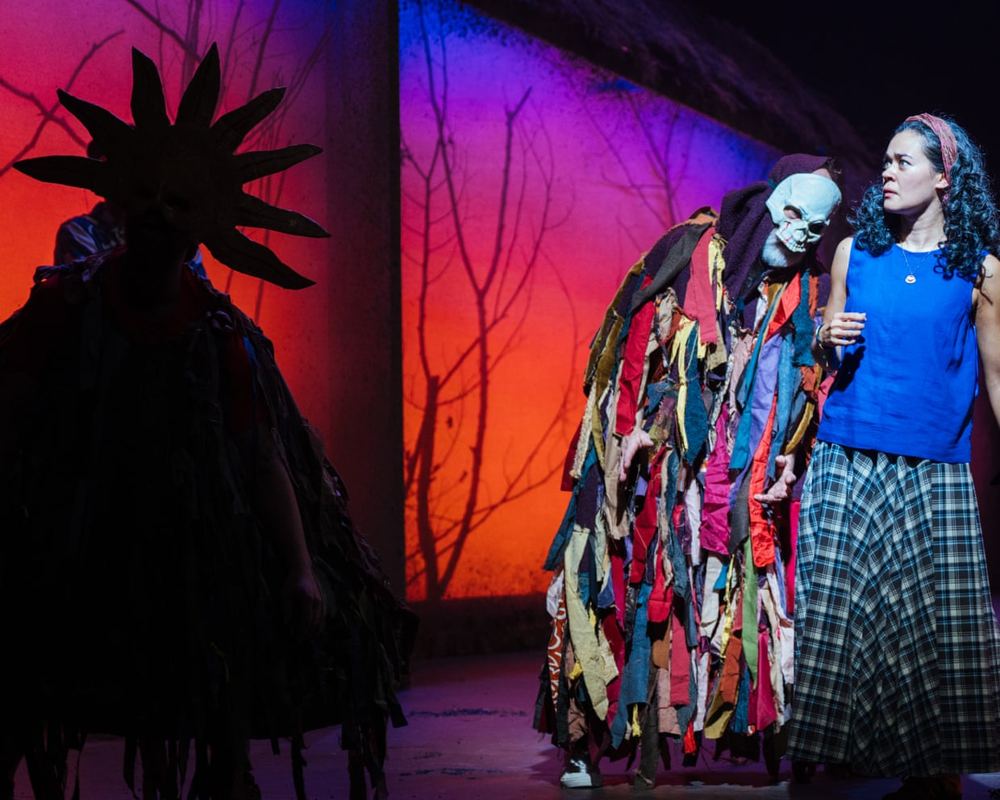
The story follows townie couple Robert (Raj Bajaj) and Jolie (Hanora Kamen), who move to the sticks and are just settling in when their otherworldly son, Lanny (Lucian Thomas on press night), goes missing. A local artist (Richard Cant), dubbed “Mad Pete”, for his bohemianism or, as a gay man in these parts, for his sexuality?, had formed a friendship with Lanny and is now considered prime suspect. The myth of a pagan figure, Dead Papa Toothwort, looms over the human drama as the police procedural unfolds.
It is a lot to transpose to the stage, alongside Porter’s multi-voiced portrait of a village and satirical social observations of country life. Bea Roberts does a deft job of adapting the mixer-blend of reality, imagination and hallucinatory bucolic lore. The production is full of pace and creepiness when it could so easily slide into the ridiculous.
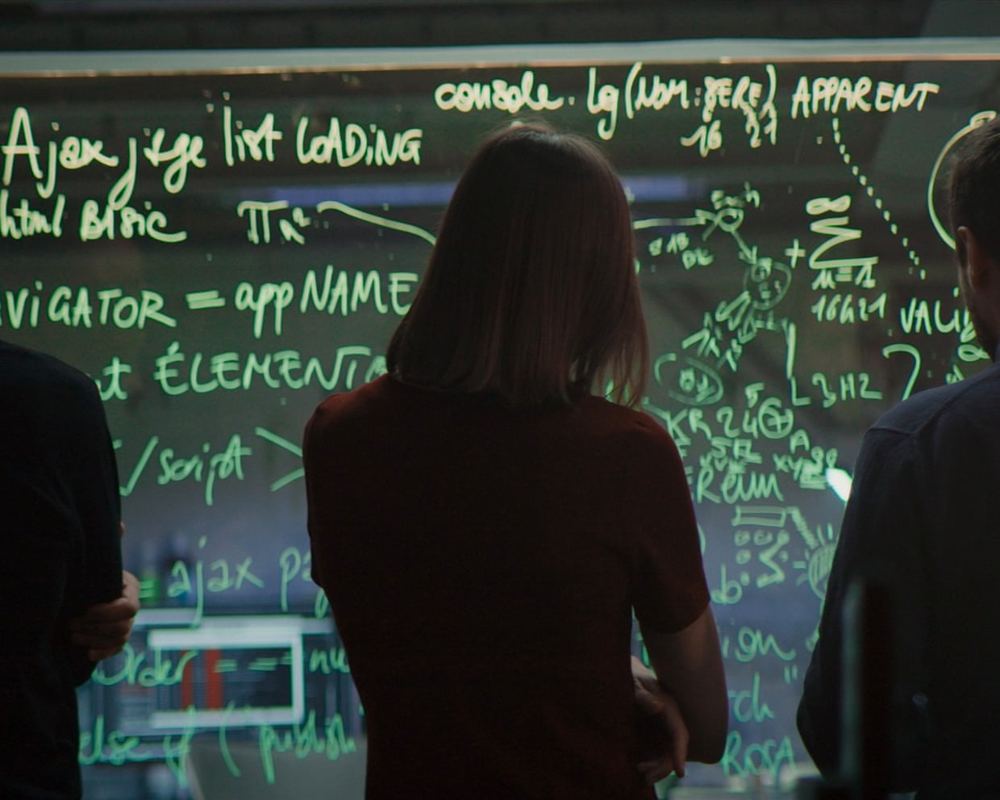
It is much helped by Rebecca Jane Wood’s haunted set design, incorporating the village and its woodland. Screens show scratchy images of bare branched trees and antler-figured silhouettes, reminiscent of a Brothers Grimm storybook. Together with Zeynep Kepekli’s contrasting of warm/cold lighting design, the optics capture the chilling magic of Dead Papa Toothwort’s parallel world.
It is smartly directed by Nancy Medina too. Horror and humour squat at close quarters although the story is heavy on green man mythology at first and it does not give enough space to domestic realism. But there is an accomplished bridging of the dark and scary with the satirical and light. The book lends itself to dialogue and the many voices of the village and the babble of modern life criss-cross in disembodied audio, sometimes accompanied by floating sentences written across the set.
This seems, ultimately to be a story about the pain, responsibility and sometimes the emotional disconnect in parenthood. As Robert reflects, “who can have children and not go completely mad?” In this production he is not an emotionally numbed dad but seems a little generic. Jolie is excellently played by Kamen as a mother left broken and furious by her loss, while Thomas does a great job of bringing Lanny to life.
Village homophobia is made more emphatic and there is an added racial element: Lanny is a brown boy, we are told, but this does not feel fully developed. Some of the underlying anxieties of the book are lost among the many strands: the sense of dislocation for these urban folk in a village environment and its spikier, more judgmental neighbours; the question of who belongs here, and whom the land itself belongs to, ultimately. Some of these inquires are subsumed by the fever and gothicism of the plot.
It swings into the surreally hallucinatory in its final scene. The happy ending might be a story, a song or a miracle, a pagan god showing mercy to the humans that occupy his land.