Atlassian people chief Avani Prabhakar calls AI mandates a ‘very bad start’
One AI “super user” in a team of five to seven people lifts the whole team’s AI adoption and usage by 56%, Atlassian’s Avani Prabhakar told TNW. Atlassian counts someone as a super user if they use AI’s most sophisticated features more than 40 times a week to change a workflow, she said. It tracks […] This story continues at The Next Web
One AI “super user” in a team of five to seven people lifts the whole team’s AI adoption and usage by 56%, Atlassian’s Avani Prabhakar told TNW. Atlassian counts someone as a super user if they use AI’s most sophisticated features more than 40 times a week to change a workflow, she said. It tracks who they are.
Prabhakar is Atlassian’s chief people and AI enablement officer, a role it announced in April , after she served as chief people officer. She joined the company seven and a half years ago and is based in Sydney. She started her career at GE in the US in 2001, in the business rather than in HR. She later spent seven years at British Airways and worked at Fuji Xerox.
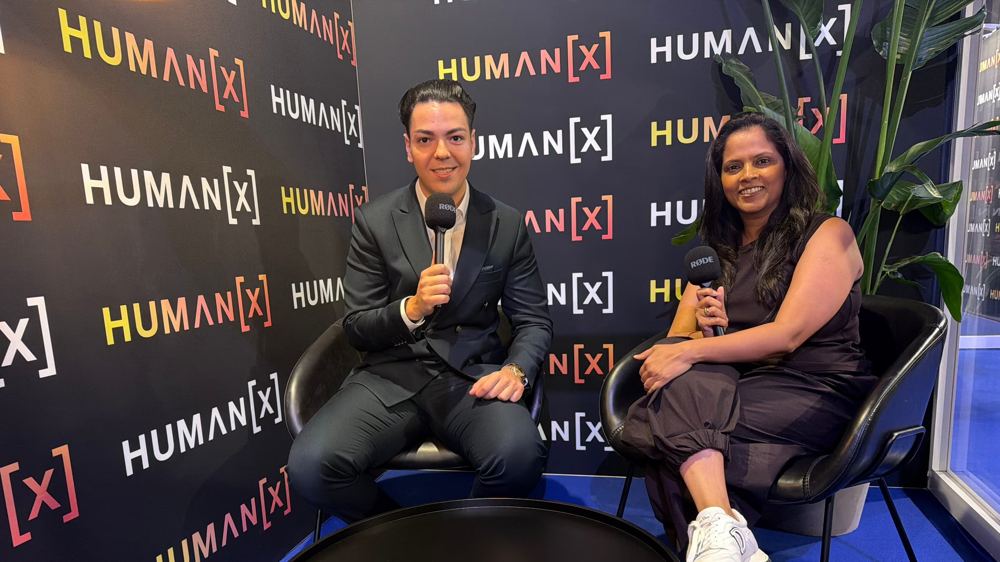
She spoke to Cristian Dina at HumanX in Amsterdam for the TNW Podcast, after episodes with Boomi’s Steve Lucas and Remote’s Job van der Voort . The full conversation is in the video below.
Companies should treat AI as a people transformation, Prabhakar said. Deploying it is the easy part, and so is getting people to like it. Big companies get into trouble on security and governance, and on cost.
So every team at Atlassian gets what it calls an AI working agreement. It sets out where AI can be used in that job and where it cannot. A product researcher cannot put company information into an AI tool, for example. A recruiter is told which decisions are theirs and which are the AI’s.
On cost, every employee gets an AI wallet, a monthly allowance that depends on their role, she said. Once they hit the limit, they need approval for more and must explain the usage and the workflow it improves. TNW reported on the engineers’ AI budget in July.
“Do not reward token usage, just monitor token usage, because that drives very wrong behavior.” Avani Prabhakar, Atlassian
The bigger saving came from the Teamwork Graph , Atlassian’s internal context layer, she said. It pulls knowledge, conversations, people, assets and code into one graph. Sending Claude to search only that graph cut token use by 48%, and accuracy rose by 44%, she said.
Making AI use a mandate tied to performance is “a very bad start,” Prabhakar said, because people start gaming it. Nor should companies build a separate chief AI officer team on the side, the way they once set up digital transformation offices. And asking for a business case before anyone can try AI kills experimentation.
Atlassian works through tasks, skills and roles, in that order. For now, everyone sees AI’s benefits at the level of tasks and workflows, she said. Anyone claiming AI has replaced a role is producing “a lot of AI slop.”
On skills, Prabhakar runs a team of about 13 behavioural scientists, and Atlassian has partnered with Stanford on experiments. One found that graduates make decisions based on AI 19% more effectively than senior managers, she said.
Atlassian has also set up about 30 greenfield projects run by teams of five or six. In those teams, engineers build prototypes and designers commit code. On roles, it has created a new job family, the design technologist, for designers whose work has changed with AI.
Atlassian has about 12,000 employees in more than 3,000 cities, and no office mandate. Staff can work from home, from an office or from anywhere. It writes more and presents less, and it sends Loom recordings rather than always holding meetings. That written, asynchronous habit gives AI the context to read and write better, she said.
Prabhakar now spends 60% to 70% of her time with customers. Her brief is to build a “customer zero” story: run the experiments inside Atlassian, write the playbook, and take it to large companies.
Her advice to graduates comes from talks with her daughter, who wants to study law. Follow what gives you joy, she said, and learn AI alongside it.
“Don’t make your career choices out of fear.” Avani Prabhakar