Bulgaria’s next president must be able to say no to prime minister Rumen Radev
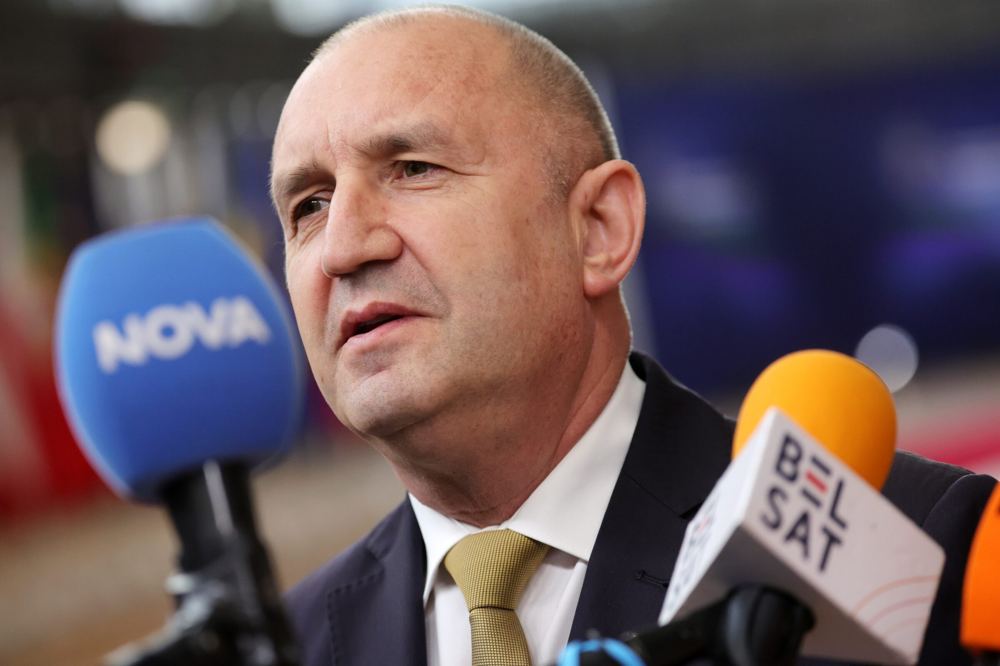
Rumen Radev’s coalition holds 131 of 240 parliamentary seats in Sofia and backs Iliana Yotova. The next president’s test is not what powers the office holds, but whether it will use them to challenge the government - including over its Black Sea response.
On Sunday (1 November) Bulgarians vote in a presidential runoff . The question that will outlast the result is not who wins, but whether the winner is willing to say no to prime minister Rumen Radev.
Radev spent nine years as president with Iliana Yotova as his vice-president.
He resigned in January to enter party politics and the office passed to her automatically; she has never been elected to it.
In April his Progressive Bulgaria coalition won 131 of parliament’s 240 seats, and it now backs her for a full term.
In the first round she led Andrey Gyurov, a former caretaker prime minister backed by the pro-Western opposition, by fewer than three points. Turnout was 22 percent, the lowest on record.
An elected majority is legitimate; so is cooperation between government and president. The constitutional risk begins where cooperation becomes an expectation of loyalty. An institution can keep every legal power and still lose the will to use it against political allies.
A president can send a law back, and parliament must debate and vote on it again in public. Radev’s majority can pass it a second time with 121 votes, but the second vote is on the record.
A president can also refer a law to the Constitutional Court, commands the armed forces, and chairs the Consultative Council on National Security, where the state assesses threats to itself.
None of this can stop a determined majority. All of it can force one to explain itself.
Meanwhile, since the start of October, at least seven merchant ships have been hit by drones off the Bulgarian and Romanian coasts.
Both governments suspect Russian involvement, although responsibility has not been conclusively established; more than two dozen sailors are dead or missing.
The first strike in Bulgaria’s exclusive economic zone came on 6 October. By then Yotova had been president for nine months without once convening the security council. She convened it the next day, after the opposition demanded it in public.
It condemned the attacks and endorsed better surveillance and counter-drone defences : the right decisions, taken after the pressure rather than before the risk.
Yotova knows how to use a veto: in February she returned an Electoral Code amendment that limited the number of polling stations in countries outside the EU, calling it unconstitutional.
That parliament was not Radev’s. Against his majority the test came in July, with the 2026 budget. The reformist and conservative opposition, the Podkrepa trade union and a petition with more than 32,000 signatures asked her to return it. Y
Yotova argued that a veto would deepen financial uncertainty and promulgated the budget. On 20 October, the Constitutional Court upheld the budget as a whole but struck down two provisions inserted through it. The challenge came from MPs and the ombudsman, not the presidency.
One policy dispute between the candidates concerns Article 4 of the Nato treaty. Gyurov wants Bulgaria to request consultations with its allies. Yotova initially opposed invoking it, but later acknowledged that coordinated action with other allies remained an option.
Radev ruled it out on the day of the first attack because the ships were struck outside Bulgarian territorial waters. Yet Article 4 does not require an attack on national territory ; it applies whenever an ally considers its security threatened. Whether to invoke it is a political choice. Territorial eligibility is not the obstacle.
The test of an independent presidency is not whether it agrees with the government on Article 4. It is whether it would demand a public account of what the state knew, what it did and what went wrong, and publish it even when it embarrasses the people who put it in office.
The European Commission’s rule-of-law report in July noted that most of Bulgaria’s regulators had their mandates renewed without becoming any more independent. A renewed mandate is not proof of oversight. Neither is a convened council.
The same test applies to Gyurov, an independent nominated by the reformist parties We Continue the Change and Democratic Bulgaria, who told CNN on 23 October that Bulgaria needs a counterweight to its government. A counterweight that only ever pushes against Radev is a faction, not an institution. A president elected by the opposition would have to challenge the opposition too.
EU leaders condemned the attacks at their 15-16 October summit , and Nato has announced additional maritime patrol aircraft, radar systems and drones .
Both are entitled to a clear account of what Bulgaria saw, when it acted and what failed.
Brussels, for its part, should judge institutional independence not by formal procedures, but by whether those institutions are willing to challenge those in power. The question to ask is simpler: when did it last contradict the government?
Radev has a mandate to govern. The next president will hold a separate one: to question, to return, to refer and, when necessary, to refuse.
Europe does not need a Bulgaria that pretends it never makes mistakes. It needs one that can find and correct them before its sailors, its neighbours and its allies pay for them.
Blaga Thavard is a Bulgarian lawyer in Brussels, specialising in the rule of law and fundamental rights. She writes on democratic institutions in Bulgaria and the EU.