The Sea review, Jennifer Saunders takes fussing over buying curtains to Shakespearean levels
Theatre Royal Bath Edward Bond’s play about consumerism and the strength of humans in dark times is hugely enlivened by Saunders and her tight-lipped pomposity When describing his own play, the late playwright Edward Bond said he wanted The Sea to deal with tragedy, be a comedy and end with people being as honest and open as they could. Jonathan Munby’s production – the first major revival in almost 20 years – begins by offering its audience a view that would ordinarily be obscured: we’re plunged underwater to where the seafaring Colin (Elliot Goodhill) hangs suspended from a rope, fighting fo
Theatre Royal Bath Edward Bond’s play about consumerism and the strength of humans in dark times is hugely enlivened by Saunders and her tight-lipped pomposity
W hen describing his own play, the late playwright Edward Bond said he wanted The Sea to deal with tragedy, be a comedy and end with people being as honest and open as they could. Jonathan Munby’s production, the first major revival in almost 20 years, begins by offering its audience a view that would ordinarily be obscured: we’re plunged underwater to where the seafaring Colin (Elliot Goodhill) hangs suspended from a rope, fighting for his life, as the waves of Luke Halls’ impressive videography engulf him.
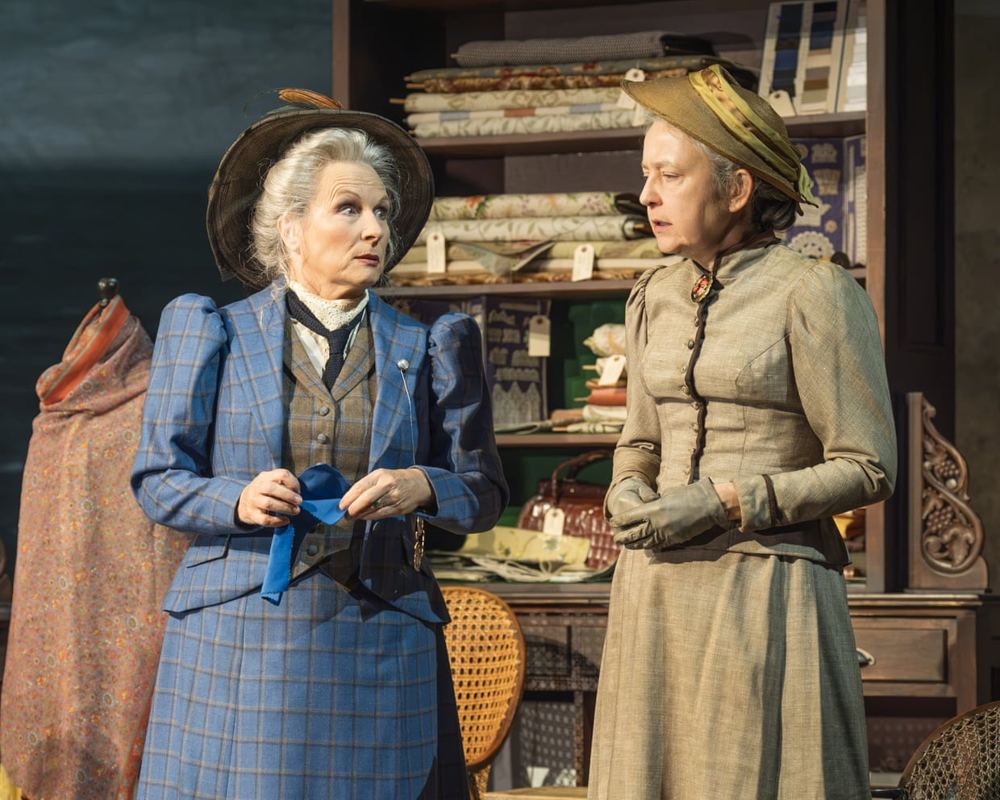
It’s a fitting opening sequence for a play that subsequently demands its audience look beneath the surface to find meaning in seemingly trivial interactions. It’s jarring when, come the following scene, we’re flung into a draper’s shop, where Jennifer Saunders’ avaricious, egotistical Mrs Rafi is fussing over curtain material. But Bond understood consumerism as a distraction from the pain and absurdity of life. Similarly, his characters sing their hymns ever louder when there’s gunfire in the distance. They also stage an annual play to raise money for their seaside village’s coastguards, while maintaining distance from any trouble their beneficiaries face on the ground.
Saunders brings tight-lipped pomposity to the imperious Mrs Rafi, though her early snobbishness mellows into something more mischievous towards the end. Her character’s late speech on her disappointment in, but dependency on, others rivals Shakespeare’s Jaques in its melancholy wisdom. Meanwhile, the reclusive Evens (an enigmatic Lloyd Hutchinson) seems like a stray Beckett character with his musing on striving to find faith amid the seeming meaninglessness of it all. The play’s setting in 1907 affords these characters a listlessness that, we imagine, could well give way to a carpe diem spirit were they to live through the first world war.
Bond also wanted his play to capture the strength of human beings. Though the death of Colin, “for whom the future seemed all brightness”, initially leaves his fellow sailor Willy (Sean Delaney) and fiancee Rose (Holly Godliman) with a loss of purpose, in closing on a half-spoken thought between them, it ultimately ends on a note of hope.