Destinus’ monthly output tops Europe’s pre-war annual cruise missile production
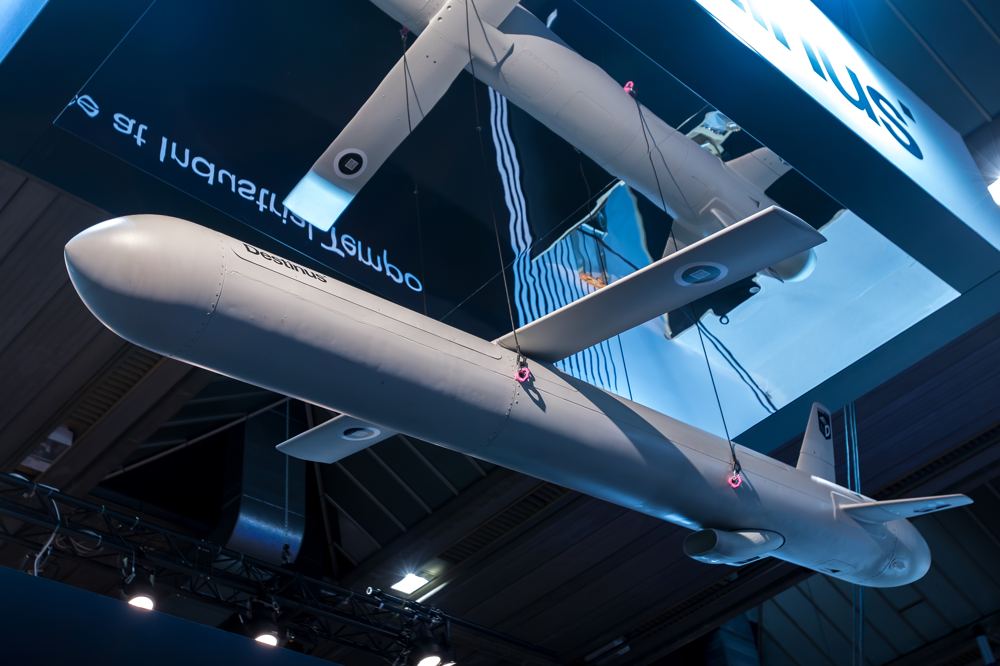
Defence startup Destinus says it has built more than 1,750 Ruta cruise missiles in Europe and now produces more cruise missiles in a month than Europe did in a year before Russia's full-scale invasion of Ukraine.
Defence startup Destinus has built more than 1,750 Ruta cruise missiles in Europe and now produces more cruise missiles in a month than Europe did in a year before Russia’s full-scale invasion of Ukraine, it told Reuters.
The Dutch-headquartered company said monthly output of its Ruta missile had reached nearly 300 units.
Chief Executive Mikhail Kokorich said he expects Destinus from next year to be able to meet demand across Europe, including Ukraine, for turbojet engines in the roughly 1.5-kilonewton thrust class used in cruise missiles.
He said the company was already producing such engines in series and supplying them both for its own missiles and to other manufacturers.
Ukraine’s missile industry has expanded rapidly during the war, but manufacturers have faced constraints in scaling production of jet-powered weapons, including access to propulsion systems.
Ruta was publicly acknowledged as having been used in combat in October 2025, when Ukrainian President Volodymyr Zelenskiy said the missile had been employed operationally.
Kokorich said in an interview that Europe was moving from a production challenge to a military integration challenge as missile inventories expand.
The company told Reuters it had begun production of the larger Ruta Block 2 missile, which is designed to carry a 250-kg payload and travel more than 700 km.
Unlike the current Block 1 version, the missile is designed to be stored, transported and launched from the same container, simplifying logistics for larger stockpiles.
“To have sufficient deterrence, you need to have tens of thousands of missiles,” Kokorich said. “But the main challenge … is that European customers still need to build the military units and logistic capabilities to operate these big numbers of systems.”
He said future missile arsenals would need supporting storage, transport, maintenance and targeting infrastructure, and argued that European militaries would need to rethink how they stockpile and deploy precision-strike weapons.
Kokorich also contrasted Destinus’ China-free supply chain with wartime production in Ukraine, saying access to Chinese suppliers would make manufacturing “cheaper, faster, easier” but that Destinus used no Chinese components.
He also pushed back against a growing focus on very long-range strike weapons, arguing that cheaper missiles with ranges below 1,000 km would account for the bulk of future demand.
“We need missiles which can fly long range and attack long-range targets,” he said. “But we need those missiles that fly shorter and cheaper.”