Middlemen raked in billions of forints from Szijjártó’s Covid ventilator deals (Day 170 of the Tisza government)
Hungarian prime minister befriends Czech counterpart Andrej Babiš while EU Commission and Council presidents Ursula von der Leyen and Antonio Costa come to Budapest to celebrate the anniversary of the 1956 Revolution.
More than a year ago, we launched our Hungary Briefing series, a weekly roundup of news from Hungary’s election campaign. The series continues, covering developments following the historic election and the actions of the Tisza government. This week’s topics:
Shortly after the Covid pandemic broke out in the spring of 2020, the Orbán government purchased almost 17,000 ventilators for 300 billion forints, equivalent to €860m at the exchange rate at the time.
The machines were imported from China through various foreign intermediary companies. Viktor Orbán later said he had consulted mathematicians about how many ventilators Hungarian hospitals would need under the worst-case scenarios.
Yet most of these machines never reached hospitals, and even if they had, they would not have been able to save lives. György Velkey, a state secretary in the Tisza government, wrote on Facebook , citing a 2020 military medical report, that only around half the machines had been classified as usable. The remaining half were either recommended for hospital use “only with serious compromises” or not recommended at all.
Many of the machines are still gathering dust in warehouses.
In 2023, former opposition MP Tímea Szabó showed what 12,000 unopened ventilators looked like in a warehouse in Gödöllő. The Hungarian state was paying 80 million forints, or approximately €200,000, a month just to store them.
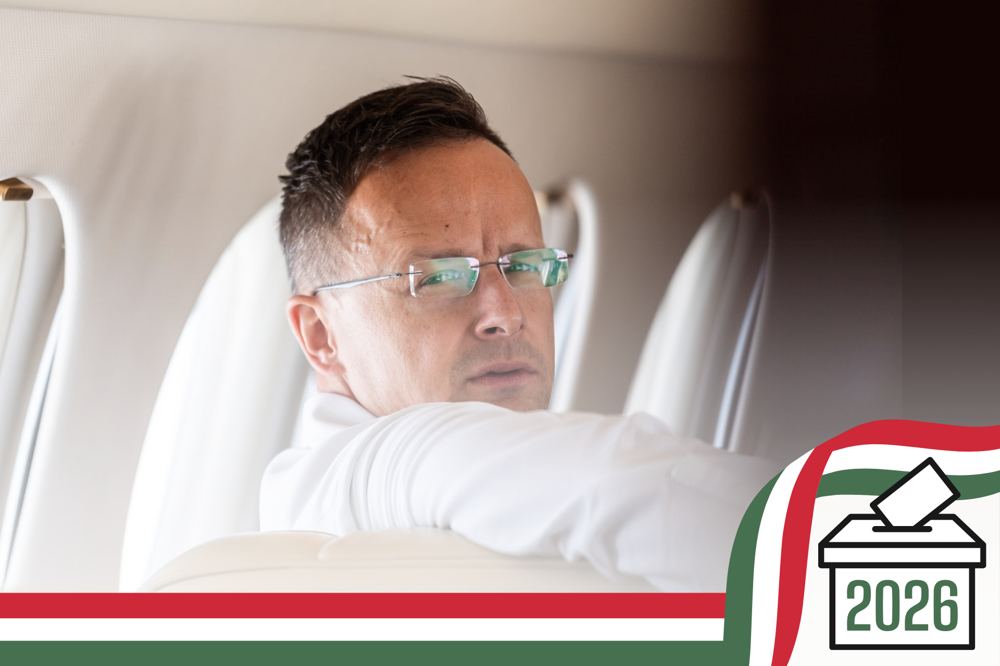
And that is not all: the companies contracted by the Ministry of Foreign Affairs and Trade, headed by Péter Szijjártó, made a fortune from procuring the machines. Further details emerged after a raid on Tuesday(27 Ocober) by the National Tax and Customs Administration (NAV).
NAV detained three people, while an international arrest warrant was issued for the suspected leader of the criminal organisation. He is believed to be in Indonesia, and the news outlet 444 discovered that he operates a Ferris wheel in Bali.
“Acting as part of a criminal organisation, the perpetrators who sold ventilators and medical masks to state bodies during the Covid-19 pandemic laundered more than three billion forints [approximately €7.5m] in profits, then deprived the state treasury of 660 million forints [approximately €1.7m] by evading tax,” NAV said .
Footage recorded during the raid also reveals the luxury in which the suspects lived. As 444 notes, this may be only part of the story: other companies may also have been involved in the overpriced procurement deals. There is no word yet on whether the authorities are investigating any responsibility Szijjártó or Orbán may bear in the case.
The Orbán government tried to portray its pandemic response as a success story. In early 2025, it released a short film entitled How We Defeated the Covid Pandemic .
Almost 49,000 people died in the pandemic in Hungary. According to international statistics , the country had the world’s fifth-highest death toll per million inhabitants.
Hungarian authorities accuse Miklós Seszták, who served as development minister in the Orbán government between 2014 and 2018 and was re-elected to parliament this year, of accepting at least 11 billion forints, or approximately €27.5m, in bribes. On Wednesday (28 October), a court extended his pre-trial detention until the end of January.
Its ruling revealed an important detail in the corruption case.
During a search of Seszták’s home, investigators found an empty safe in which, according to the court, he had kept nine billion forints in cash, approximately €25m at the current exchange rate. He had arranged for the money to be hidden before he was questioned.
As 444 calculated , that amount of cash would be extremely heavy: 450,000 banknotes with a face value of 20,000 forints could weigh 450kg.
Commenting on the news, investigative journalist Szabolcs Panyi wrote that “in principle, this is entirely consistent with what several colleagues and I have long been hearing from sources with inside knowledge of the NER”, the political and economic system built around Orbán.
According to Panyi, as early as the 2010s, one of the major problems facing people within the Orbán regime was how to store the vast amounts of cash generated by corruption. They could not deposit it in a bank without having to explain where it came from.
Zoltan Szalay is editor-in-chief of Napunk, a Bratislava-based hungarian-language news site that is part of Dennik N group. He studied law at Comenius University in Bratislava and worked in public administration as a lawyer. He later became editor-in-chief of Irodalmi Szemle and Új Szó. An author of several short story collections and novels, he has been on the staff of Denník N since 2019.