Bollywood and the underworld, together in the spotlight?
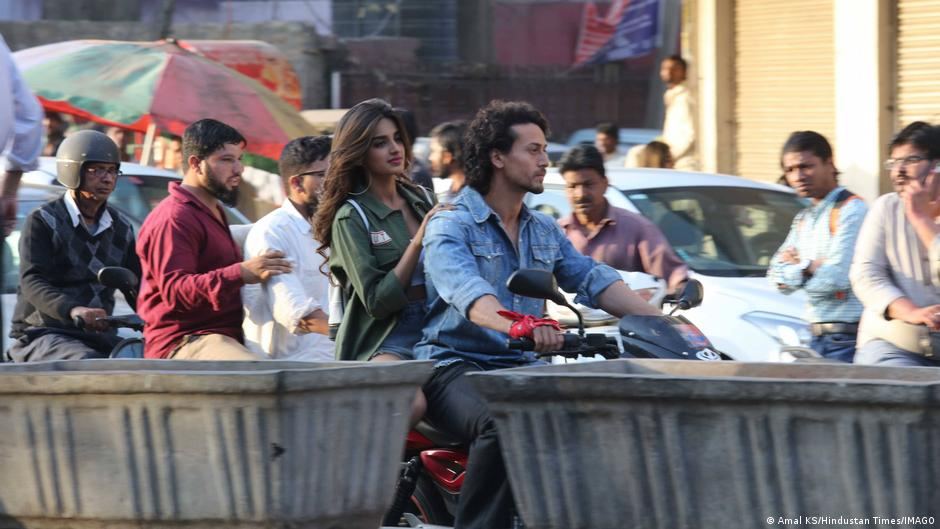
A wave of shootings and extortion threats has rattled India's film industry. This time, those claiming responsibility are very different from the Mumbai underworld that had Bollywood in its grip back in the 1990s.
"In the entire film industry, whoever works without aligning with us, or works with Salman Khan, will be killed."
This warning was delivered in an audio message by presumed attackers on Indian actor Tiger Shroff in Mumbai earlier this month, as they claimed responsibility for the shooting.
The apparent perpetrators said they were connected to Lawrence Bishnoi, a student-politician-turned-gangster who has been in prison since 2014. Notably, police have not confirmed the gang's involvement.
The shots fired at Shroff, which injured his driver, were only the latest in a string of attacks targeting prominent figures from the Mumbai-based film industry, popularly known as "Bollywood" .
Since 2022, gunmen fired shots at actor Salman Khan's apartment and at the home of filmmaker Rohit Shetty in Mumbai, as well as actor Disha Patani's family home in northern India. Actor Ranveer Singh also reportedly received an extortion demand of nearly $1.1 million (around €980,000).
The attacks have spread to the other side of the globe , with a cafe owned by comedian Kapil Sharma in Surrey, Canada, also hit three times.
For an industry that once lived in the shadow of organized crime, the attacks have revived old fears, harking back to the crime bosses of the 1990s. But experts say the threat facing Bollywood today looks very different from the one it faced three decades ago.
In the 1990s, Mumbai's underworld was deeply entangled with the Hindi film industry.
"The mafia was always fascinated with the movie industry," said S. Hussain Zaidi, crime journalist and author of "Dongri to Dubai: Six Decades of the Mumbai Mafia," who has covered organized crime in the city for over three decades.
Gangsters like Dawood Ibrahim, Abu Salem and Chhota Shakeel "were totally obsessed" with Bollywood, he told DW, much like mafiosi who sought a foothold in Hollywood.
To the gangsters, films offered glitz and glamor, but also a way to launder their profits. They invested in films "so that they could control the industry and have a legitimate way of making money," Zaidi added.
When producers didn't cooperate, the consequences could be fatal. In 1997, music mogul Gulshan Kumar, founder of the label T-Series, was shot dead. In 2000, filmmaker Rakesh Roshan, father of Bollywood star Hrithik Roshan, was shot and wounded.
Mumbai's streets were "made red with blood" in 1998, Zaidi said, describing the year as the pinnacle of gang killings.
D. Sivanandhan, the former Police Commissioner of Mumbai, who led the crackdown, says 101 businessmen were shot dead in 1998 alone, or one "every third day," mostly over unpaid extortion demands.
Police efforts were reinforced by a tough new organized crime law passed in 1999, which Sivanandhan calls the "ultimate weapon." Security forces used electronic surveillance and preventive detention, and seized some 2,500 illegal weapons.
"A few encounters also happened, but that is not a policy nor a strategy,” he told DW, referring to police shootouts.
By the early 2000s, the gangs' hold had been broken, and a new Mumbai seemed to be emerging.
The man believed to be behind the latest wave of attacks is not from Mumbai.
Bishnoi, 33, comes from a landowning family in the northern state of Punjab and was studying in Chandigarh when he was drawn into violent student politics. Then, he was arrested, incarcerated and eventually turned to crime, says journalist Jupinderjit Singh, author of "Gangs of Punjab."
"He was introduced to the University of Crime through the jail," Singh told DW.
Bishnoi went on to build what Singh describes as one of the first criminal syndicates spanning several northern Indian states. Investigators say he still directs operations from prison using concealed phones and messaging apps.
Currently, Bishnoi is held in a jail in Prime Minister Narendra Modi's home state of Gujarat.
His network stretches beyond India's borders. In September 2025, Canada designated the Bishnoi gang a terrorist entity. Last month, the FBI added Satinderjeet Singh, popularly known as Goldy Brar, to its Ten Most Wanted list, offering up to $1 million for information leading to his arrest. US prosecutors described him as the alleged leader of Bishnoi's group in North America.
While Bishnoi comes from an affluent landowning family, his shooters are mostly poor. The gang usually recruits them online.
"There are so many youngsters who want to do something… they are just pulled by the lore attached to Lawrence Bishnoi," Singh explained. "Recruiting is no big issue… They offer money, protection, weapons."
In 1998, Salman Khan was accused of killing a blackbuck, an antelope revered by Bishnoi's community . Bishnoi vowed revenge, and many of the attacks targeted people close to the actor, including the 2024 killing of politician Baba Siddique, which police have linked to the gang.
Singh sees the feud as a bid for respectability. Criminals "always try to find something that makes them a moral guardian," he says, and this case was Bishnoi's "chance to redeem himself."
"Bollywood has a lot of money," Singh added, pointing that the previous generation of gangsters was no longer in position to take advantage.
"With Dawood Ibrahim and his counterparts away, there was a vacuum, and Lawrence Bishnoi is trying to exploit that."
Sivanandhan explained the old Mumbai gangs ran a whole "basket" of illegal businesses, from smuggling to protection rackets and cricket match-fixing. Their members were "local boys," while the Bishnoi gang has “nothing to do with Mumbai,” he added. It targets Bollywood because the industry is "loaded with money" and a "soft underbelly."
"They are using Bollywood as an ATM," he told DW. "Insert a card and collect your money."
Meanwhile, Zaidi sees the attacks mainly as publicity. "It's a way to grab headlines," he told DW. Within hours of the recent attack on Shroff, someone claimed on social media that he was targeted for being close to Khan, a logic Zaidi called "absolutely illogical and absurd."
But publicity is useful to gangs that live off extortion. "The base material of extortion is: create fear," a security professional responsible for the protection of several Bollywood stars, who asked not to be named because of the sensitivity of the issue, told DW.
Still, experts say its hard to argue that the ongoing violence is comparable to the 1990s crime wave.
"I won't say resurgence, because that would be a bit of an exaggeration," Zaidi said. In the 1990s, several rival gangs fought for control of Mumbai. Today, other than Bishnoi's faction, other gangs are not considered active in Mumbai.
The film industry is also not paying up the way it once did, because the shift to digital payments has made large cash transactions hard to hide, he added.
To view this video please enable JavaScript, and consider upgrading to a web browser that supports HTML5 video
Sivanandhan disagrees. The shootings at walls and gates, followed by quick claims on social media, are "all aimed at collecting… extortion money," he said. In his view, "cash-rich Bollywood would be coughing up so much, which is enough to run an army of people."
And even if violence is not as prevalent, hundreds of thousands of people rely on the Mumbai film industry for their livelihoods.
"If the fear of the underworld continues, leading names may be forced to leave Mumbai," the All Indian Cine Workers Association (AICWA) President Suresh Shyamlal Gupta wrote to Home Minister Amit Shah.