Sweden takes 60% stake in new SMR nuclear venture
Sweden is taking a controlling stake in a new small modular reactor venture, marking a decisive policy reversal to secure industrial power and energy independence.
The Swedish state will acquire a 60-percent stake in Videberg Kraft, the company tasked with building the country's first new nuclear reactors in half a century. Parliament has already approved the purchase for up to 1.8 billion kronor. State-owned utility Vattenfall and the Industrikraft consortium will each retain a 20-percent share in the venture.
The project marks a definitive pivot toward small modular reactor technology to meet future energy demands. Earlier this month, Vattenfall announced it had selected Britain's Rolls-Royce to construct three of these reactors at the existing Ringhals nuclear power plant in southwest Sweden, a site already home to two operating reactors. Once completed, the new units are expected to provide an energy output equivalent to two large conventional reactors, generating around 1,500 megawatts.
For European markets and industrial investors, the Swedish model highlights a growing consensus that heavy electrification requires stable baseload power. Industrikraft, a consortium of industrial companies, demonstrated this demand by investing 400 million kronor ($41 million) for its initial 20-percent stake. Industrial power consumers are increasingly financing nuclear capacity directly to guarantee predictable energy costs, reducing their reliance on weather-dependent wind power.
The government's direct financial involvement represents a profound policy reversal for Sweden. In 1980, Swedes voted in a nonbinding referendum to phase out nuclear power entirely. Since that vote, the country has shut down six of its 12 ageing reactors. However, the six remaining active facilities still generate roughly 30 percent of Sweden's electricity, forming a critical backbone for the national grid.
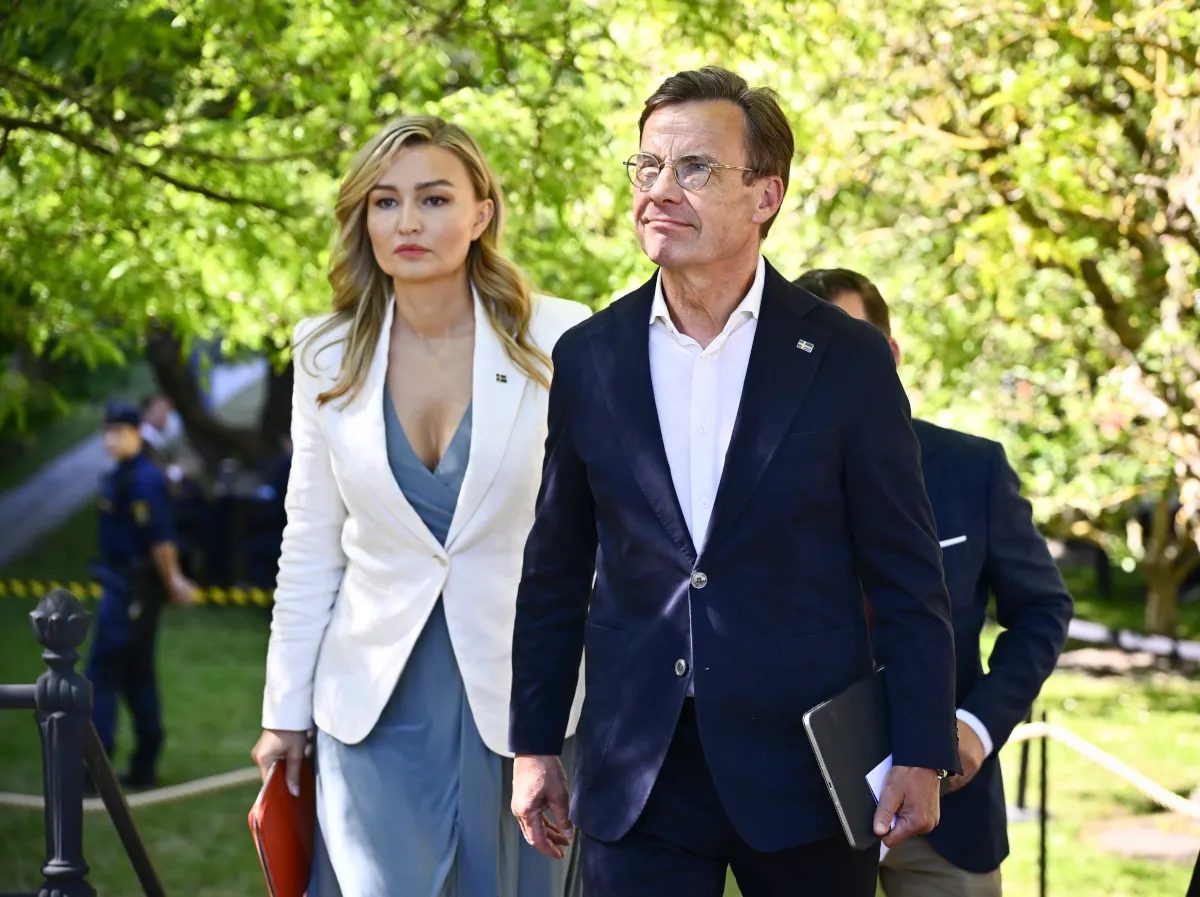
Energy Minister Ebba Busch framed the state investment as a direct response to a deteriorating global security environment. "There are major geopolitical uncertainties and substantial electrification needs," she told a press conference. Busch argued that global energy supplies have several times become "weaponised." Sweden "cannot, in that situation, be dependent on the weather or on foreign powers," she added.
The current right-wing coalition government, led by Prime Minister Ulf Kristersson and supported by the far-right Sweden Democrats, committed to a massive expansion of nuclear power in 2023. By taking a majority state stake in Videberg Kraft, the government is replicating the strategy used during the 1970s energy crisis, when the state oversaw the construction of Sweden's current reactor fleet. The selection of Rolls-Royce also provides a notable commercial win for British engineering within the European energy transition.