[Interview] Young Europeans know far more about Palestine than young Israelis, says MEP Lucia Yar after West Bank trip
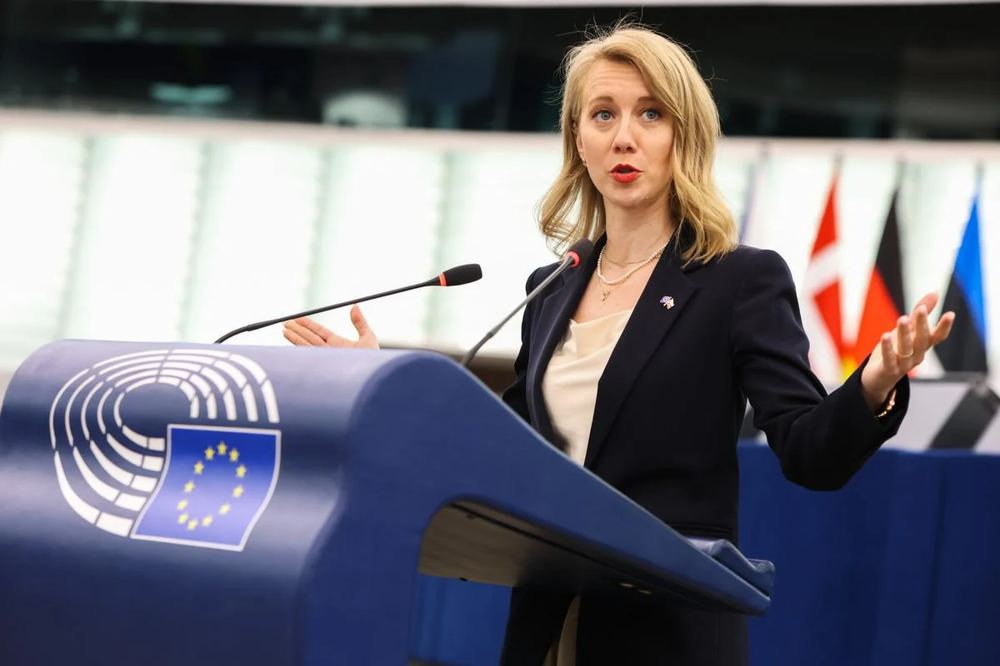
Slovak MEP Lucia Yar reflects on her NGO-led trip to the Middle East: 'When I walk through the streets of Brussels, I see more Palestinian flags than I saw during my entire stay in the West Bank, where the Palestinian flag is perceived as a provocation'
Slovak Renew Europe MEP Lucia Yar is one of the few MEPs that have travelled to the West Bank and the first Slovak politician to do so since 7 October 2023.
“When I walk through the streets of Brussels, I see more Palestinian flags than I saw during my entire stay in the West Bank,” she said.
In the following interview, Yar discusses her trip to the West Bank and the EU’s scope to influence events in the Middle East.
Young people’s feelings. I met a 23-year-old woman who told me that in recent years they had kept no pictures, memorabilia or even a flag at home, nothing that might in any way express her Palestinian identity. She said IDF soldiers had come to their home once and taken away her brother.
Almost every young man in the West Bank has apparently had a similar experience of either being interrogated or detained. When I walk through the streets of Brussels, I see more Palestinian flags than I saw during my entire stay in the West Bank, where the Palestinian flag is perceived as a provocation.
Young people there live under constant surveillance of some kind. In the town where they were born, they have to carry a residence permit card. They live in fear and know nothing else.
I was also struck by the feelings of young people on the Israeli side, who have never spoken to Palestinians and feel only anger. It is an intergenerational trauma on both sides and remains unresolved, affecting millions of people across generations.
Why did you go to the West Bank in the first place? And why now?
The EU or its parliament are yet to obtain permission to organise an official mission. Either it was not possible to agree with the Israeli authorities, or such a mission was blocked within the EP itself. I do not know why it was not possible.
I was invited by DanChurchAid , a humanitarian NGO with roots in the Danish Lutheran Church, active in Israel and the Palestinian territories. Its work is therefore not limited to providing humanitarian aid, but also includes advocacy for not only Christian Palestinians.
As an agnostic, it seemed right for me to go with them, because they offered a balanced programme. Having read a whole lot about the issue and region over a long period and during my studies, I wanted to form my own view through personal experience. It is better to see something once than hear about it a thousand times. And given no Slovak politician had visited the West Bank since October 2023, it was good for someone to go.
I encountered a full range of reactions online, including some very harsh ones. Strongly pro-Israel comments claimed that by speaking to Palestinians, I was supporting Hamas. Meanwhile, from the far end of the pro-Palestinian side, I heard that this was some kind of performance on my part. In-person reactions were more positive and came from across the political spectrum.
In this case, we would not need to comment on events in other parts of the world. I believe the European Parliament is vocal enough on foreign policy. Recently, we dealt with China; before that, the United States; and Ukraine is constantly on our agenda. As the strong democratic voice of all Europeans, the parliament must draw firm attention to certain issues.
Immediately after returning from the West Bank, I spoke about this issue in plenary, and I discussed it personally with Kaja Kallas, the EU foreign affairs chief.
We spoke about why the European Commission has not yet presented a way to sanction a broader group of Israelis operating in illegal settlements or how to apply such sanctions. Some member states have already taken certain steps in this direction.
Other member states may block such sanctions. The EU must decide unanimously on matters of foreign policy.
Suspending the entire association agreement with Israel is unrealistic, but restrictions on trade with Israeli settlers would be different.
Not only does the EU cooperate with settlers, but pension funds in the Netherlands and Sweden invest in businesses operating in these illegal settlements in the West Bank. This is precisely what the commission has the power to limit: it can prepare a relevant proposal and approve it by qualified majority.
In such a case, it would not be possible to block the decision merely by forming a blocking minority. We can press the commission, ask it questions and exert pressure on it. The point is to draw attention to areas where the commission should act. Citizens and MEPs are calling for it. If the proposals ultimately fail, so be it. But we have certain powers, and we should use them.
Why does the commission not want to put forward the options you mentioned, which could be adopted by qualified majority ?
We can only speculate about who may be blocking something, whether anyone is blocking it at all, and what forces are at play. We sent the commission a letter asking about these matters as well, but have not received a reply.
You had an opportunity to spend some time in Israel itself. Whom were you able to meet?
We met Israeli politicians who belonged to the opposition but were not enthusiastic about the idea of an independent Palestinian state. We also spoke to representatives of an organisation that helps both Palestinian and Israeli women.
Magdaléna Fajtová is a reporter at Respekt, a Czech magazine. She studied journalism at Masaryk University and International Relations in Prague at Charles University. In 2022, she received the Czech-German Journalism Prize, the Milena Jesenská Special Award, granted by the Czech-German Fund for the Future.