Spain’s transport minister Óscar Puente resigns over Urda train crash that killed 69
Óscar Puente revealed that a high-speed train was allowed to keep running at over 160 km/h after its safety system failed, as rail workers threaten to strike.
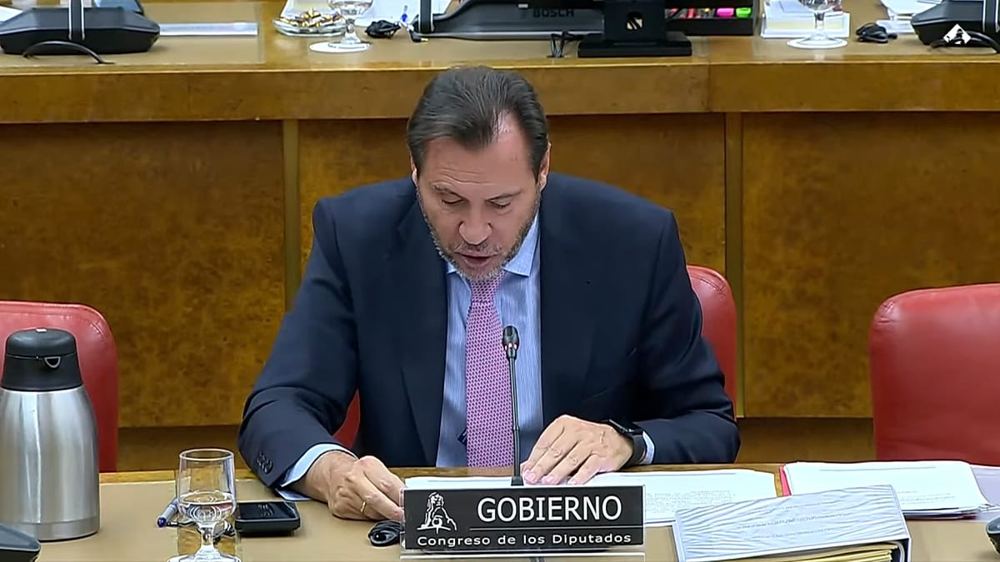
Spain’s Transport Minister Óscar Puente resigned on Tuesday over last week’s train crash near Urda, in the central province of Toledo, which killed 69 people.
He announced the decision during an appearance before the Permanent Deputation of the Congress of Deputies, the standing committee that represents Spain’s lower house when it is not in full session.
Puente, a member of Prime Minister Pedro Sánchez’s Socialist party, said stepping down was “good for the country and for democracy”. He presented it as an act of political responsibility, adding: “It is not true that all politicians are the same.”
He also said he would not stand as a candidate at the next election, saying he wanted “to live up to my party”.
During the session, Puente defended the safety of the Madrid-Seville high-speed line, where the crash happened. As well as the 69 dead, around 200 people were injured.
“It is neither an abandoned nor a forgotten piece of infrastructure,” he said, pointing to a €780 million renewal plan launched by the government.
He ended his speech with a farewell: “I trust my country will live up to the occasion. I have tried to live up to it. Farewell.”
The Urda crash came nine months after a derailment near Adamuz, in the southern province of Córdoba, killed 46 people in January. That accident also happened on the Madrid-Seville line.
Puente told MPs that the control centre run by Adif, Spain’s state-owned rail infrastructure manager, had allowed the AVE high-speed train involved to continue its journey even though its LZB automatic safety system had failed. A train operated by the private company Iryo had stopped further along the track.
The AVE then travelled about 25 kilometres at more than 160 km/h before the collision.
Puente defended the reliability of the LZB system and announced new technology to strengthen rail safety.
Ester Muñoz, spokesperson for the conservative People’s Party (PP), said the minister’s job “is not to explain fatal accidents, it is to prevent them”.
Pepa Millán, spokesperson for the far-right Vox party, accused Puente of “shirking his responsibilities” and criticised how he had behaved after the crash. “He has neither dignity nor shame,” she said.
The PP and Vox had demanded his resignation, as had two parties whose votes the Sánchez government has relied on: the Basque Nationalist Party (PNV) and the Catalan pro-independence party Junts.
Meanwhile, the works council at Adif has agreed to push for a strike on 17 November to demand better rail safety, although the strike has not yet been formally called.
The planned protest reflects growing concern about the safety of Spain’s high-speed network after two deadly crashes in less than a year.