Chinese spy suspect walks free after Prague court acquittal, while Czech spy suspect in China remains behind bars
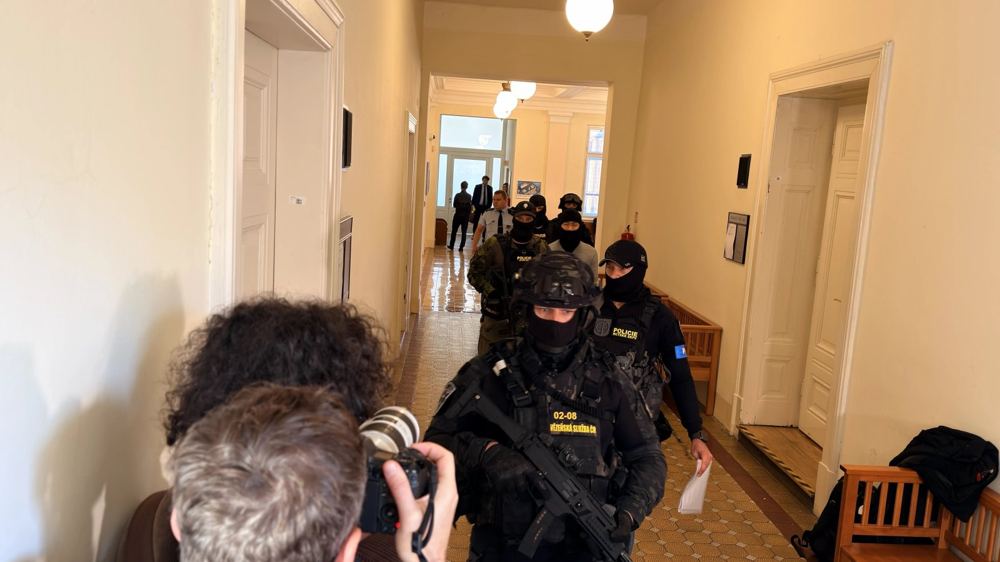
Yang Yiming, a suspected Chinese spy, has walked free after a Czech court acquitted him, but prosecutors have appealed the verdict. However, Czech national Aleš K. is still behind bars in China for allegedly breaching the country's security laws.
Yang Yiming, a suspected Chinese spy, has walked free after his arrest earlier this year in the Czech Republic.
Prague Municipal Court judge Tome Frankič found that Yiming posed as a foreign correspondent for a Chinese media outlet while working for the country’s intelligence services. He accepted assignments to covertly pass on information he obtained about politicians and other public figures.
And yet, the man was released this week on Monday (2 November). In the view of judge Frankič, the evidence against Yiming did not show he broke the law.
In court, the prosecution failed to prove Yiming had “intentionally endangered or damaged the constitutional order, territorial integrity, defence or security of the Czech Republic, or undermined its sovereignty.”
The trial of the Chinese man was the first of its kind in modern-day Czech Republic.
Previously, espionage could be prosecuted only if police or intelligence services could prove that a person had obtained classified information such as government documents or intelligence-service materials.
But the Czech security community argued for years that defining the offence of spying was defined too narrowly, and could not adequately tackle espionage.
Indeed, collecting information on people's private lives - whether it be their alcoholism or intimate relationships - could be enough to blackmail some to advance the interests of foreign powers.
So the previous Czech government passed a new, broader criminal offence - unauthorised activity for a foreign power.
Now, bringing someone before a Czech court requires proof of activities for a foreign power with intent to endanger the Czech Republic's constitutional order, sovereignty, territorial integrity, defence or security.
Ondřej Kundra is the deputy editor-in-chief of Respekt, where he has been a permanent editorial member since 2002 focusing on Czech politics, justice, and the influence of foreign powers like Russia and China. He is award-winning investigative journalist, he has authored several books covering topics ranging from Russian intelligence services and European jihadists to Czech military aid for Ukraine.