Wax On, Never Off: How Vinyl Crashed The Digital Party And Refused To Leave
When the first Amsterdam Dance Event took place in 1996, a DJ's set lived in a record bag. Wax On, Never Off: How Vinyl Crashed The Digital Party And Refused To Leave
When the first Amsterdam Dance Event took place in 1996, a DJ's set lived in a record bag.
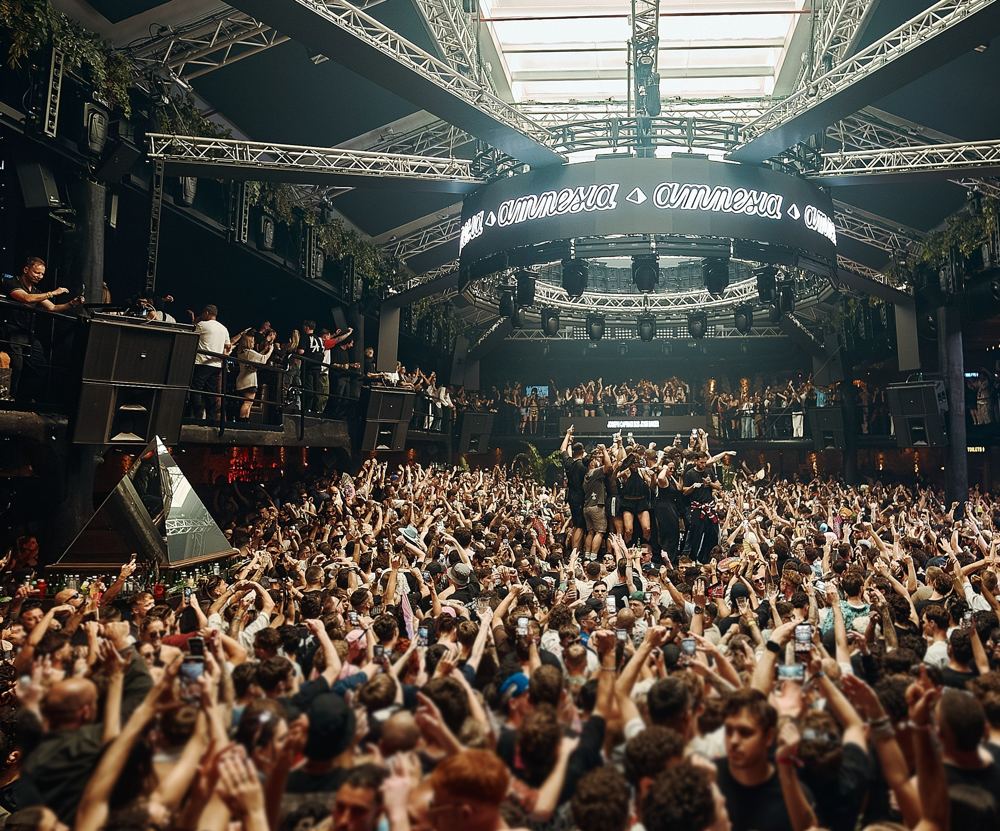
When the first Amsterdam Dance Event took place in 1996, a DJ’s set lived in a record bag. As ADE marked its 30th edition from October 21 to 25, the bag was back. Vinyl is selling at levels not seen in decades, some of the biggest names in the booth are playing it again, and collectors are paying serious money for the right sleeve.
The UK has just had its strongest run in a generation. BPI figures show UK vinyl album sales up 13.3% in 2025 to 7.6 million units, the 18th straight year of growth. Spending on the format hit £174.4 million, its highest level in more than 30 years.
Record shops are taking a bigger share of that money. According to ERA, 41.2% of physical music sales now happen in shops, and 28 new independent stores opened in 2025, bringing the UK total to 499.
The US market is bigger again. The RIAA’s 2025 year-end report put American vinyl at $1.04 billion in wholesale revenue, up 9.3% and the 19th consecutive year of growth. It was the first time vinyl had passed the billion-dollar wholesale mark since 1983. The US now accounts for nearly half of vinyl’s global value.
2026 has been stronger still. In the first half of the year, US vinyl revenue rose 17.7% to $543.8 million on 26.5 million units, according to the RIAA’s mid-year report. CDs grew faster, up 58.6% to $171.1 million, suggesting a broader appetite for physical music. Vinyl remains its biggest earner by a distance.
Streaming keeps 82% of US revenue. Physical formats brought in $731.5 million of the half-year’s $5.97 billion, roughly 12%, and most of that came from vinyl.
Younger buyers are a large part of the growth. In a Vinyl Alliance survey reported by CNN, 56% of Gen Z fans said they like vinyl for its aesthetic, and 37% said they use records as home decor.
Carl Cox made the boldest move. Opening every night of The Prodigy’s UK and Ireland arena tour this spring, he mixed across three turntables for the first time in 25 years. In a behind-the-scenes clip from the tour, he walked through the prep. For a two-hour set of 24 to 30 tracks, he shortlisted at least 60 and listened to every one in his Melbourne studio.
“When you’re playing turntables, you need skills,” he said. “You need to know where your breaks are.” He also made clear it has been worth the work: “I’ve been really enjoying playing vinyl again, putting the needle on the record.”
“I’ve been really enjoying playing vinyl again, putting the needle on the record.”
Armin van Buuren made vinyl a full chapter of his \[UNVRS\] Ibiza summer. First came a vinyl-only classic trance set that opened with Chicane’s ‘Saltwater’ and closed with Veracocha’s ‘Carte Blanche’, taking in Energy 52’s ‘Cafe Del Mar’ and Paul van Dyk’s ‘For An Angel’ on the way. He then added a dedicated vinyl set to his five-hour residency show and began pressing records for it.
“I’m actually making vinyl, especially for this set,” he said in an Instagram reel, admitting it meant giving up his hot cues and tricks. He also recalled that from 1999 to 2005 it was “completely unthinkable” to DJ with anything but vinyl. ADE was already a few years old by then.
In Tokyo, ¥ØU$UK€ ¥UK1MAT$U (Yousuke Yukimatsu) played an all-vinyl set for Technics on the Top Deck of Tokyo Tower, 250 meters above the city. Filmed with the Japanese streaming platform DOMMUNE, it premiered on Resident Advisor’s YouTube channel on August 18. The set is part of Technics’ campaign for the 55th anniversary of the SL-1200, its long-running DJ turntable, which happens this year.
Seth Troxler, meanwhile, walked through his entire record collection on camera. “This is 26 years DJing in the game,” he said, before promising to “get back to the vinyl game”. Then came a sarcastic chant of “I’m a vinyl DJ”, a dig at artists who wear vinyl as an aesthetic more than they play it. The revival has grown big enough to attract posers, and Troxler has noticed.
Skrillex, one of electronic music’s most digital-native stars, sent his fans to a record shop. A vinyl pressing of SOMA, the album he surprise-released in June, went on sale at Seattle’s Zion’s Gate Records on Sunday, August 30 at 11 AM. It was in-store only, one per person, with nothing sold online. The record cost $40, next to a $45 T-shirt and an $85 hoodie.
At the far end of the collector market, a copy of Röyksopp’s 2001 debut ‘Melody A.M.’ sold for £3,720 through Wessex Auction Rooms. It was one of 100 blank sleeves the duo sent to Banksy in 2002, which he returned with their name spray-painted in green through a custom stencil.
Auctioneer Martin Hughes told the BBC the record had “definitely been played” and that Banksy’s artwork drove the price. The buyer may even have got a bargain: another Banksy copy sold for $8,450 on Discogs in 2021, and one in 2019 went for more than $10,000.
Labels are reading the room too. In April, Anjuna launched Archive, a vinyl-only series drawn from the early years of Anjunabeats and Anjunadeep’s 26-year history, with every track remastered for vinyl. Anjunabeats Archive 01 leads with the extended version of Gabriel & Dresden’s 2004 remix of Above & Beyond and Zoë Johnston’s ‘No One On Earth’.
The Anjunadeep edition includes Jaytech’s ‘Pepe’s Garden’, on vinyl for the first time, alongside Johan Vermeulen’s ‘Do Not Cross’ and Paul Keeley’s ‘Paper Jet’. Both records are pressed on black 12-inch vinyl in reverseboard sleeves with spot gloss, in limited quantities.
Amsterdam got its own chance to hear the difference during ADE. On Friday, October 23, Vinylism x ADE took over TILLATEC from 14:00 to 22:00, with vinyl-only sets from Ellen Allien & friends and free entry.
Anyone tempted to build a booth of their own has a fresh excuse. Technics’ limited SL-1200 55th Anniversary Edition, 12,000 units in seven colors, ships in batches starting this autumn.
Streaming still pays most of the bills, and nobody in this piece pretends otherwise. They’re choosing something slower anyway: 60 records auditioned for a two-hour set, a pressing cut for one residency, a single sleeve bought at auction. Thirty years after the first ADE, the record bag has earned its place back in the booth.