Dresden AI chipmaker Sparxity closes Series A, taking funding to $90M
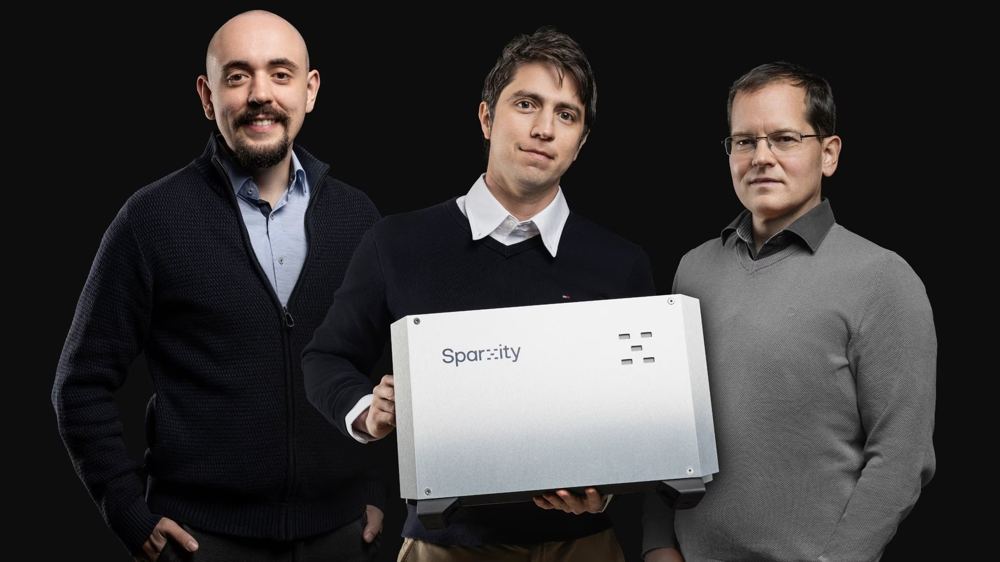
Sparxity, a Dresden company that builds computer chips and systems for AI, has closed its Series A funding round. The round brings the company’s total raised to $90M. Yet Sparxity did not say how much of that came from the Series A. ICM HPQC Fund, which invests in computing and quantum infrastructure, led the round. […] This story continues at The Next Web
Sparxity, a Dresden company that builds computer chips and systems for AI, has closed its Series A funding round. The round brings the company’s total raised to $90M.
Yet Sparxity did not say how much of that came from the Series A.
ICM HPQC Fund, which invests in computing and quantum infrastructure, led the round. Lockheed Martin Ventures, chipmaker GlobalFoundries, GS Futures, Cloudberry Ventures, TGFS and the EIC Fund also took part.
Angel investors include Richard Socher, founder of Recursive Superintelligence, and Nancy Xu, whose start-up Moonhub was bought by Salesforce.
The company will use the money to develop chips for what it calls dynamic sparsity. Many AI models only use a small part of their network for each task.
Sparxity’s chips are designed to skip the parts that are not needed, which the company says saves time and energy. It is aiming for AI inference, the stage where a trained model answers requests, up to 44 times faster in very sparse models.
The company was founded in 2021 as SpiNNcloud, a spin-off from TU Dresden . It was built on SpiNNaker2, a chip inspired by how the brain works. Last month, it changed its name to Sparxity to reflect its new focus on sparse computing.
Sparxity said it has made more than 70,000 chips across three chip designs and installed 12 racks of its systems. It has more than 30 customers, including some of the world’s largest supercomputing centres, and its revenue quadrupled between 2024 and 2025.
Its current systems are used for scientific computing as well as AI. On selected tasks, the company says they run some calculations 10 times faster and uses 18 times less energy for certain machine learning work.
Hector Gonzalez, Sparxity’s co-founder and chief executive, said the money will help data centres move from power-hungry designs to setups with chips built for sparse AI.
“Sparxity has demonstrated the ability to manufacture its technology and deploy systems with major customers,” said Matthew Gould of ICM HPQC Fund.
The funding follows two recent deals. In October, Sparxity installed a system worth several million dollars at the Jülich Supercomputing Centre in Germany, home of JUPITER, Europe’s first exascale supercomputer.
Last week, it signed a letter of intent with T-Systems, the business arm of Deutsche Telekom, to bring its technology into T-Systems’ data centres.
“We are looking forward to having Sparxity on board in our AI factory soon,” said Ferri Abolhassan, chief executive of T-Systems.
Sparxity has also received EU support in the past. In 2025, it was picked for the European Innovation Council’s accelerator programme, which gave it €10m in grants and equity .