From bison powder to a £30,000 robot that massages you, our expert guide to which new products really WILL help you live longer
What's the best way to stave off ageing? To find out the latest thinking, thousands of 'biohackers' - seeking to optimise their health - poured through the doors at a summit in London.
Published: 17:00 GMT, 9 November 2026 | Updated: 17:18 GMT, 9 November 2026
What’s the best way to stave off ageing? To find out the latest thinking, thousands of eager ‘biohackers’, seeking to optimise their health, poured through the doors at the recent Health Optimisation Summit in London .
These are people who are already plunging themselves into ice baths and ‘stacking’ supplements (combining different ones daily in the hopes of amplifying their effects). But the summit is widely recognised as the epicentre of the European longevity movement, and they wanted to see what was new in the wellness industry.
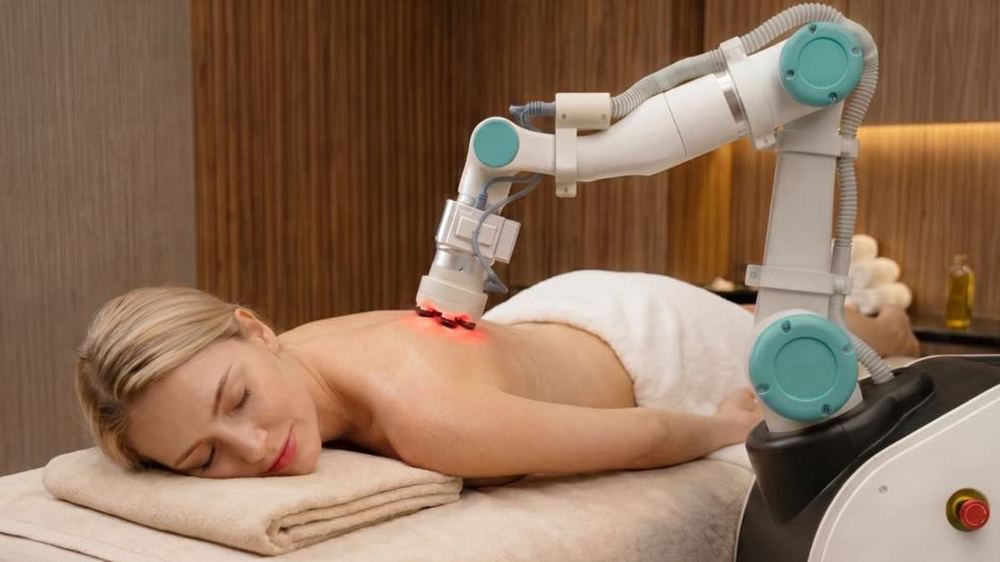
And, sure enough, there were all kinds of gadgets, supplements and ‘functional’ foods (ie, with added health benefits), even a physiotherapy robot. But are any of them worth trying?
‘Serious longevity science is still largely only happening in labs,’ says Dr Ingrid Yang, a physician and longevity specialist at Sharp Memorial Hospital in California in the US.
‘The science of longevity is evolving but it’s very much at the “Does this even work and is it safe?” stage.’
However, there are exceptions. Take creatine. Interest in the compound, produced naturally in the body, isn’t new, it has been beloved of the body-building brigade for years.
But recent research shows that it may have a critical role in keeping our brains smart and our muscles strong. Dr Yang’s verdict is that creatine ‘has strong evidence in improving healthspan and a firm safety record. Plus, it’s inexpensive.
‘It’s the closest thing to a genuine, affordable, evidence-based “longevity” product out there at present.’
Indeed, there was plenty of creatine on show at the summit. But what about the other products, are they any good? We asked Dr Yang to give her verdict...
Inhale H2 Precision Hydrogen Inhalation Therapy, £4,899, healf.com
The Inhale H2 Precision Hydrogen Inhalation Therapy device costs £4,899. You wear a mask and breathe in the hydrogen gas for a session that typically lasts for 20 to 40 minutes
First there was hyperbaric oxygen therapy, which uses a pressurised chamber to help your body absorb pure oxygen and boost energy and tissue repair. Indeed, it’s recognised as an effective treatment for 14 conditions, including severe burns and non-healing diabetic wounds.
But now we’re being told that inhaling pure hydrogen can enhance performance, reduce inflammation, balance cholesterol, clear brain fog and rejuvenate our cells.
Primarily, hydrogen is said to ‘mop up’ harmful molecules, called reactive oxygen species. Released when our bodies convert food into energy, these can damage cell DNA and accelerate ageing.
The manufacturer says its hydrogen therapy ‘appears to play a protective and regulatory role at the cellular level... preserving mitochondrial structure [mitochondria are ‘batteries’ in cells that provide energy] and DNA. This may lead to healthy longevity’.
You wear a mask and breathe in the hydrogen gas for a session that typically lasts for 20 to 40 minutes.
EXPERT VERDICT: This seems plausible and safe. Independent research suggests genuine benefit in neurodegenerative diseases such as Alzheimer’s and Parkinson’s disease, and chronic obstructive pulmonary disease (COPD, an umbrella term for conditions such as emphysema). For example, in one study hydrogen therapy reduced inflammatory markers and improved how far people with COPD could walk.
Most studies measure biomarkers such as oxidative stress (where there’s an excess of reactive oxygen species) and functional endpoints (such as how far someone can walk in six minutes), rather than hard outcomes such as hospitalisation, disease progression or deaths. And there’s no evidence that it extends human lifespan, as claimed by influencers.
So, while there is some science behind it, it’s nowhere near justifying almost £5,000 for home use. Save your money.
Bear Grylls’ Modern Savage powder is made from beef liver, kidney, heart, spleen, lung and testes and bison liver, alongside inulin fibre, probiotics, date powder and freeze-dried berries
Bear Grylls’ Modern Savage brand is ‘solving the real-world problem of what we call nutrient-vacant foods’, it claims, by returning to our ancient ancestors’ diet. This means relying on red meat from large mammals such as bison, and eating every part of it, including the organs, fat, brain and marrow, as well as eggs, bone broth, raw milk, honey and fruit.
This is a powder made from beef liver, kidney, heart, spleen, lung and testes and bison liver, alongside inulin fibre, probiotics, date powder and freeze-dried berries.
Organ meats are ‘nature’s ultimate multivitamin’ says Grylls, who adds the supplement offers ‘better focus, stronger immunity and stronger muscles’.
My main concern is vitamin A, products should clearly state how much they contain per daily serving (and this one doesn’t). Bison and beef liver are concentrated food sources of vitamin A in the form of retinol.
If you combine products (say, a multivitamin or vitamin A-fortified foods), you could risk overload as retinol builds up in the body. This can cause severe, irreversible liver and bone damage.
‘Vibro-acoustics’ is the use of sound vibrations that you can both hear and physically feel through your body, research has suggested benefits in autism, chronic pain, Parkinson’s, fibromyalgia, post-operative recovery and sensory dysregulation, the Onizion website says.
Its bed is aimed at those looking for inner calm and neurodivergent people (‘the ADHD brain that cannot stop. Autistic nervous systems that never fully decompress’), promising: ‘Your nervous system reset.’
The specially engineered bed acts like a high-fidelity speaker for your body, turning sound (from a calming playlist the manufacturer has also developed) into low-frequency vibrations.
You lie down, put on the headphones and press play on an accompanying app: ‘You hear each soundtrack and feel it through your whole body.’ This signals to your body to ‘quiet the nervous system’ and guide you into a ‘deeply restorative state in as little as ten minutes’.
EXPERT VERDICT: Studies do show benefits for vibro-acoustic beds in general.
A 2023 review of previous research found whole-body vibration reduced chronic lower back pain and pain from osteoarthritis, and a small pilot study on peripheral neuropathy (damage to nerves outside of the brain and spinal cord, particularly the hands and feet) showed some improvement in symptoms.
But studies on ADHD, autism and burnout are small and lack rigour.
And a 2017 Cochrane review on whole-body vibration noted that most studies were small, short-term and at high risk of bias because of industry ties.
There is just no clinical evidence that vibro-acoustic therapy can reset the nervous system as claimed.
Any benefits are almost entirely because of acute relaxation. You can get this kind of relaxation response much more cheaply, with, for example, guided meditation, gentle yoga, a weighted blanket or a massage.
Bio Normalizer Fermented Green Papaya Enzyme, £54 for 30 sachets, fermentedgreenpapayaenzyme.com
Bio Normalizer Fermented Green Papaya Enzyme has suddenly developed a cult following, thanks to social media. Unripe papaya is high in antioxidants such as vitamins C and E and lycopene (a pigment compound linked to heart health)
This was developed in Japan in 1969. However, it has suddenly developed a cult following, thanks to social media.
Unripe (green) papaya is high in antioxidants such as vitamins C and E and lycopene (a pigment compound linked to heart health). It’s also very rich in papain, a potent digestive enzyme.