France awards $1.7 billion contract to Airbus-Thales team for new military satellites
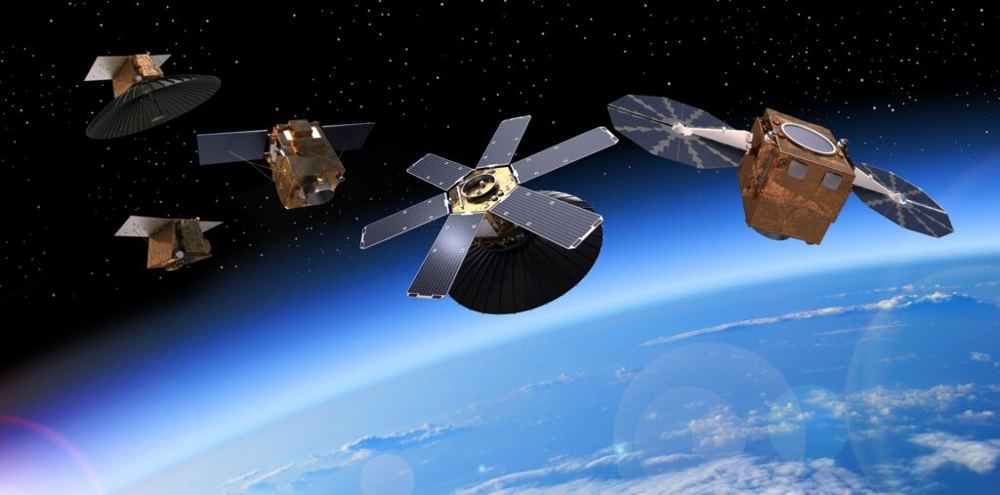
The IRIS orbiters will replace three current satellites in use, known as the Optical Space Component, with better technology to deliver clearer images and faster access to captured imagery.
MILAN, France’s Directorate General of Armament (DGA) has awarded €1.5 billion ($1.7 billion) to Airbus Defence and Space and Thales Alenia Space to procure two high-resolution Earth-observation satellites for the French armed forces.
The contract is for Paris’ next-generation military satellite program, dubbed IRIS, which is designed to provide strategic intelligence and surveillance capabilities to its military. It also includes the development, manufacturing, and testing of two satellites, as well as in-orbit operations and maintenance.
“With this contract, Airbus Defence and Space is contributing to France’s sovereignty and strategic autonomy. […] In addition, this program strengthens the French supply chain in space-based optical imagery,” Alain Fauré, head of Space Systems at the company, said in a press release .
The IRIS orbiters will replace three current satellites in use, known as the Optical Space Component (CSO), with better technology to deliver clearer images and faster access to captured imagery.
According to the DGA, the new satellites are expected to be in orbit by 2035, with the first scheduled to become operational by 2033, helping to “guarantee France an operational space-based imagery intelligence capability.”
Under the contract, Airbus will serve as the lead contractor to supply both satellite platforms, the majority of the first satellite’s payload, and oversee the program’s ground segment.
Thales Alenia Space, meanwhile, will be a co-contractor and provide the satellites’ optical systems for the IRIS program, which it states will be able to capture extremely high-resolution imagery “anywhere on Earth, even under low-light and nighttime conditions” thanks to their infrared capabilities.
As NATO and European governments accelerate investment in space-based intelligence, decision advantage will depend on how quickly sovereign and commercial capabilities can be fused into a trusted operational picture.