General strikes to paralyze Spain as protestors clash with police ahead of election campaign
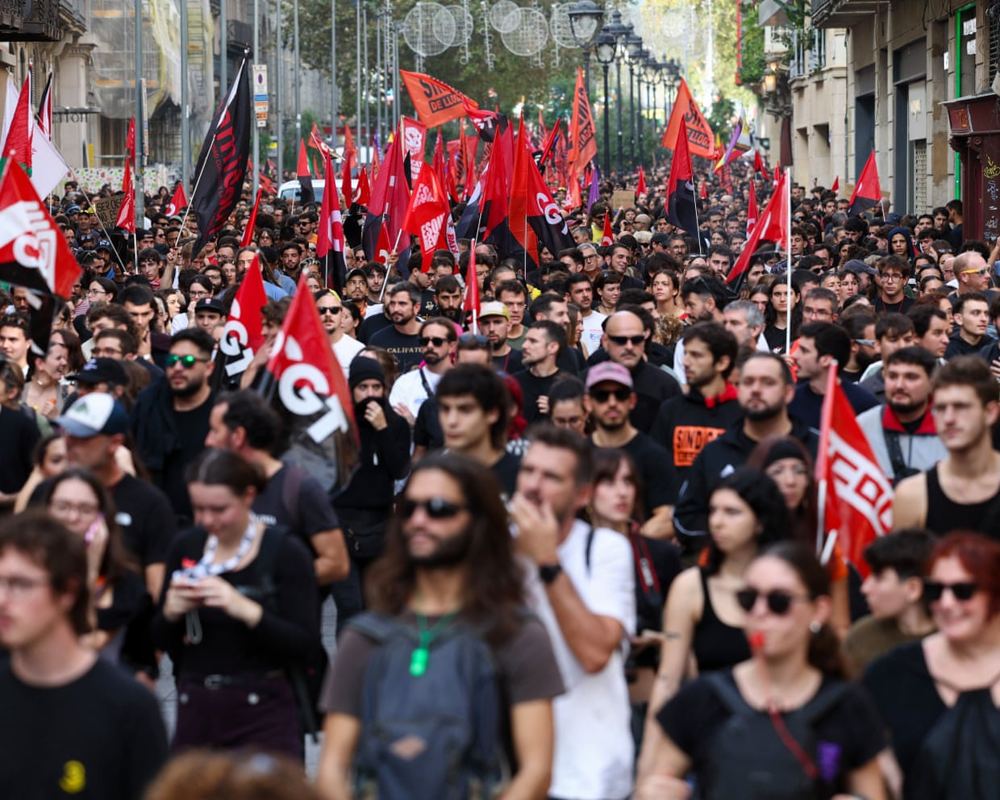
Spanish workers are expected to turn out in their millions on Wednesday for the country's first general strike in 14 years.
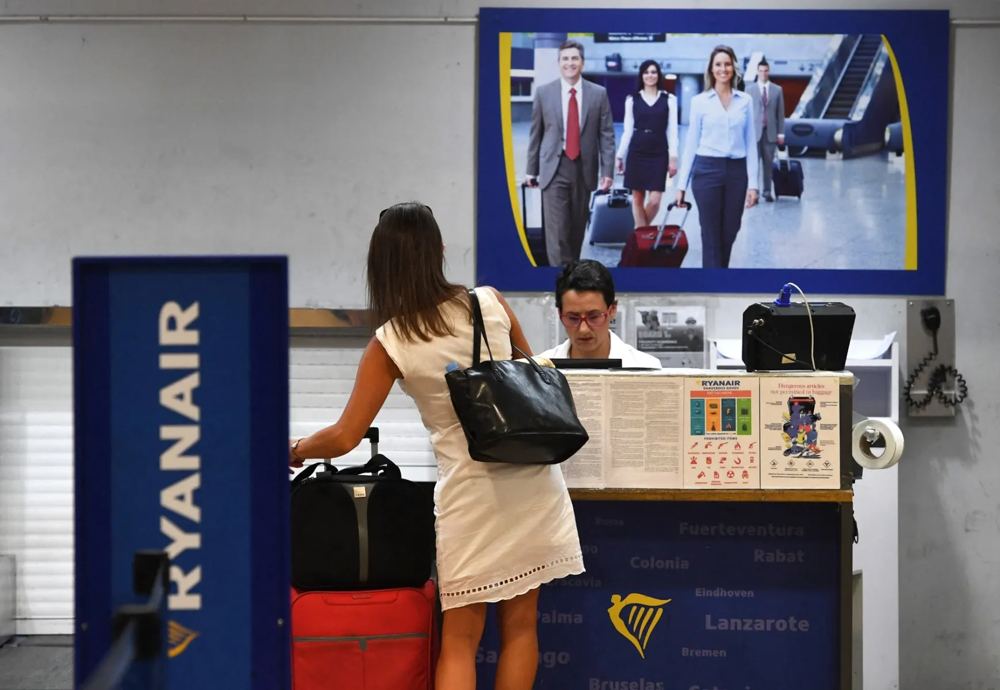
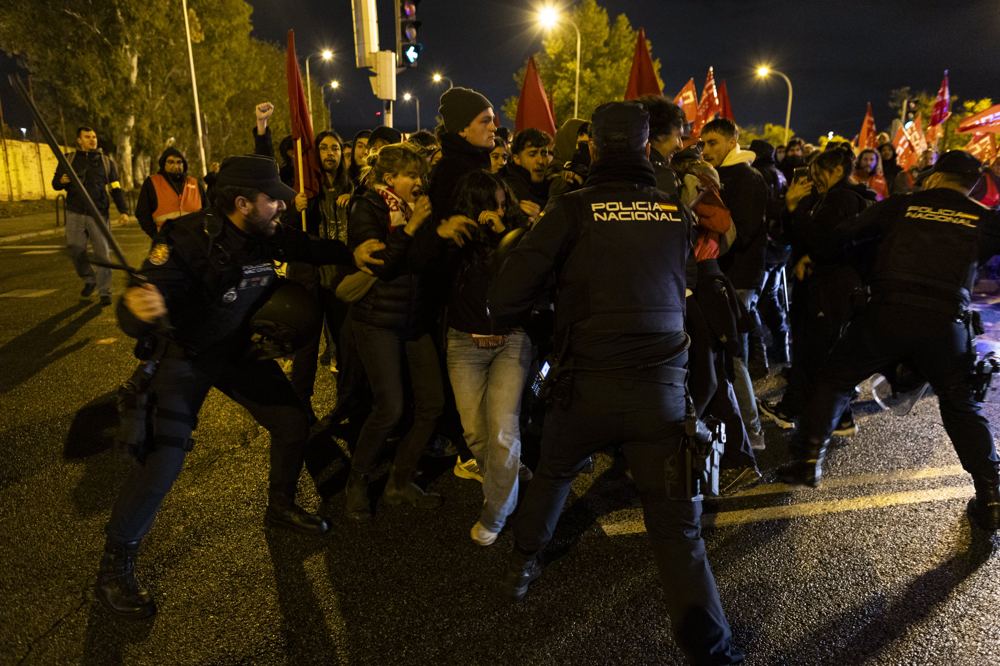
Spanish workers are expected to turn out in the millions on Wednesday for the country's first general strike in 14 years, as anger over soaring rents and living costs intensifies less than three weeks before a general election. Demonstrators clashed with police at a wholesale market in Madrid in the early hours of the strike, while roadblocks were also reported in the early hours of Wednesday. The 24-hour labor walkout is expected to disrupt public transport and flights, as well as bring some businesses, shops and factories to a standstill.
Housing costs are a particular source of frustration among demonstrators. Rents have almost doubled over the past decade, squeezing household budgets as many workers feel homeownership is beyond their reach. The Bank of Spain estimates that the country faces a shortage of 750,000 homes, potentially rising to 1 million over the next two years. Spain's two largest trade unions, CCOO and UGT, which called the strike, are calling for greater government intervention in the housing market. Housing activists demand an end to tourist rentals and automatic lease renewals, while unions are seeking greater housing intervention and a new minimum-wage agreement.
UGT Secretary-General Pepe Álvarez urged members to join the protests, saying "there is no salary that can cope with the price of housing in this country," in comments translated by CNBC. He added that it was time for the government to listen to citizens' demands.
The strike follows weeks of social unrest. The eviction of an 87-year-old woman from her Madrid home, followed by her death around two weeks later, sparked national outrage. The left-wing government's attempts to pass measures to help tenants were blocked by the opposition.
Prime Minister Pedro Sánchez's coalition responded by calling an election for Nov. 29, hoping to bolster his support and secure another four years in power. But a high-speed train collision that killed 69 people, the second such disaster this year, shifted the debate toward public safety and accusations of government mismanagement.
The government has not officially endorsed the strike, whose slogan is "Salaries. Housing. Prices." But the protests are widely seen as an opportunity for left-wing parties, including Sánchez's Spanish Socialist Workers' Party, to put housing at the center of the election campaign. Political scientist Oriol Bartomeus of the Autonomous University of Barcelona told The Associated Press that a strong, peaceful turnout could help the left return the campaign to a focus on housing. Sánchez took to social media earlier this week to voice support for existing policies including national health insurance and a 40-hour workweek, warning that a right-wing government would introduce austerity measures and cuts to social services.
"Your eight-hour working day. Your pensions. Your public healthcare. None of this fell from the sky. They were collective achievements," he told voters on Monday.
The conservative Popular Party and far-right Vox, which already govern in some parts of Spain, accuse the unions of organizing the protests to keep the current government in power. "The strike is not a general strike, it's an election strike," Miguel Tellado, a spokesperson for the Popular Party, said Tuesday.
Opinion polls suggest a shift to the right, with the Popular Party leading and potentially able to form a government with Vox.
Such a coalition would bring the far right into Spain's national government for the first time since Francisco Franco's 36-year dictatorship ended in 1975.
A poll for El País and Cadena SER, published Nov. 9, put the Popular Party at 31.9%, Sánchez's Partido Socialista Obrero Español at 29.9% and Vox at 18%. The survey, conducted Nov. 2-4, projected a combined 190 seats for the Popular Party and Vox, above the 176 needed for a majority in the 350-seat lower house. A strong turnout at Wednesday's protests could prove crucial for the government, whose handling of the migration crisis in Ceuta drew widespread criticism. Sánchez's family has also been plagued by corruption scandals.
The prime minister's personal standing has suffered. Some 58% of respondents had a "bad" or "very bad" opinion of him, compared with 41% who had a good or very good opinion, according to a poll for elDiario.es conducted Nov. 2-5.
Violence during the strike, however, could backfire on the government. Protests in France in October were seen as an opportunity for the country's far-right party to emphasize its ability to restore order and security ahead of the country's 2027 presidential elections.
"On the evening of 11 November, there will almost certainly be two narratives: one of resounding success and one of failure. Neither should be read as an exit poll. It will be more useful to look at other things: which sectors and regions stop work, how many people take to the streets and, above all, whether housing moves to the centre of the campaign," wrote Maite Aurrekoetxea, professor of social and human sciences at the University of Deusto, in comments translated by Google.