Jensen Huang resigns as Nvidia CEO after 33 years, effective immediately
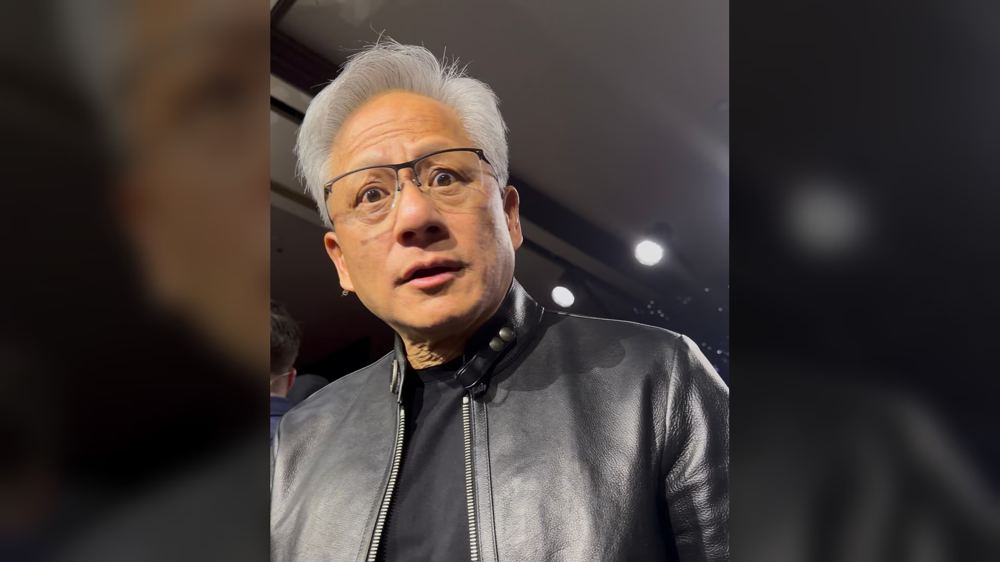
Jensen Huang has resigned as Nvidia’s president, CEO, and board member, effective immediately, the company’s board announced today, ending a 33-year run in which he built the chipmaker he co-founded into the roughly $4T centrepiece of the AI boom. Chief financial officer Colette Kress steps in as interim CEO while the board searches for a […] This story continues at The Next Web
Jensen Huang has resigned as Nvidia’s president, CEO, and board member, effective immediately, the company’s board announced today, ending a 33-year run in which he built the chipmaker he co-founded into the roughly $4T centrepiece of the AI boom.
Chief financial officer Colette Kress steps in as interim CEO while the board searches for a permanent successor, and Harvey C. Jones becomes the company’s first-ever board chair, a role Huang never relinquished until now.
“NVIDIA’s strength has always come from its people, and together with our leadership team, I am committed to building on the extraordinary foundation Jensen created over the last 33 years,” Kress said.
The resignation caps a two-week unravelling that began with reports that US intelligence believed Alice Huang, a Megaspeed executive with whom Huang had a relationship, was recruited by China’s Ministry of State Security to spy on him, per the New York Times.
Jensen Huang admitted in a memo to employees that he had been unfaithful to his wife, and on Sunday the board opened an independent investigation while expressing confidence in his leadership.
Yet, that confidence lasted four days, as on Wednesday the NYT reported a second relationship, with Kimberly Powell, Nvidia’s vice president of healthcare and one of his direct reports; the Wall Street Journal reported the company was preparing to fire him; and the board met late into the night without announcing a decision.
The market damage is already historic. Nvidia had shed roughly $600B in value since the investigation was announced, and the stock fell as much as 10% more on news of the resignation. The company reports quarterly earnings on November 17, its first ever without the leather-jacketed founder who fronted every one.
The board’s statement does not mention the allegations at all, thanking Huang instead for his “immeasurable contributions”.
He departs holding about 3.6% of the company, and leaves behind the succession vacuum he created: dozens of direct reports, no anointed heir, and an interim CEO drawn from finance rather than the technology roadmap.
Bloomberg reported this week that an outside firm is compiling candidates; prediction markets have favoured Ian Buck, who runs the data-centre business that supplies the AI industry .
Whoever gets the job inherits a company that is simultaneously the most valuable enterprise on Earth, the hinge of the US-China technology conflict, and, as of today, proof that no founder is bigger than his board.