This Cursed Beautiful Land by Evan Gershkovich review, jailed in Putin’s Russia
The US reporter wrongly imprisoned for espionage writes compellingly about his ordeal Evan Gershkovich is the Wall Street Journal reporter who, in the early phase of Putin’s war in Ukraine, was snatched up by the Russian authorities on bogus espionage charges and spent a year and a half in Russian jails (first Lefortovo and then Yekaterinburg) before being released in a prisoner exchange in 2024. The opening section of his book about the experience is gripping and rather moving. He recounts his arrest in a sting operation, after meeting a contact who promised to supply him
The US reporter wrongly imprisoned for espionage writes compellingly about his ordeal
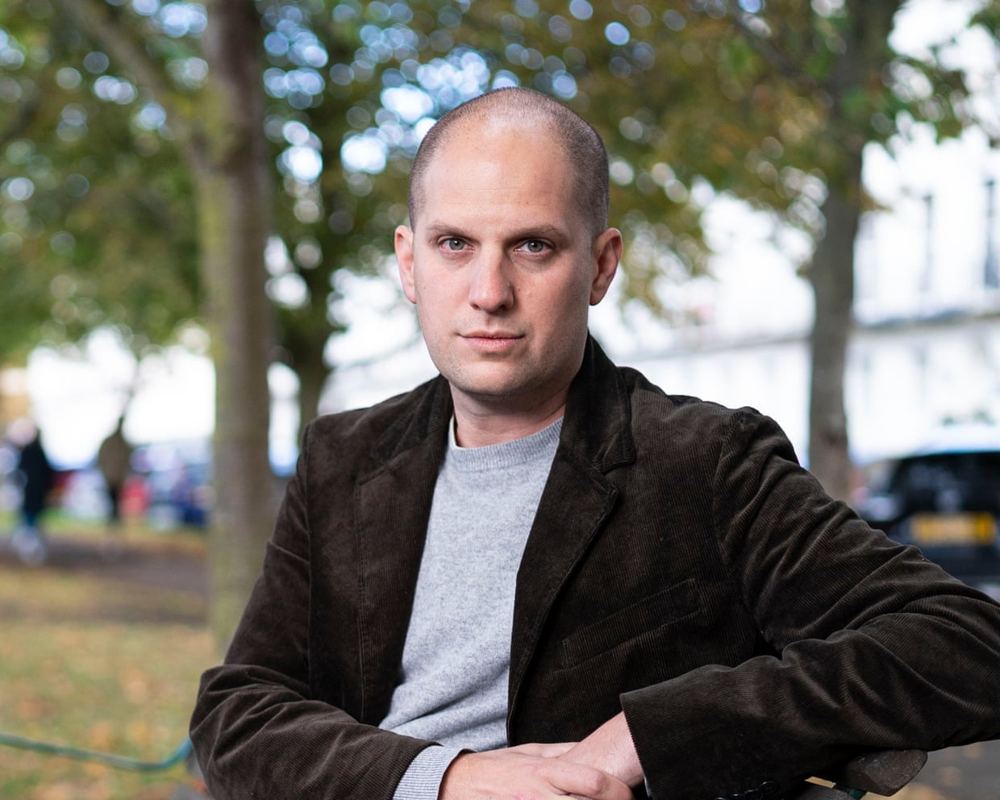
E van Gershkovich is the Wall Street Journal reporter who, in the early phase of Putin’s war in Ukraine, was snatched up by the Russian authorities on bogus espionage charges and spent a year and a half in Russian jails (first Lefortovo and then Yekaterinburg) before being released in a prisoner exchange in 2024.
The opening section of his book about the experience is gripping and rather moving. He recounts his arrest in a sting operation, after meeting a contact who promised to supply him with information about Russia’s military-industrial preparations. Born to Russian Jewish immigrant parents in the US, Gershkovich grew up in suburban New Jersey on a diet of Soviet cartoons and “Krylov’s fables rather than Aesop’s”; he was betwixt and between. When he found his way into journalism in his early 20s, first working nights as an editorial assistant at the New York Times, then getting started properly as a reporter at the Moscow Times, he gravitated to Russia and fell in love with it.
Describing his life as a reporter, he gives a sense of how even a big city like Moscow, if you’re a foreign correspondent, is a village. As the Ukraine war started and the Kremlin tightened its restrictions on reporters, that village began to empty out. Some of Gershkovich’s Russian colleagues fled, the odd one was run in. Things got hairier. But calculating, wrongly, as it turned out, that Putin’s thugs would still hesitate before doing to a foreigner what they did cheerily to their own nationals, Gershkovich kept on reporting. Understandable, a little heroic, a little foolish.
His account of his time in prison is interesting and deftly written, but the narrative tires a bit after his arrest. Gershkovich is in a Russian prison; but at the same time he’s not of a Russian prison. He knows all along, essentially, that he’s a bargaining chip, that he’s going to be repatriated in a prisoner exchange: “ I’m still a voyeur , I wrote in my journal. I have a way out .” It’s unpleasant, but he has a very low chance of being tortured, beaten, disappeared or sent to fight and die in Bakhmut (the latter being the fate of his teenage cellmate in Central prison in Yekaterinburg).
He spends a lot of time reading, takes up smoking again, watches terrible Russian TV (a highlight is Monastery Kitchen, where a portly chef dressed as an Orthodox priest inflicts horrid pre-revolutionary cuisine on his friend Oleg), misses his girlfriend, cherishes the chance to exercise and meditate; cooks ingeniously with the tools he has available; forms a touching bond with his Lefortovo cellmate; and, of course, keeps a diary because he knows he’s going to be able to write about all this later.
He describes well the strange kayfabe of his prosecution, Gershkovich is tormented by curiosity as to who, if anyone, really believes he’s a spy; he thinks, weirdly, that Putin actually might, and the foregone conclusions of an “investigation” in the Russian judicial system. Beria’s principle (“show me the man, and I’ll show you the crime”) is still the basic operating system of post-Soviet justice.
You learn much that’s fascinating and depressing about Russian prisons: the means of communication between cells; the etiquette (never shake hands with a cellmate until you’ve established they’re not in for a sex crime; always show respect by wiping your feet on the rag at the cell door); the punitive hierarchies; the way that the system’s prisoners come to feel more comfortable there than on the outside.
The problem is, slightly, that his ability to analyse the events he’s living through or report on the glubinka , or what you might call la Russie profonde is a little inhibited by the fact that he’s in jail. (At the very same time, Åsne Seierstad was reporting all over Russia for his book Never Say War, with Gershkovich’s situation something of which she was anxiously aware.) As the conflict with Ukraine unfolds, Gershkovich watches it on prison TV.
There are, of course, insights into the Russian mindset to be had from behind bars. Gershkovich is electrified by the Wagner chief Yevgeny Prigozhin’s abortive march on Moscow. But when the news of Prigozhin’s subsequent death in a plane accident flashes on the TV, his cellmate tells him he’d already heard about it that morning.
“‘Why didn’t you tell me?’ I thundered [...] Seryoga shrugged. ‘He existed and now he no longer does,’ he said. ‘I couldn’t care less.’”