The impact of the ICJ’s genocide ruling in Myanmar will go far beyond Asia
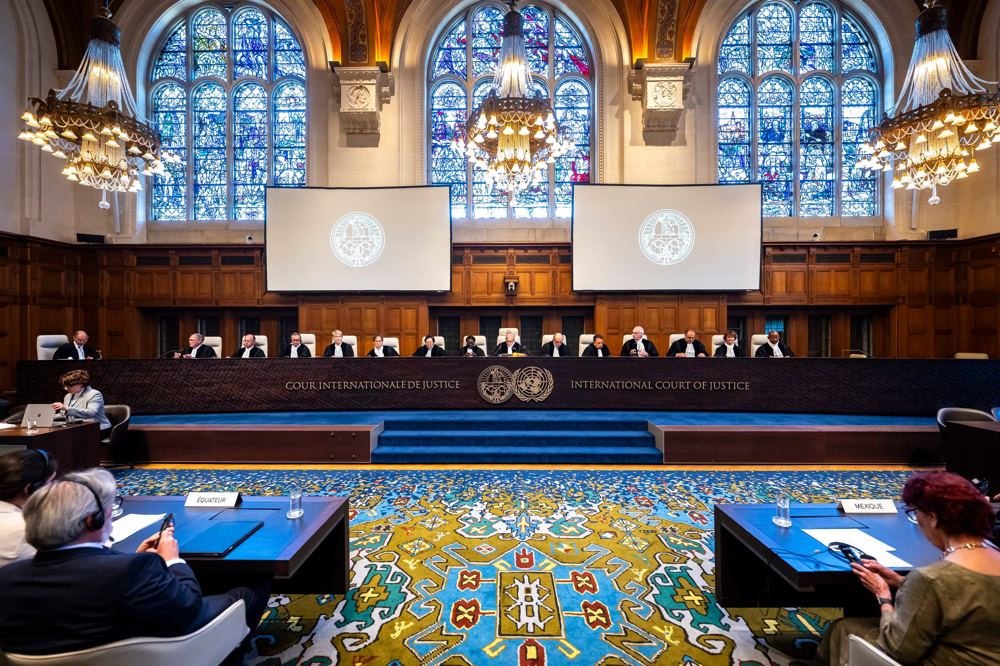
On 19 November, the International Court of Justice will deliver its judgement in The Gambia v Myanmar case. The case concerns the Rohingya, but its implications extend well beyond Myanmar. The Court’s interpretation of the Genocide Convention may also matter for the ongoing case brought by South Africa against Israel — and for the credibility of international justice itself.
At first sight, a case concerning the Rohingya in Myanmar may seem remote to European readers. But the judgment the International Court of Justice (ICJ) is due to deliver on 19 November addresses questions that go to the heart of international law: when can a state be held responsible for genocide, what evidence is required to establish genocidal intent, and how should the court assess the conduct of state authorities?
The case was brought by The Gambia, which alleges that Myanmar violated the 1948 Genocide Convention through its treatment of the Rohingya. The court’s answer will matter not only to the victims of the alleged crimes, but also to the interpretation and application of the Convention in other cases.
One of the most important precedents is the court’s 2007 judgment in Bosnia and Herzegovina v Serbia and Montenegro . Bosnia brought its case in 1993, alleging that Serbia was responsible for genocide committed during the Yugoslav war. In 2007, the court found that genocide had been committed in Srebrenica in July 1995.
But it did not find that the acts of genocide could be attributed to Serbia. It held that Serbia had nevertheless breached its obligations to prevent genocide and to punish those responsible.
The distinction is fundamental. The International Criminal Tribunal for the former Yugoslavia (ICTY) dealt with the individual criminal responsibility of those who committed or participated in the crimes.
The ICJ, by contrast, had to determine whether the conduct could be attributed to a state and whether Serbia had breached its obligations under the Genocide Convention.
The court also set a demanding standard of proof. It held that allegations involving charges of exceptional gravity, such as genocide, must be established by “fully conclusive” evidence, and that it must be “fully convinced” that the allegations have been clearly established.
Where genocidal intent is not directly established but inferred from a pattern of conduct, the court added that this intent must be the only reasonable inference that can be drawn from the acts in question.
These requirements attracted criticism. Some considered that the court had effectively approached the question as if it were deciding the criminal guilt of an individual, rather than the international responsibility of a state.
Others argued that requiring genocidal intent to be the only reasonable inference set an exceptionally high threshold, making it particularly difficult to establish genocide through circumstantial evidence.
I was an ICTY judge when the ICJ delivered its judgment in 2007. I followed it with particular interest, and some surprise. At the tribunal, we were dealing every day with the individual criminal responsibility of those involved in the crimes committed in Bosnia.
The evidence concerning Srebrenica and the role of Bosnian Serb political and military leaders was familiar to us. Yet the ICJ was operating within a different legal framework, with a different question to answer.
In its 2015 judgment in Croatia v Serbia , the court largely maintained its approach. It rejected both Croatia’s claim and Serbia’s counterclaim, finding that neither side had established the specific intent required to prove genocide. The demanding standard of proof therefore remains an important feature of the court’s jurisprudence.
The Gambia v Myanmar proceedings bring these questions back before the court. The judges will have to assess how genocidal intent can be established, including through patterns of conduct and circumstantial evidence, and how the actions of state officials engage the responsibility of the state.
Myanmar, unsurprisingly, argues for continuity with the court’s established case law. The judgment will show how the court applies that jurisprudence to the evidence before it, and whether it offers further clarification.
The wider interest in the case is reflected in the participation of eleven states under Article 63 of the court’s Statute: Belgium, Canada, Denmark, the Democratic Republic of the Congo, France, Germany, Ireland, the Maldives, the Netherlands, Slovenia and the United Kingdom. They are not parties to the dispute. They have intervened because they consider that the interpretation of the Genocide Convention is at stake. Under Article 63, the court’s interpretation of the Convention will also be binding on the states that have intervened.
Belgium’s participation is particularly significant. It is not simply an observer of proceedings taking place far away. By intervening, Belgium has chosen to take a position on the interpretation of a treaty that lies at the centre of the international legal order.
The judgment will also be closely followed in the case brought by South Africa against Israel. Both proceedings concern the same Genocide Convention, and the ICJ’s reasoning on the interpretation of its provisions, the assessment of evidence and the establishment of genocidal intent may be relevant to the South Africa case.
The Myanmar judgment will not decide that case, nor should its outcome be prejudged. But the court’s legal reasoning will inevitably attract attention. The two proceedings raise questions that are closely connected, even though their facts and procedural stages are different.
There is another reason why the composition of the court has attracted attention. Gambia appointed Navi Pillay as its ad hoc judge, while Myanmar appointed the German international law scholar Claus Kreß. Pillay is a distinguished international jurist: she served as President of the International Criminal Tribunal for Rwanda, was a judge at the International Criminal Court (ICC) and later served as UN High Commissioner for Human Rights. In October, she was awarded the 2026 Nobel Peace Prize for her efforts to promote peace and international law.
Her appointment has nevertheless prompted public comment, particularly because of her previous work and statements concerning Israel . That makes it all the more important to recall the role of an ad hoc judge. Such a judge is not a representative of the state that appointed them. Once appointed, an ad hoc judge has the same duty of independence and impartiality as every other member of the court. I know this responsibility from personal experience, having served myself as an ad hoc judge at the ICJ.
The independence of international judges is not an abstract institutional concern. The ICC has already been subjected to sanctions by the Trump administration , targeting judges and other officials. The ICJ has not faced the same direct measures, but it operates in an international climate in which judicial institutions and those who serve them are increasingly exposed to political pressure.
The authority of the ICJ ultimately depends on its ability to decide cases independently, according to law and evidence, irrespective of the political consequences.
The judgment in The Gambia v Myanmar will be important first and foremost for the Rohingya. But it will also help shape the interpretation of the Genocide Convention, influence the debate in other proceedings and test the confidence states place in international adjudication.
For European countries, this is not a distant legal dispute. Belgium and ten other states have chosen to participate because the interpretation of the Convention matters to them.
Their commitment to international justice will be tested not only by the positions they take in court, but also by their willingness to defend the independence of the institutions that apply the law, including when the consequences are politically uncomfortable.
Christine Van den Wyngaert is a former judge at the ICC (2009-2018), a former judge at the Yugoslavia Tribunal and a former ad hoc judge at the International Court of Justice. She is professor emerita at the University of Antwerp.