Can depression really become dazzling dance? The biggest ever BalletBoyz show is a huge feat
Sadler’s Wells, London In Six Lethargies, Iván Pérez and Seirian Griffiths have devised a mammoth production of aching, ethereal sadness ‘If I write what I feel, will you feel it, too?” That was the question behind singer-songwriter turned composer Keaton Henson’s Six Lethargies. Perhaps that is every artist’s mission, but for Henson it was specifically his experiences with anxiety and depression that he wanted to translate into music. Now it has been turned into dance by the BalletBoyz. If they dance it, will we feel it? Six Lethargies is the largest production in the 25-year history of the B
Sadler’s Wells, London In Six Lethargies, Iván Pérez and Seirian Griffiths have devised a mammoth production of aching, ethereal sadness
‘I f I write what I feel, will you feel it, too?” That was the question behind singer-songwriter turned composer Keaton Henson’s Six Lethargies. Perhaps that is every artist’s mission, but for Henson it was specifically his experiences with anxiety and depression that he wanted to translate into music. Now it has been turned into dance by the BalletBoyz . If they dance it, will we feel it?
Six Lethargies is the largest production in the 25-year history of the BalletBoyz. Once just two ex-Royal Ballet dancers, Michael Nunn and William Trevitt, this iteration is a company of 44 dancers (male and female), a 37-piece string orchestra, and not one but two choreographers working together: former Dance Theatre Heidelberg artistic director Iván Pérez and talented newcomer Seirian Griffiths .
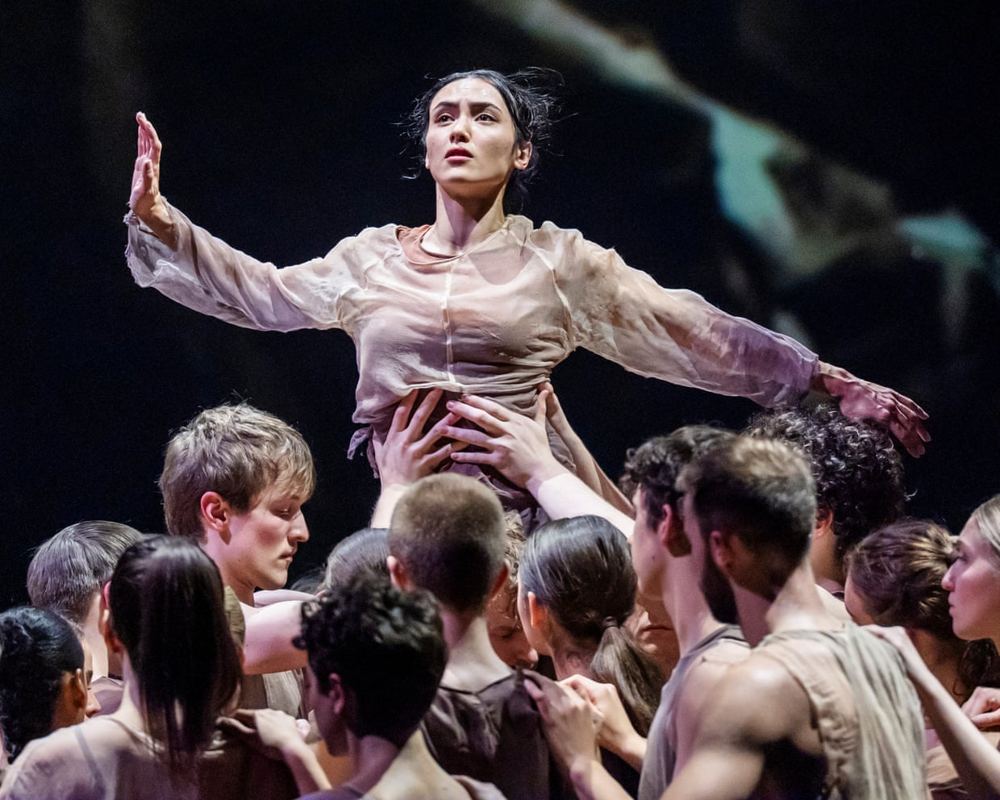
It’s a piece made with a limited sepia-toned palette, the mud-coloured costumes lit with misty glow, and musically it is all very minor chord (often the same one). The mood is achingly sad, mournful, ethereal and sweet; the sound of beautiful distress. Henson (incidentally, the son of ballerina Marguerite Porter) doesn’t read or write music and devised the work first as a graphic score, then collaborated with orchestrator Ben Foskett. It’s a kind of slow-moving minimalism, sometimes stuck, sometimes hollow, yes, that’s what depression can be like. Then a sudden, unnerving scurry of dissonant notes racing up the neck of the violin.
Movement-wise, you can’t see the seams between the work of the two choreographers, who created together in the studio, and the long phrases are seamless too, like circular breathing, delving back into repeated motifs, surge and flow, swaying and walking. To its credit, nothing is overwrought. And it’s all very easy to get lost in.
There are eight lead dancers, joined by students from the Rambert school. We’ve seen a lot of this massed dance, multiple bodies morphing together, in work by Crystal Pite and her imitators, but this group manage to find subtly different approaches. There’s dancer Kai Tomioka lost in a fast-moving crowd that churns around him (very cinematic); or leading the throng of bodies behind him who echo his movement in waves. It’s like watching a visible reverb, or iron filings chasing a magnet.
The solos are the most arresting, Tomioka’s light, lyrical touch, swept up by forces larger than himself; Dan Baines spinning and swirling on his feet, hands, back, using his B-boy talents plus Griffiths’ influence, a choreographer who draws from martial arts and breaking. There’s a lot of strength, played in understated ways.
When they started out, Nunn and Trevitt were notable for partnering each other, playing with the balance of energy between two men. Back then it could feel a bit effortful, now these young dancers are so deft it’s almost unnoticeable who’s lifting who. When a woman lifts a man, pulling his weight off the ground, circling his body around hers, it’s all part of the flow.
To answer Henson’s question: No, you don’t feel exactly what he feels. The effect is more distant, unspecific, more beautiful, although those notions of overwhelm, rumination and melancholia are all there. The artist’s need to pour their soul and neuroses into their work is one thing, the audience’s reception of that something else. But in this case, it’s a good something else.