Solange Alexandre obituary
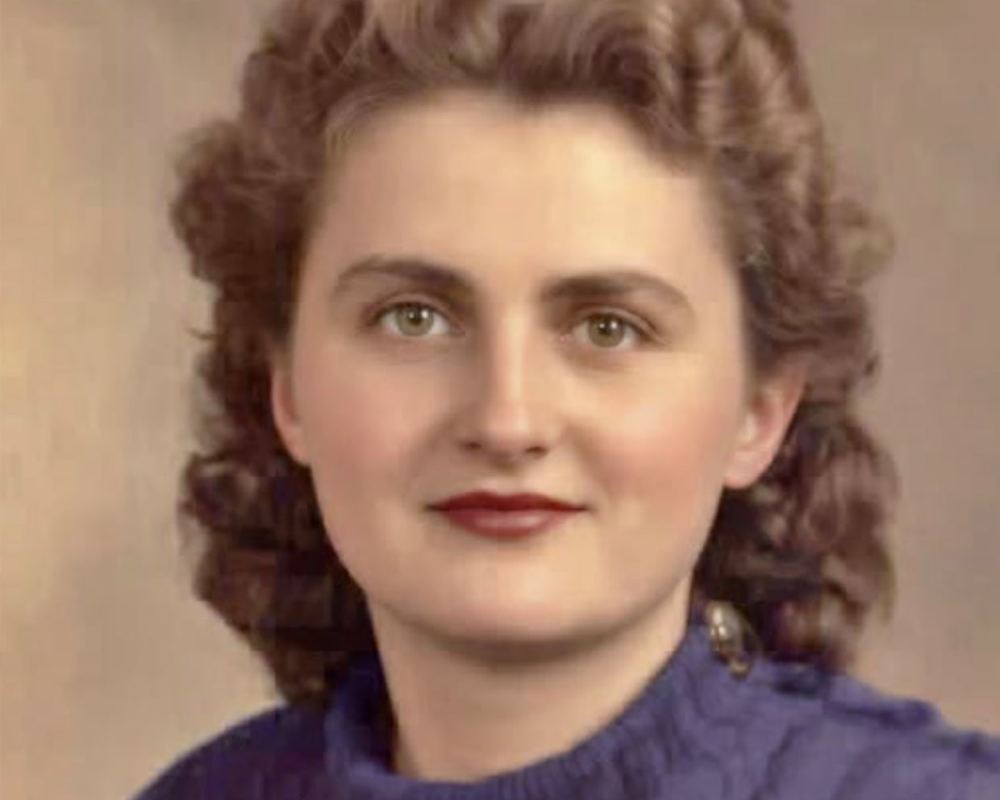
French resistance fighter who founded and led a 30-strong group operating around Le Mans and Tours Solange Alexandre, who has died aged 104, was one of the founders and leaders of a French resistance group that carried out a series of attacks on German troops around the cities of Le Mans and Tours, cutting supply and communications lines, and making hit-and-run attacks on convoys moving north into Normandy. Then named Solange Dubuisson, she was 17 and training to be a teacher in Le Mans, in the north-west of the country, when the Germans overran France in 1940. Her father was wounded in the fi
French resistance fighter who founded and led a 30-strong group operating around Le Mans and Tours
Solange Alexandre, who has died aged 104, was one of the founders and leaders of a French resistance group that carried out a series of attacks on German troops around the cities of Le Mans and Tours, cutting supply and communications lines, and making hit-and-run attacks on convoys moving north into Normandy.
Then named Solange Dubuisson, she was 17 and training to be a teacher in Le Mans, in the north-west of the country, when the Germans overran France in 1940. Her father was wounded in the first world war in 1917, while her mother’s first husband had died fighting the Germans in the same war.
“The words homeland and honour were very important to us,” she said. “They were in my blood. I was immersed in that from a very young age.” The German occupation and the willingness of those like the Vichy France leader Marshal Philippe Pétain to collaborate “put hatred in my heart”.
So when Charles de Gaulle , who had gone to London to set up a government in exile, broadcast a call to the French people to never give up, she was inspired by his insistence that “the flame of French resistance must not and will not be extinguished”, and decided to fight. “From that moment, I knew I had to join up.”
She joined a local resistance group that was part of the OCM, the Organisation Civile et Militaire, working as a courier under the codename Corlay, often cycling vast distances delivering messages between groups as far west as Rennes in Brittany and north into Normandy. As a former gymnastics champion, she was extremely fit and up to the task.
While working with the group she met and fell in love with Guy Déliot, a former gendarme who had deserted after refusing to arrest a Jewish couple and joined the same resistance group.
In April 1944, they decided to set up their own group, along with Dubuisson’s friend Michel Gadois and his brother, Jean, at Étang du Pas-de-Boeuf (Ox Passage Pond), a wooded area around a small lake north of Ruillé-sur-Loir in Sarthe.
The 30-strong “Pas-de-Boeuf” group was made up of a mix of men who had gone on the run to avoid deportation to Germany as forced labourers, survivors from a resistance group in the Vendée in western France which had been broken up by the Gestapo, and two allied airmen, an American and a Canadian, whose planes had been shot down.
Dubuisson took charge of the group, who lived in the forests and were supplied with food by local farmers while carrying out sabotage operations, destroying telephone lines, blocking roads and making small hit-and-run attacks against the Germans at night.
Under sustained fire from allied aircraft by day, and with no air cover from the Luftwaffe, the German troops moving north into Normandy were forced to hide under cover during the day and travel at night, making them vulnerable to small-scale ambushes. The impact of the group’s attacks meant the Germans were constantly trying to track them down. “Twice the Gestapo came for me,” Dubuisson later recalled. “And twice I slipped through their hands.”
On 8 August 1944, the day Le Mans was liberated, she and a dozen members of her group were returning from an attempt to sabotage a munitions train on the Tours-Le Mans railway line, when they heard that some German troops who had stolen horses were stationed at a farm just outside Ruillé-sur-Loir and, believing there was only a small number of them, decided to attack it, kill the Germans and retrieve the horses. But they were spotted by a sentry and found themselves under fire from around 80 German soldiers.
“We might have killed 20 or 30 of them,” she later said. But while they were retreating, Michel Gadois was wounded and captured. “He was finished off with a bullet to the head.”
She ended the war as a sub-lieutenant in the Forces Françaises de l’Intérieur, the Free French amalgamation of the various resistance groups, in charge of a department taking care of resistance members who had been deported or imprisoned by the Germans.
Born in Mamers, a small town in the Sarthe department of north-west France, she was the daughter of Marguerite and Albert Dubuisson, a gendarme.
A month before VE Day, she married Déliot. He rejoined the gendarmerie and was sent to work in the French overseas territories, initially in New Caledonia, where Solange took a job as secretary general of the chamber of agriculture. They had two daughters and a son.
When Déliot was killed during riots in Martinique in 1960, she returned to Le Mans and resumed teaching. She retired in 1978. A few years later, she married Bernard Alexandre, and after his death became an ardent campaigner for the right to die with dignity, serving as the Sarthe departmental delegate of ADMD (the Association pour le Droit de Mourir avec Dignité) for 16 years.
In 2022, on her 100th birthday, a ceremony was held in Ruillé-sur-Loir to rename the town square the Place Solange Dubuisson Alexandre. Expressing her thanks to those attending she said: “I am very proud, even if it is only a few weeks, or a few months, before I die.”
Alexandre twice turned down the Légion d’honneur, saying that she had merely done her patriotic duty, but was eventually persuaded to accept it in 2024.
Two of her children, Jean-Pierre and Françoise, predeceased her. She is survived by her daughter Marie-France.