'We should not be okay with a handover of society to AI', warns Meta's AI boss
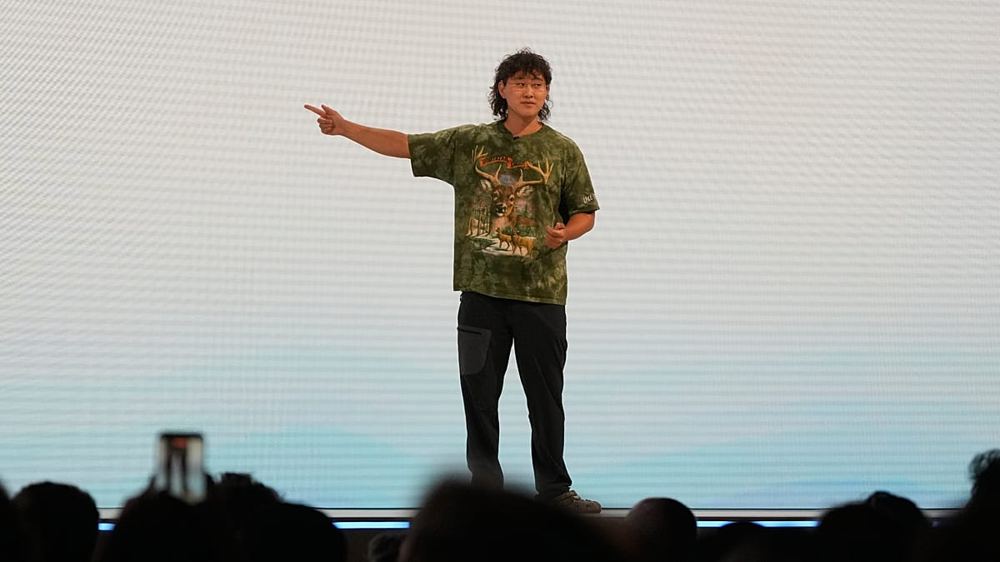
Alexandr Wang has raised concerns over the latest achievements of AI and the risk posed by super intelligent AI models to humanity.
The world is entering the era of superintelligence, and the AI industry must prioritise safety and human control rather than allowing an unconstrained handover to machines, Meta’s AI chief has warned.
Alexandr Wang, Meta’s Chief AI Officer, made the warning in a post on social media platform X on Sunday in light of rival Anthropic’s announcement on Friday that one of their mathematicians had used their Claude AI model to solve the famous Riemann Hypothesis mathematical problem.
The hypothesis suggests that the seemingly random appearance of prime numbers actually follows a hidden, strict pattern. Solving the problem could eventually have enormous real-world consequences, by giving certainty to the way prime numbers are distributed, computer systems, for example, can run more quickly and leaner.
It comes at a time when global debate over AI has reached fever pitch, with concerns among the public over the risks AI poses not only to jobs and the economy but also to security and human rights.
Young people in 20 countries took to the streets on Friday to protest the cost of living, with the lack of AI regulation and fears over autonomous weapons following talks over killer robots also among concerns.
It’s for this reason Meta’s AI chief is concerned that the intelligence of AI models may outpace humans, raising questions of what the future holds.
“It is hard to imagine a world where humanity can maintain control over fully unconstrained recursive self-improvement,” said Wang.
“It is equally hard to imagine a world where humanity maintains control with superintelligence that is 1,000-times smarter and more capable than humans in every field.”
Wang criticised the “lazy thinking within the AI industry” that advanced AI capable of surpassing human intelligence across all domains is “inevitable” and cannot be stopped.
“We should not be okay with a 'handover' of society to AI,” warned Wang.
“We should endeavour ourselves to build a technology which delivers a positive future for humanity, where all humans have greater agency and empowerment.”
Wang concluded saying while he believes it is possible, it means “the whole industry taking meaningfully different actions from the ‘default path’ in front of us”.
His warning echoes similar statements made by other leading AI research labs.
On Friday, Google DeepMind researchers including Tim Genewein warned that artificial general superintelligence could soon be within reach, opening the door for recursive self-improving AI models.
On Sunday OpenAI publicly urged rival AI labs to agree on shared safety limits until better monitoring and control tools exist, amid Anthropic’s claim of solving the Riemann Hypothesis.
In September, Anthropic CEO Dario Amodei called for “pacing the frontier”, to slow down the development of advanced AI models to give time for sufficient safety guardrails to be put in place.
His call was welcomed by some leaders such as European Commission President Ursula von der Leyen who reiterated his call to slow down development and establish global rules.
However, US President Donald Trump has taken a different approach. At the end of September, he convened a summit with America’s biggest AI firms and made an agreement that the companies can police themselves .
Last week in China, America’s approach to AI safety was at loggerheads with the Chinese premier Xi Jinping, who called for global action to keep “ AI under human control ”.
Canada Prime Minister Mark Carney also warned last week that global governance on AI is an “ enormous risk ”.