European Mercury probe BepiColombo enters orbit despite software glitch
Eight years after leaving Earth, the BepiColombo spacecraft is finally circling Mercury. The European Space Agency confirmed on Saturday that the probe had entered orbit around the solar system’s smallest planet, only the second spacecraft ever to pull it off. The make-or-break engine burn began at 18:24 UTC on Saturday, slowing the spacecraft enough for […] This story continues at The Next Web
Eight years after leaving Earth, the BepiColombo spacecraft is finally circling Mercury. The European Space Agency confirmed on Saturday that the probe had entered orbit around the solar system’s smallest planet, only the second spacecraft ever to pull it off.
The make-or-break engine burn began at 18:24 UTC on Saturday, slowing the spacecraft enough for Mercury’s gravity to catch it. Stopping there is brutally hard, as the Sun’s huge pull speeds craft up so much that ESA rates Mercury tougher to orbit than Saturn.
During the manoeuvre, however, “the thruster burn was shorter than planned following a software issue,” ESA said in an update on Sunday.
The agency stressed that the spacecraft is safe. Teams at its mission control in Darmstadt are now working out what happened, and what the short burn means for the orbit.
Mercury has earned its name as the forgotten planet. Barely bigger than Earth’s moon, it is the least explored of the four inner planets. Only NASA’s Mariner 10 and Messenger have been there before, and only Messenger stayed in orbit.
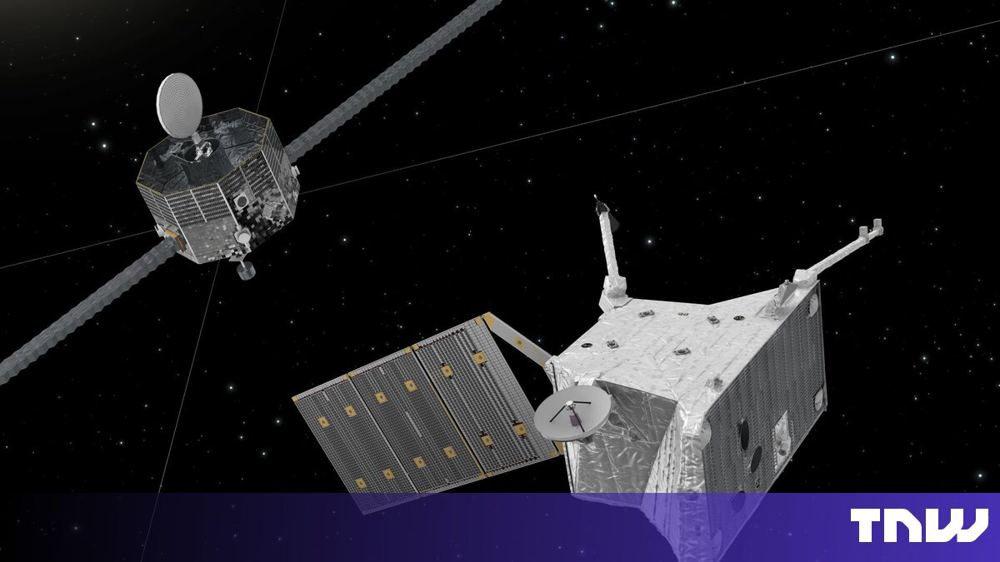
BepiColombo is a joint European-Japanese mission, run by ESA and Japan’s space agency JAXA. It carries two craft, Europe’s Mercury Planetary Orbiter and Japan’s Mio, which made the trip stacked together and dropped their transfer module in September.
Romania leads its first private ESA mission with CyberCUBE launch
Thruster trouble is an old enemy for this mission, as a power glitch in 2024 sapped the probe’s electric propulsion and pushed its arrival back from December 2025 to this November.
Mio is due to separate from the stack in December, and routine science should begin in early 2027. And the two orbiters will then map Mercury and study its magnetic field, chasing questions the planet has kept to itself for decades.