From the margins to the mainstream: the growing market for illustration art
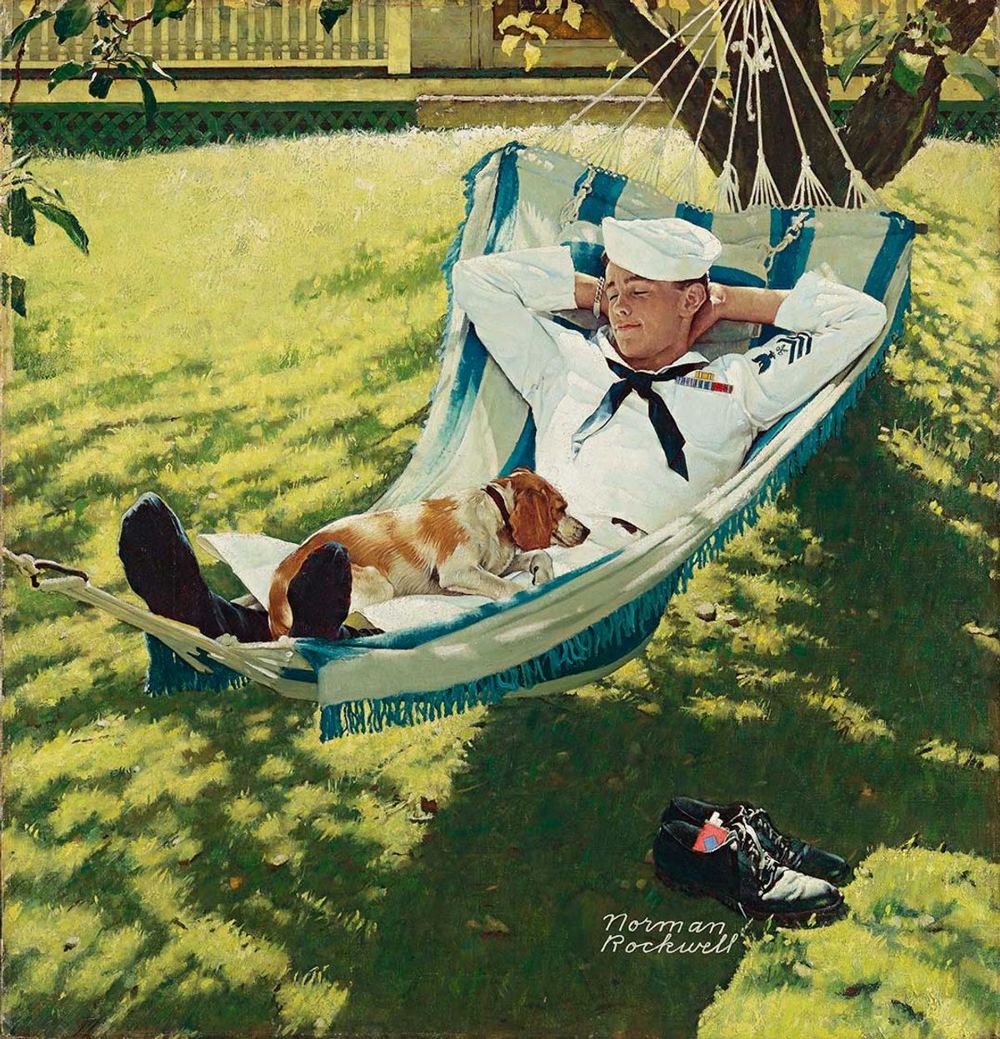
Works by Norman Rockwell and his peers are winning collectors, museums and million-dollar auction prices
Lucas and fellow filmmaker Steven Spielberg have been some of the largest collectors of the original art created by illustrators for decades, but many others have caught up. Today, the interest in works by Norman Rockwell, N.C. Wyeth, J.C. Leyendecker, Howard Pyle, Maxfield Parrish, Jessie Willcox Smith, John Held Jr and Charles Dana Gibson, among many others, has mushroomed, and in some cases prices have shot up from almost zero to millions of dollars.
“A lot of the work of illustrators was pooh-poohed by the art world, because they were illustrators,” says the New York-based American art dealer Debra Force, “but you don’t hear that so much anymore.”
Certainly, one doesn’t hear that at the major auction houses where works by Rockwell, Parrish, Wyeth and Leyendecker frequently bring the highest prices in American art sales. Norman Rockwell (1894-1978) leads the pack, with his 1951 painting for a Saturday Evening Post cover, Saying Grace , fetching $46m at a 2013 Sotheby’s auction and his 1957 oil painting The Rookie (Red Sox Locker Room) sold for $22.5m at a 2014 auction at Christie’s. The 1922 painting Daybreak by Maxfield Parrish(1870-1966) earned $7.6m at a Christie’s sale in 2006, while a 1943 tempera on panel, Portrait of a Farmer , by N.C. Wyeth (1882-1945) brought $5.9m at Sotheby’s in 2018. Football Hero , the 1914 painting for a Saturday Evening Post cover by J.C. Leyendecker (1874-1951), brought $4.1m at a Heritage Auctions sale in 2021, and the 1907 painting Captain Keitt by Howard Pyle (1853-1911) for the frontispiece of his novel The Ruby of Kishmoor earned $702,000 at a 2004 sale at Sotheby’s.
“There’s definitely a hierarchy,” says Aviva Lehmann, the deputy chair of fine art at Heritage Auctions, which sold Rockwell’s 1943 work So You Want to See the President! in 2025 to the White House Historical Association for $7.2m.
Besides the Lucas Museum of Narrative Art, there is the Brandywine River Museum of Art in Chadds Ford, Pennsylvania; the Norman Rockwell Museum in Stockbridge, Massachusetts; the Eric Carle Museum of Picture Book Art in Amherst, Massachusetts; and the National Museum of American Illustration in Newport, Rhode Island. That last museum was founded in 1998 by Judy Goffman Cutler, the owner of Manhattan’s American Illustrators Gallery, who claims to have sold Lucas “hundreds” of original paintings by the top book and magazine illustrators. “I sold him his first Rockwell, it was called Going Out ,” she says, a 1933 painting that was used on the cover of the Saturday Evening Post . For reasons of “client confidentiality”, she declines to say how many works in the illustration field she has sold to Lucas, only noting that “I built his collection”.
Other museums that aren’t wholly devoted to illustration or storytelling art also have collections of this type of work, most notably the New Britain Museum of American Art in Connecticut and the Delaware Art Museum in Wilmington. The New Britain Museum has almost 1,800 works in its Sanford B.D. Low Illustration Collection, named in honour of the institution’s first director who himself had been an illustrator and invited illustrators he knew to donate works for a collection. They include such artists as Willcox Smith, Everett Raymond Kinstler, Stevan Dohanos, Walter Wick and William Steig.
“Interest in illustration art doesn’t begin and end with Rockwell, and the awareness of illustration art as art is definitely increasing,” says Lisa Williams, head of curatorial affairs at the New Britain Museum.
Others agree. “I have no doubt that the collective appreciation for the category will continue to grow thanks to its elevation by these museums,” says Quincie Dixon, head of sale in Christie’s American art department. She adds that “private collectors make up the bulk of this market, but perhaps that will change now that there are museums on both coasts dedicated to the category”.
Specialised museums and collections reflect a growing prominence, but they might also be keeping these works segregated. Goffman Cutler states that it is her “goal to have museums include American illustration art in their American art galleries”, which the occasional museum has done, but not many and not too often.
A spokesperson for the Museum of Fine Arts, Boston, notes that the “collection includes art from American artists of many backgrounds, including quite a few who have worked as illustrators, among them Winslow Homer, Childe Hassam, William Glackens, Joseph Leyendecker, Charles Sheeler” and some others. Having worked as illustrators doesn’t mean that their illustration work is what the museum shows, and the Leyendecker is not currently “on view”. Both New York’s Metropolitan Museum of Art and the Museum of Fine Arts, Boston, own paintings by Parrish that are not displayed in their American art galleries, but the Art Institute of Chicago has hung its Rockwell, The Dugout (1948), in one of the Arts of Americas galleries, and the Crystal Bridges Museum of American Art in Bentonville, Arkansas, has hung Rockwell’s 1943 work Rosie the Riveter (which the museum purchased from a private collector in 2009) next to Charles Willson Peale’s George Washington (around 1780-82) and works by John Singleton Copley and James Peale Sr in its Visions of America galleries. “In the same section of the gallery as Rosie the Riveter ,” says a museum spokesperson, “are Susie J. Lee’s Johnny [2013], Kerry James Marshall’s Our Town [1995] and a new commission by artist Teri Greeves.”
It seems the greatest test for illustration art is no longer garnering record prices, but if it can enter, and hold its own within, the art historical canon.