Stunning Supermoon photos: The best shots of last night's Beaver moon lighting up the night sky
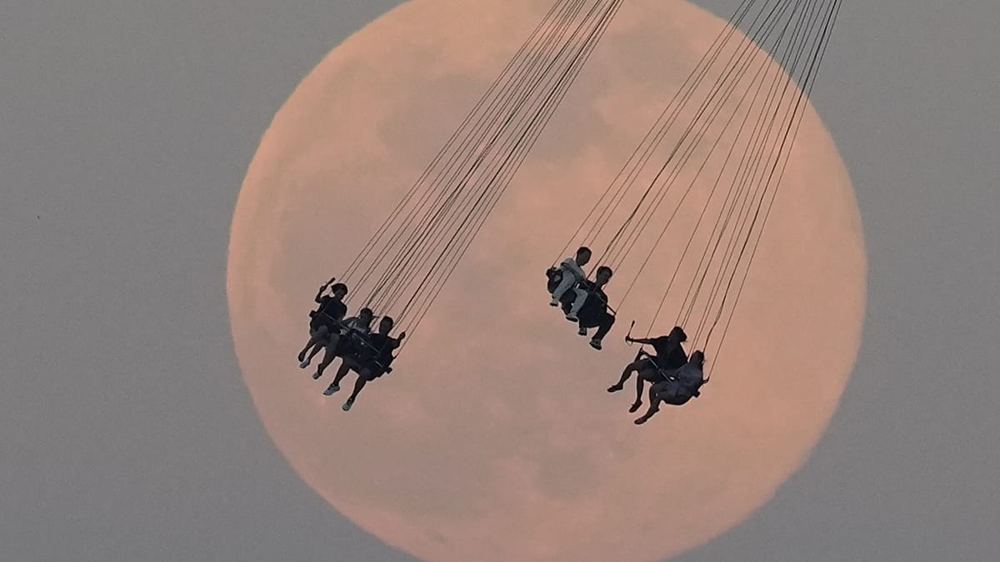
From Germany to Dubai, catch up on the best photos of last night's Supermoon.
It is a stargazer and photographer's dream: a rare Supermoon lit up the sky across the world on Tuesday.
A Supermoon , which is more of a popular term than a scientific one, is used to describe when a full moon is at its closest point to the Earth. The phenomenon usually occurs only three or four times a year.
Because the moon inches a little closer than usual, it appears to be larger and brighter.
If you didn't get a glimpse of last night's Supermoon, do not worry - there are three more coming up soon.
November’s full Moon is traditionally known as the 'Beaver Moon', a nickname linked to the time of year when beavers prepare for winter by building dams and gathering food.
The technical name for a Supermoon is a perigee full Moon, and it can appear up to 14 per cent larger and 30 per cent brighter than a full Moon at apogee.
When Supermoons happen, they happen in groups - we get four or five Super Full Moons in a row (or four or five Super New Moons in a row).
The last Supermoon of 2026 could be particularly magical, as it will rise on 24th December, celebrated as Christmas Eve in many European countries.
The next two Supermoons after that will be on 22nd January 2027 and 20th February 2027.