Captain of sunken Costa Concordia hired by tourism agency in Sorrento
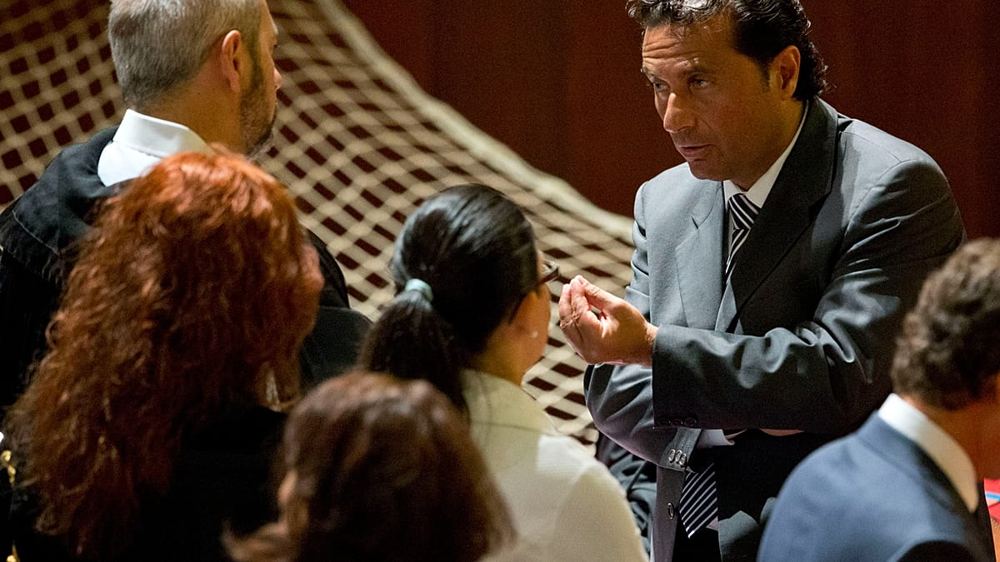
The former captain Francesco Schettino was sentenced to 16 years and one month in prison after the sinking of the Costa Concordia in 2012
The former captain of the Costa Concordia, the cruise ship that ran aground and then sank off the coast of Italy in 2012, has a new job in the tourism industry.
Italian media report that Francesco Schettino, who's now 66, is due to work for an agency providing consultancy and management services for holiday apartments, B&Bs and other accommodation on the Sorrento peninsula. He has reportedly been given a permanent contract.
Schettino was widely labelled a "coward" in the press after leaving the ship while passengers were still being evacuated. 32 people died in the disaster.
He was sentenced to 16 years and one month in prison over the sinking, including for manslaughter and abandoning the ship.
After spending more than nine years in prison, Schettino has now been allowed to serve the remainder of his sentence outside jail under the supervision of social services. He is not yet completely free, and his sentence is due to end in July 2030.
According to Italian media reports, Schettino has returned to his home town of Meta di Sorrento.
However, his early release is tied to strict rules. In addition to his eight-hour working day at the agency, Italian media reports that Schettino must perform four hours of community service every week as a probation condition.
Schettino is reported to have told his lawyer Francesca Carnicelli: "I can hardly wait to get started."
After leaving prison Schettino initially spent a lot of time with his family. Mayor Giuseppe Tito, a long-time friend of the former captain, told the newspaper about a phone call between them: "His voice was tired. He suffers from the constant attention of the media, but he is calm."
The Costa Concordia disaster happened on 13 January 2012, when the cruise ship, carrying more than 4,200 passengers and crew, struck rocks off the island of Giglio.
Investigators found that Schettino had taken the vessel too close to the coast during a manoeuvre intended as a "salute" to people on the island. Thirty-two people were killed.