ECB drops crisis tools as Lagarde flags volatile era
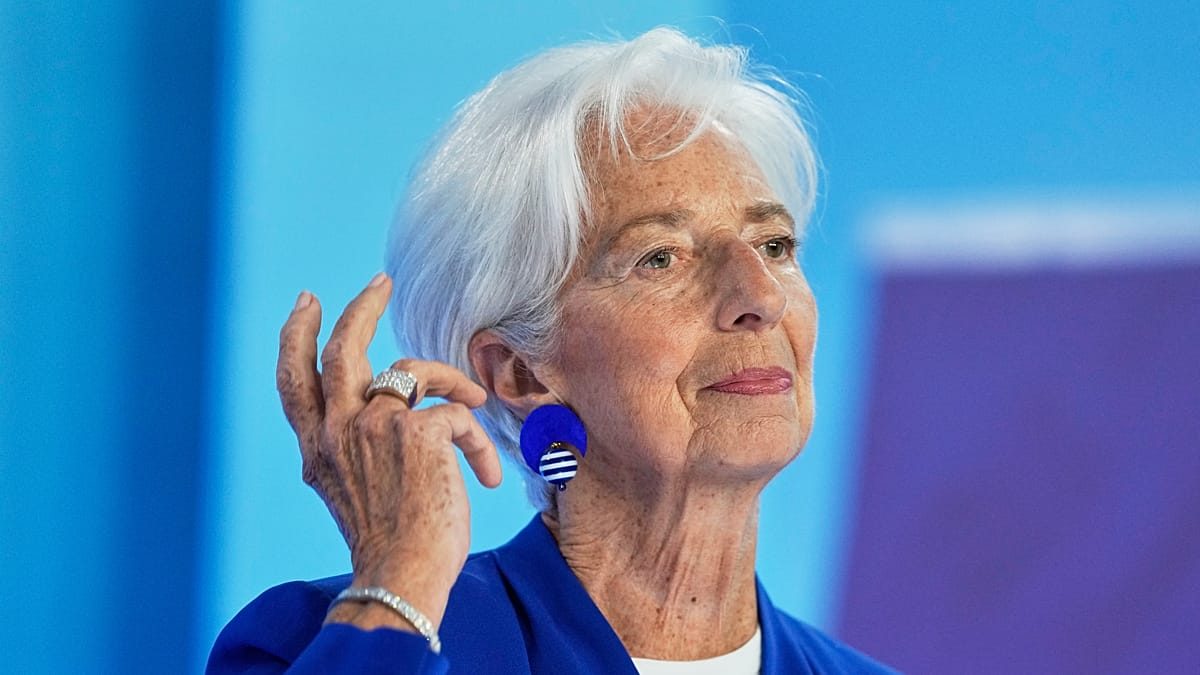
The European Central Bank is retiring its emergency measures and relying solely on interest rates, leaving investors to navigate a volatile global economy without the certainty of forward guidance.
Christine Lagarde announced on Monday that the European Central Bank is ending its reliance on unconventional monetary tools. Speaking at the ECB's annual forum in Sintra, she declared that the bank can now use interest rates as its primary instrument to control inflation. "Monetary policy has gone back to basics," she said, closing a 13-year chapter defined by mass bond buying and emergency lending.
This shift reflects a more resilient eurozone capable of absorbing economic shocks. "By making the economy more resilient to shocks, this framework has reduced the need for unconventional or forceful policy responses," Lagarde said. She credited strengthened banking supervision, common fiscal tools like the European Stability Mechanism and NextGenerationEU, and an energy transition that has decoupled electricity generation from natural gas prices in countries including France, Spain and Portugal.
However, returning to conventional policy does not mean a return to predictability. Lagarde warned that the global economy is now defined by rapid, supply-side shocks that escalate and reverse just as quickly, making it difficult to distinguish temporary price spikes from persistent inflation. She pointed to last year's US tariffs, which defied models by strengthening the euro rather than weakening it, and Middle East tensions that pushed oil to nearly $120 a barrel in March before a recent interim peace deal pulled it back to around $72.
For investors and businesses, the most immediate consequence is the death of forward guidance. "Forward guidance is not in the cards," Lagarde said. Instead, the ECB will provide "framework guidance," outlining how it weighs the inflation outlook, underlying price dynamics and policy transmission without pre-committing to a specific path.
This data-dependent approach was evident in the ECB's June rate increase. Lagarde rejected the idea that the move was merely a precautionary "insurance hike," noting that projections showed inflation would remain above the 2% target through 2028 without further tightening. She highlighted that financial conditions had already tightened in March as markets reacted to energy prices. "The markets did the work for us," she said.
The overarching message for European markets is that they must now price in policy shifts themselves. The ECB will no longer promise what comes next, betting instead that investors understand its reaction function well enough to adjust to new data in an inherently volatile world.