National Gallery acquires Kauffman work, lifting women artists to 28
The National Gallery in London has added an 18th-century Angelica Kauffman painting to its walls, a donation that highlights the slow but ongoing effort by major European museums to correct a stark historical gender imbalance in their permanent collections.
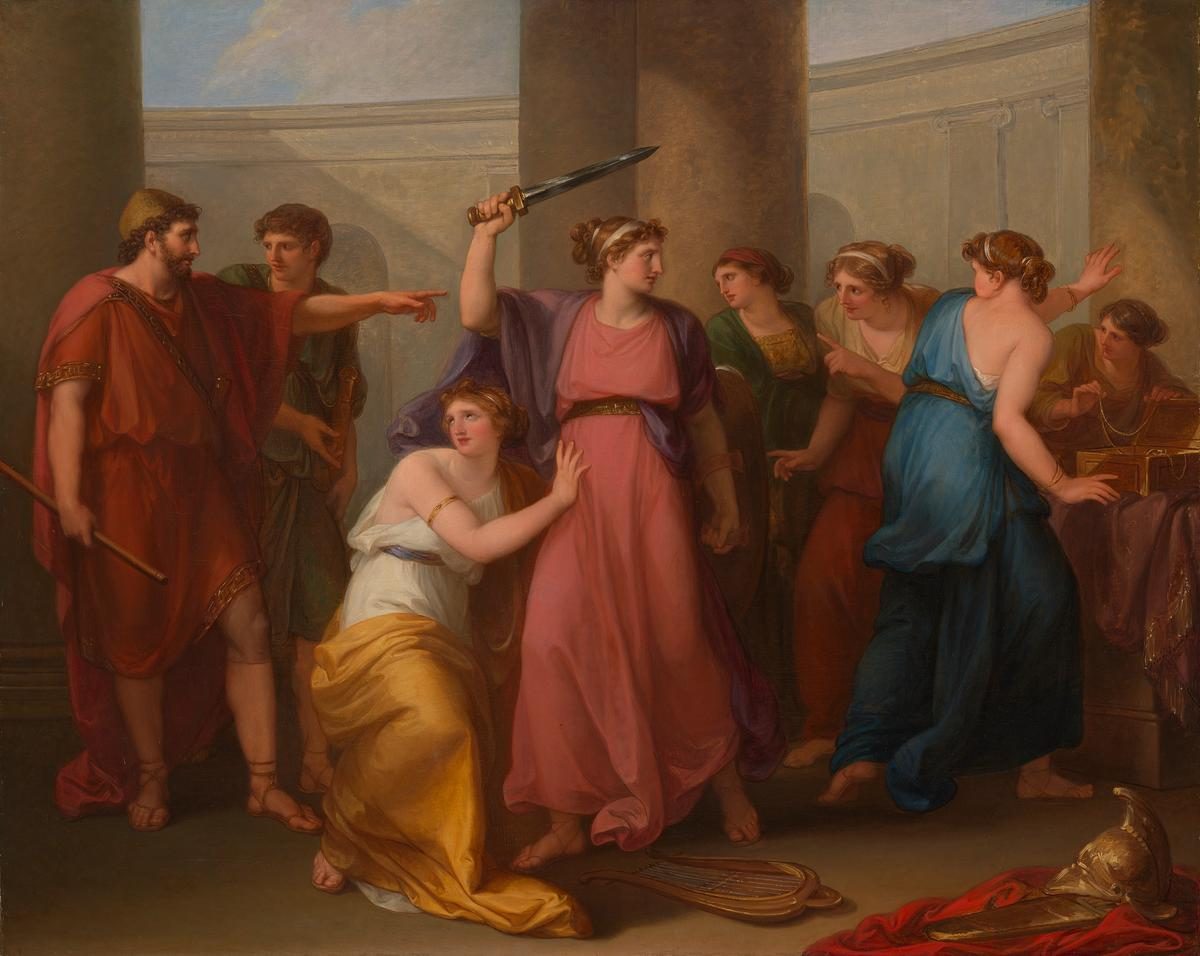
The National Gallery in London has acquired Achilles discovered among the Daughters of Lycomedes (1787-88), an oil study by the Swiss artist Angelica Kauffman. The work was donated by Dallas-based collectors Richard and Luba Barrett, alongside two other Swiss pieces: Ferdinand Hodler’s Portrait of Louis Montchal (1885) and Alexandre Calame’s Four Large Trees (before 1850). All three are now on public display at the Trafalgar Square gallery.
The arrival of Kauffman’s painting brings the total number of works by women in the gallery’s 2,400-piece collection to just 28. That figure underscores the stark historical gender imbalance that major European museums are now under pressure to address. For decades, the canonical narrative of European art largely excluded female professionals, a bias that institutions are slowly correcting through targeted acquisitions.
Kauffman’s career defied the conventions of her era. Born in 1741, she achieved wealth and fame during a period when combining professional success with social popularity was rare for women, notably securing a prenuptial agreement upon marriage at age 39 to retain full control of her finances. “Kauffman had enjoyed a successful career in London, where she was one of only two female painters to be founding members of the [RA in] 1768, before going on to Rome where she would paint this picture,” says a National Gallery statement.
The newly acquired piece depicts the Greek mythological hero Achilles hidden on the island of Skyros by his mother, the sea nymph Thetis, during the Trojan War. It serves as a study for a larger canvas commissioned by Catherine the Great, which remains in the Scientific-Research Museum of the Academy of Arts of Russia in St Petersburg. The painting's journey from Rome to London, via a Russian imperial commission, reflects the deeply intertwined nature of European cultural heritage.
Scholars largely ignored Kauffman’s achievements until recent decades, but her reputation is experiencing a revival across the continent. This resurgence follows major exhibitions at the Royal Academy of Arts in London in 2024 and the Kunstpalast in Düsseldorf in 2020. The National Gallery’s previous Kauffman work was transferred to what is now Tate Britain in 1897 and is thought to have been destroyed during the Second World War.
The Barretts, who specialise in Swiss art from the 14th to the 20th centuries, founded their collection in the 1990s. While they are sending a separate pledge of more than 400 Swiss works to a new $32m cultural complex at the University of Texas at Dallas, their decision to donate these three pieces to London ensures a critical piece of 18th-century European history remains accessible to a broad public.