NATO picks Saab to replace US-built airborne surveillance fleet
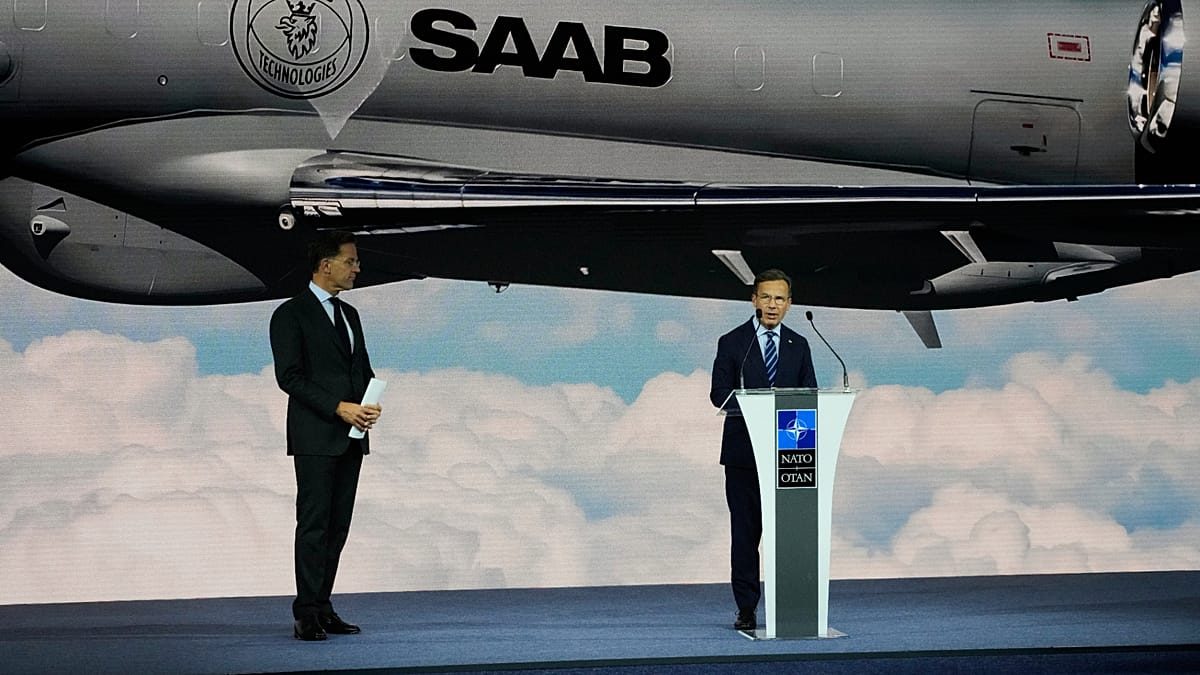
NATO has chosen Saab's GlobalEye to replace its ageing Boeing surveillance fleet, handing the Swedish defence contractor a landmark deal that shifts alliance procurement away from American manufacturers.
NATO has selected the Swedish defence company Saab to supply its next generation of airborne surveillance aircraft, replacing a US-built fleet that has been in service since 1982.
The alliance plans to negotiate the purchase of up to 10 GlobalEye aircraft. The decision, announced at a defence industry forum in Ankara, marks a notable shift for NATO. The current fleet of 14 Boeing E-3A planes is uniquely operated directly by the alliance rather than by an individual member state.
For Saab, the selection represents a major commercial victory after NATO's initial attempt to upgrade its fleet collapsed. The alliance had chosen Boeing's E-7A Wedgetail in 2023, but that plan fell apart in 2025 when the US Air Force cut the aircraft from its budget in favour of space-based surveillance. Eleven NATO countries, including Germany, Canada and the Netherlands, are now backing the Saab alternative.
The GlobalEye is an Airborne Early Warning and Control platform built on the Global 6500 business jet from Canadian manufacturer Bombardier. It uses active and passive sensors to detect and track targets at distances exceeding 550 kilometres. The outgoing Boeing aircraft can track ships and planes beyond 400 kilometres and fly for up to 10 hours, whereas Saab states the new system can remain airborne for more than 11 hours with lower maintenance costs.
These capabilities are increasingly central to European defence planning. “In a serious security situation, the ability to detect threats early and control operations in the air, at sea and on the ground is becoming increasingly important,” Swedish Defence Minister Pål Jonson said. “GlobalEye provides precisely the kind of advanced situational awareness that modern defences need to combat everything from drones, missiles and other types of threats,” he added.
Despite the political announcement, a formal contract has not yet been signed. Saab will now enter negotiations with the NATO Support and Procurement Agency. Chief Executive Micael Johansson told Dagens Nyheter that deliveries could begin in 2030 if an agreement is reached promptly.