US AI boom drives 1,038% grid fee spike, sounding alarms for Europe
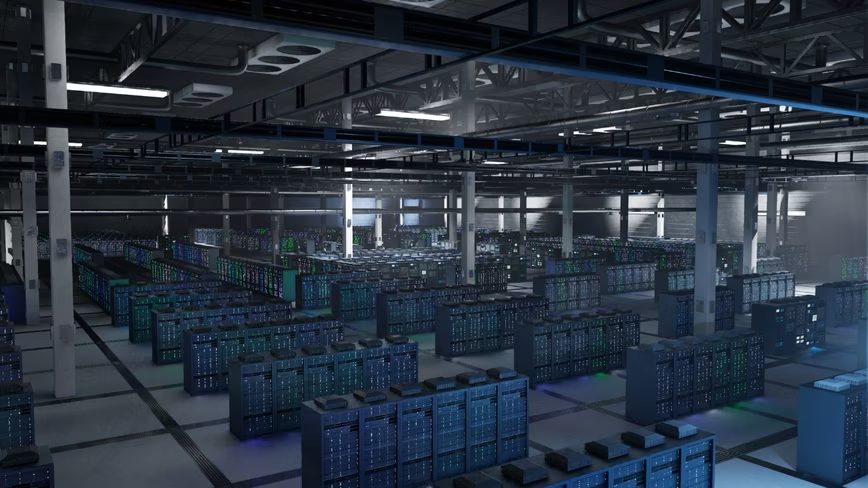
A 1,038% surge in US grid capacity charges driven by AI data centres is crippling Rust Belt manufacturers, offering a stark warning for Europe as the continent balances tech ambition against industrial energy costs.
Capacity charges in the PJM Interconnection grid, which spans 13 US states from New Jersey to Illinois, have leapt from $28.92 to $329.17 per megawatt-day. The spike, driven largely by data centres feeding the artificial intelligence boom, accounted for 40% of a record $16.4 billion in the grid operator's most recent auction costs.
Traditional factories are absorbing the shock. Industrial electricity prices surged 31% in Pennsylvania and 26% in Ohio over the year to December 2025, compared to a 7% national average. Belden Brick Company saw its monthly capacity charge jump from $1,600 to $12,000. “There are going to be some companies that are on the razor’s edge,” said company president Brad Belden, noting the 141-year-old manufacturer had to raise brick prices by 4% just to protect shrinking margins.
European policymakers should take note. The strain crippling US factories mirrors the pressures already forcing households across Europe to cut power use. As US utilities prepare $1.4 trillion in grid spending to accommodate tech giants, Europe faces an identical dilemma: how to host energy-hungry AI infrastructure without pricing out its own industrial base.
The root problem is a mismatch in construction speeds. Data centres “can be built faster than the generation needed to serve them,” according to PJM spokesperson Jeff Shields. A single server warehouse consumes as much electricity as a mid-sized town, and five of the eight emerging US data centre hubs sit in the Rust Belt. Last week, a heatwave pushed peak demand to a record, forcing the operator to ask users to curb consumption to avoid rolling blackouts.
Manufacturers are scrambling to adapt. Plaskolite, a plastics maker, is weighing a switch to direct natural gas after its annual capacity charges across Pennsylvania and Ohio jumped to $1.2 million from $200,000. Electronics-materials firm Tosoh SMD is considering moving production to the graveyard shift to secure cheaper rates.
Regulators have inadvertently worsened the pain by grouping manufacturers and data centres into the same rate class. This means rules designed to shield residential consumers often catch factories instead, a dynamic that has sparked appeals against federal transmission charges and at least 10 state-level rule reviews.
The political stakes are high as Washington pushes a domestic manufacturing revival. Tech firms have signed a White House "ratepayer protection pledge" and are betting on nuclear power to solve the grid bottleneck. For Europe, the American rift highlights an unavoidable truth about the AI era. “Manufacturers are not data centres,” said Paul Cicio of the Industrial Energy Consumers of America. If grid planning fails to distinguish between the two, the push for tech supremacy will come at the direct expense of legacy industry.