French firm restores old photo booths as analogue demand surges in Europe
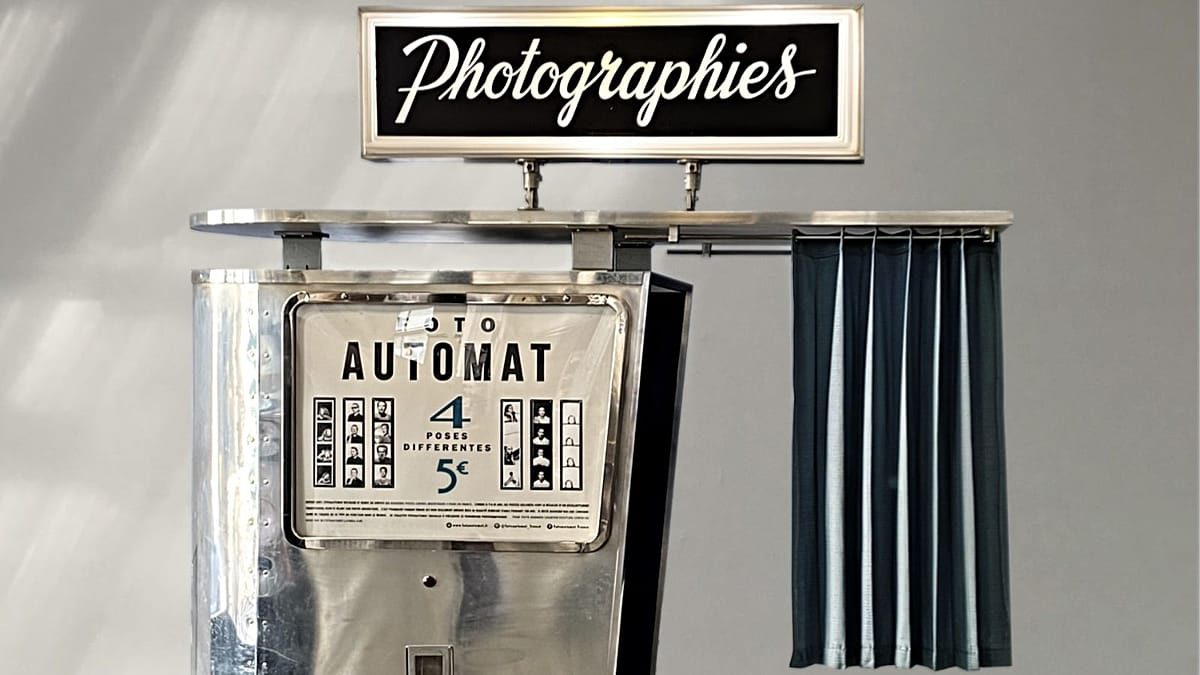
A French restoration company is struggling to keep vintage photo booths running as European demand for analogue photography surges, complicated by supply chain cuts linked to the war in Ukraine.
Fifteen years ago, only about fifty analogue photo booths were operational worldwide. Today, there are between 300 and 400. This resurgence is forcing small European restoration businesses to navigate severe supply chain disruptions to keep the vintage machines running.
Eddy Bourgeois, co-owner of French company Fotoautomat, started restoring the chemical-processing machines around 2007. Initially, analogue booths were rendered obsolete at the turn of the millennium by digital models. Those newer machines featured touch screens and internet connectivity, allowing operators to drastically cut maintenance and operating costs.
However, the digital transition came at the expense of print quality. As Bourgeois installed restored analogue models in Paris museums, consumer behaviour shifted. People stopped using the booths for identification purposes and began using them for entertainment, drawn by the vertical, cinematic format of the four-pose prints.
Maintaining this unexpected demand has become a significant operational challenge. The classic machines depend on specialised black-and-white photosensitive paper historically manufactured by Slavich, a company based in Russia. That supply line has been entirely severed by the war in Ukraine.
The mechanical infrastructure presents an equally daunting hurdle for restorers. The booths still run on original period parts that are impossible to replace. Bourgeois noted that his company must constantly find and develop alternative engineering solutions just to keep the existing fleet operational.
Despite these business obstacles, collectives in major European and American cities are continuing to restore and operate the vintage booths. "The younger generation is showing incredible enthusiasm for this old school style of self-portraiture," said Raynal Pellicer, a French filmmaker and author who has collected booth images for decades.
The economic value now lies in offering an experience that digital alternatives cannot replicate. "Once the curtain is drawn, freedom is absolute, guaranteed by the absence of negatives or internal memory: each print is a unique copy," Bourgeois said.
The machines trace their commercial origins to 1925, when Jewish immigrant Anatol Josepho installed the first Photomaton on Broadway. According to Dr Michael Pritchard, a photography historian, the machine "made eight pictures in twenty seconds" and was "besieged nightly by queues of amused theatre goers".
Where early models disrupted the expensive professional photography market, today's restored versions operate as a niche business. They offer a tangible, unretouched product in an economy saturated with polished digital images, providing a rare guarantee of physical permanence.