Saab to replace US aircraft in historic Nato surveillance deal
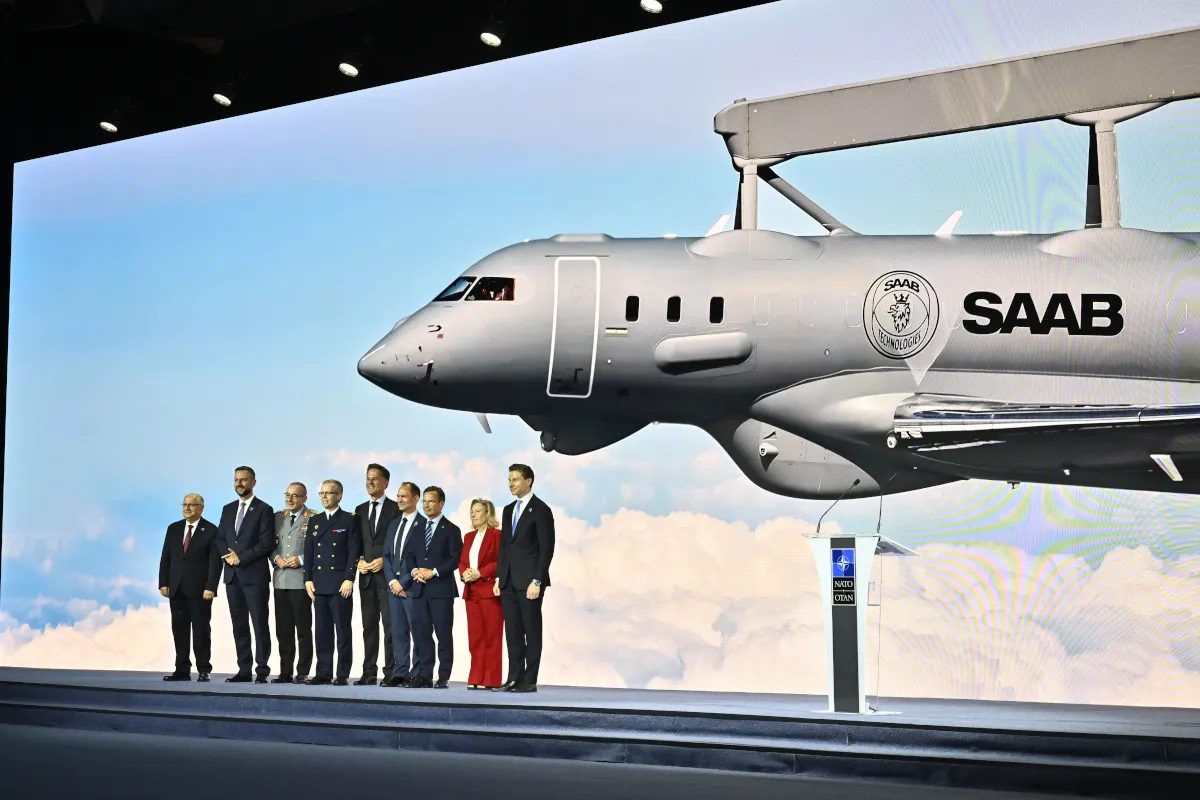
Sweden’s Saab has been selected to provide Nato with its first non-American airborne surveillance fleet, a multibillion-dollar shift that promises significant industrial gains for European defence manufacturers.
Nato will replace its ageing American-made Awacs aircraft with up to ten Globaleye planes built by Sweden’s Saab, ending the alliance’s total reliance on United States technology for airborne early warning and control. Nato secretary general Mark Rutte noted that the current 14-aircraft fleet, which entered service in the 1980s, is rapidly reaching the end of its operational lifespan. The upcoming fleet will be jointly funded by 11 Nato allies, including Sweden, Germany and Norway, before being placed at the alliance's disposal and likely based in Germany.
The transition represents a notable shift in how Nato sources its most critical intelligence-gathering technology. Saab CEO Micael Johansson told the TT newswire that the radar-equipped aircraft can see deep into Russian territory while remaining at a safe distance from potential attacks. The Globaleye system is already combat-proven, having been operated for several years by the United Arab Emirates and performing exceptionally well during the Iran conflict, according to Johansson.
For the European defence sector, the agreement delivers a significant industrial catalyst, even if the manufacturing footprint stretches beyond the continent. While the actual aircraft airframes are manufactured by the Canadian company Bombardier, critical components will be produced in France. The complex integration of these systems will drive hundreds of new jobs in the Swedish industrial hubs of Linköping and Gothenburg.
Final contracts remain pending, but the parameters of the deal highlight a multibillion-kronor procurement. Johansson put the price of a single Globaleye aircraft at between $400 million and $450 million, meaning a ten-plane order would cost roughly 40 billion kronor. If negotiations conclude successfully in the near term, Saab anticipates it could begin delivering four to six platforms per year starting from 2030. Sweden, meanwhile, is on track to receive its own separate national deliveries of the aircraft by 2027.
The political and corporate leadership in Stockholm framed the selection as a defining achievement for the country's defence ecosystem. "This is a proud moment for Sweden," Prime Minister Ulf Kristersson said, later adding: "As prime minister, I am immensely proud of the Swedish defense industry and its engineering excellence." Johansson echoed this sentiment, telling TT: "It is absolutely fantastic to have the opportunity to supply Nato with this capability."