Russia deploys Starlink jammers to disrupt Ukrainian drone strikes
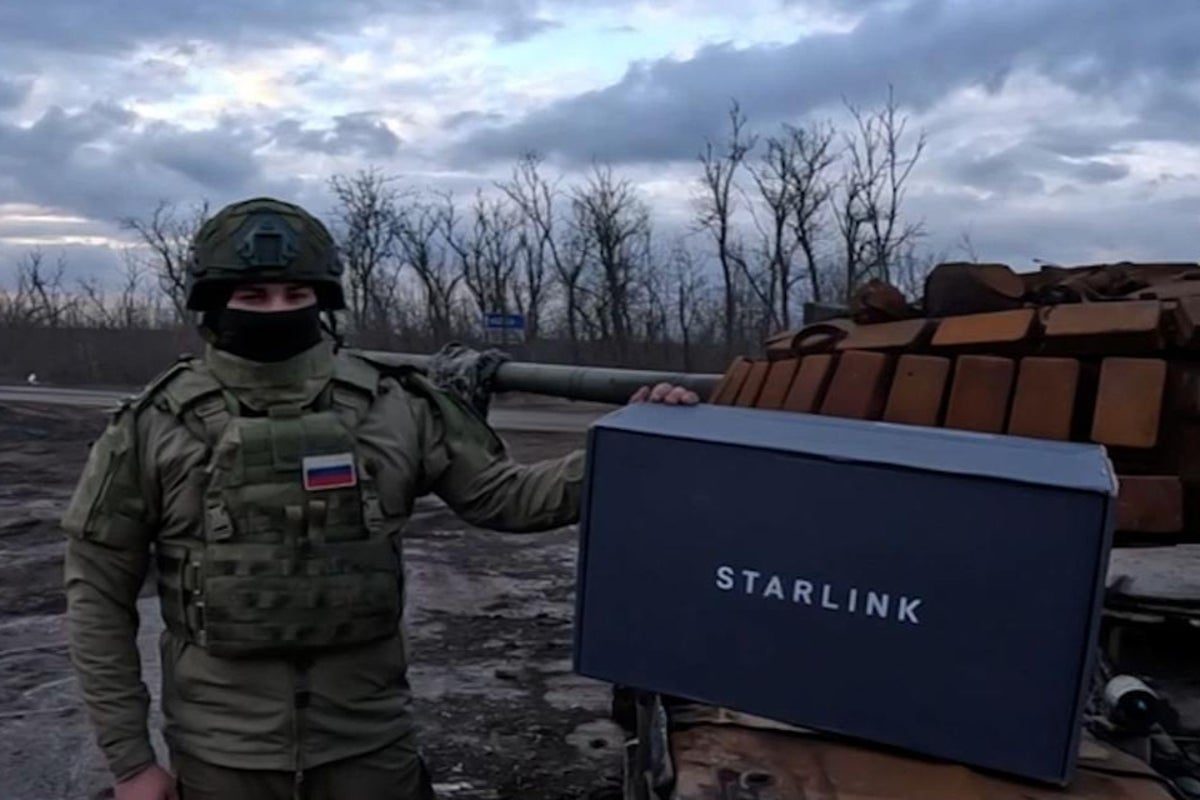
Russian forces are deploying sophisticated electronic jammers to disrupt Elon Musk’s Starlink network, threatening a highly effective Ukrainian drone campaign that has crippled Moscow's logistics.
Russian military forces are installing powerful new jamming systems designed to sever the Starlink satellite internet connections used to pilot Ukrainian drones deep behind enemy lines.
Ukraine has relied heavily on these "mid-strike" drones to attack supply lines, fuel depots, air-defence installations and command centres. This campaign has successfully disrupted Russian logistics and caused fuel shortages in occupied Crimea, demonstrating how commercial space technology can alter modern warfare.
The Starlink network, operated by Elon Musk's SpaceX, was previously considered largely immune to interference. However, Serhii Beskrestnov, an advisor to Ukraine's defence ministry, said Moscow is now deploying a jamming system called the Volna Kupol Garant. These devices emit signals strong enough to destabilise Starlink connections across an area of about 20 square kilometres, with roughly 10 detected so far.
Ukrainian forces are treating the jammers as priority targets. The 422nd regiment, working with the SBU security service, has already struck two of the systems, including one destroyed just hours after being detected. "As soon as we struck that installation, our Starlink-equipped (drones) flew without problems," said a crew commander using the callsign 'Dyryhent'.
Beyond electronic warfare, Russian forces are adapting their physical logistics to survive the mid-strike threat. Commanders from the 422nd regiment noted that Moscow is hiding fuel shipments in civilian vehicles, including painted milk trucks and water tankers. Ukrainian military intelligence confirmed that Russian forces are using quadbikes, motorcycles, camouflaged dugouts and civilian petrol stations to move and store supplies away from aerial surveillance.
The electronic arms race highlights the ongoing vulnerabilities of relying on private satellite networks for military operations. Rob Lee, a senior fellow at the Foreign Policy Research Institute, identified Ukraine's mid-strikes as perhaps the most important battlefield development this year. "If they scale production of the jammers, they could make it more difficult to conduct the middle-strike campaign," Lee said.
Despite the technological shifts, the strikes do not always succeed. During a recent operation, a RAM-2X drone missed its fuel tanker target, and an accompanying surveillance drone was destroyed by a Russian Tor surface-to-air missile system. The crew simply logged the missile system's location into Ukraine's digital targeting network, a reminder that the underlying war of attrition continues regardless of the battle for airwaves.