Ukraine's midrange drones sever Russian supply lines to Crimea
Ukrainian forces are using a new fleet of Starlink-connected drones to devastate Russian logistics deep behind the front lines, a shift that is stalling Moscow's advances and isolating occupied Crimea.
Ukrainian drone units are systematically destroying the road networks that keep Russian forces supplied, stalling Moscow's advances and enabling strikes into illegally annexed Crimea. By deploying fixed-wing midrange drones equipped with Starlink satellite communications, Ukraine has closed a critical gap, turning a previously safe 25- to 200-kilometer logistical corridor into an active combat zone.
The strategy directly targets the highways linking occupied Mariupol, Berdyansk and Melitopol to the Crimean Peninsula. Ukrainian commanders state that sustained attacks have made sections of this land corridor too dangerous for normal transit, forcing Russian forces onto slower, less efficient resupply routes.
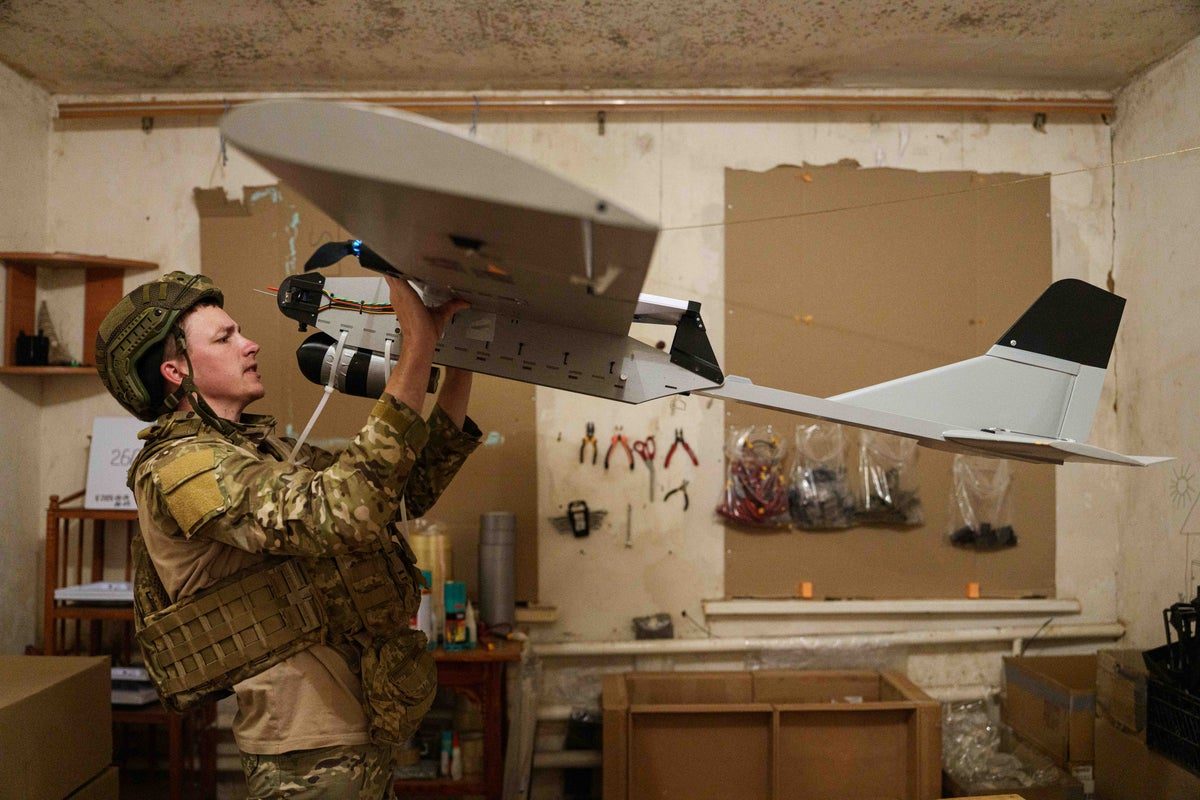
The K-2 brigade, one of Ukraine’s most elite drone units, has executed much of this campaign from an unremarkable workspace in Kharkiv. Pilots there guide aircraft launched more than 200 kilometers away, flying them for up to four hours over 100 kilometers behind Russian lines. In May alone, the unit launched 800 midrange drones, with 650 striking their intended targets.
This operational efficiency follows a critical shift earlier this year when SpaceX cut off Russian forces' unauthorized access to Starlink. “The blocking of Starlink for Russian forces was one of the most significant battlefield developments of the year,” said Rob Lee, a senior fellow at the Foreign Policy Research Institute’s Eurasia Program.
The disruption crippled Russian communications while allowing Ukrainian drones to evade detection and resist jamming. “What’s changed is that now eight out of every 10 sorties are successful,” said Pharaon, a 20-year-old pilot with the unit, noting the success rate was previously the reverse.
The campaign relies on inexpensive, easily assembled hardware. The brigade primarily flies the Dart, constructed from polystyrene, wood and 3D-printed parts, which targets logistics convoys. Larger models like the Hornet carry heavier payloads for infrastructure.
By degrading these supply lines, Ukraine is systematically reducing Russia's front-line fighting capacity. “Cut off their supply lines, and the infantry on the front line have no food, no ammunition, no night vision, no batteries. Nothing. That’s how we’re wearing them down in every sense,” said Kat, commander of the K-2 brigade.
Russia is attempting to adapt. “Significantly increasing the number of their mobile anti-aircraft units and fixed machine-gun positions, and are deploying more interceptor crews near major cities,” Pharaon observed. However, Samuel Bendett, a researcher at the Center for Naval Analyses, noted that poor coordination between Russian units hampers their defensive response. “The question is whether Ukraine can keep this pressure up over the next few weeks and months,” Bendett said.