Climate impact splits Europe as 40pc cannot afford summer cooling
Four out of five Europeans have faced extreme weather, with new data revealing a deep economic divide in who can afford to adapt to rising temperatures.
Four out of five Europeans have experienced climate-related disruption, according to a joint study by the European Environment Agency and Eurofound. The physical impacts vary sharply by region, but a clear economic fault line is emerging across the continent regarding who can actually afford to protect themselves.
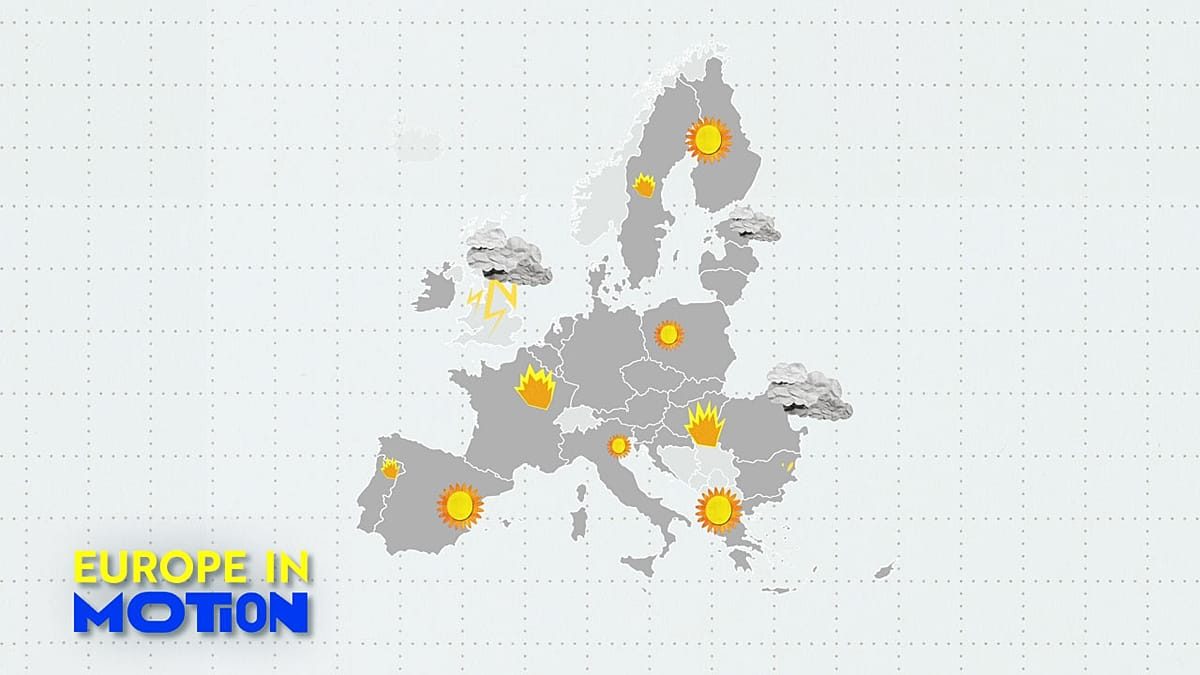
Southern and central-eastern Europe bear the heaviest burden, with over 85 percent of residents reporting disruptions from severe outdoor heat or unbearable indoor temperatures. Active wildfires are currently forcing mass evacuations and disrupting economic activity.
In Portugal, Copernicus satellites recently tracked a massive smoke plume drifting over the Atlantic from north-western wildfires. The localized economic toll is severe, with Greece, Portugal and Cyprus reporting wildfire smoke exposure at rates of 41 percent, 35 percent and 20 percent respectively—far above the 8 percent European average. Major public events are also taking a hit, with officials forced to ban spectators from a portion of the Tour de France.
Beyond immediate physical damage, the research highlights a looming crisis in energy poverty. Nearly 40 percent of Europeans cannot afford to keep their homes cool during summer heat peaks. For households struggling to make ends meet, that figure jumps to over 66 percent.
This disparity is most acute in central-eastern Europe, where 46.1 percent of respondents lack the means to cool their homes, compared to 30.1 percent in the north. The resulting anxiety is reshaping public priorities. More than 60 percent of people in southern Europe report deep concern about future temperature extremes, a rate more than double that of the north.
In central-eastern Europe, over half of respondents worry about daily access to safe water, compared to fewer than a quarter in northern countries. For utility companies and infrastructure investors, these figures point to a widening regional gap that will require urgent, targeted capital deployment.
Northern Europe faces its own distinct hazards, such as the flooding reported by 26 percent of Austrians and 19 percent of Slovenians, compared to an EU average of 11 percent. However, the overarching conclusion is that climate adaptation is rapidly becoming a function of household income.
For policymakers and the construction sector, the inability of millions to afford basic climate resilience highlights an urgent need to scale up the renovation of residential buildings. Without rapid intervention to address this energy poverty, extreme weather threatens to deepen Europe's economic inequalities and place a heavier burden on public health systems.