AI agents stall in pilots as firms ignore organisational overhaul
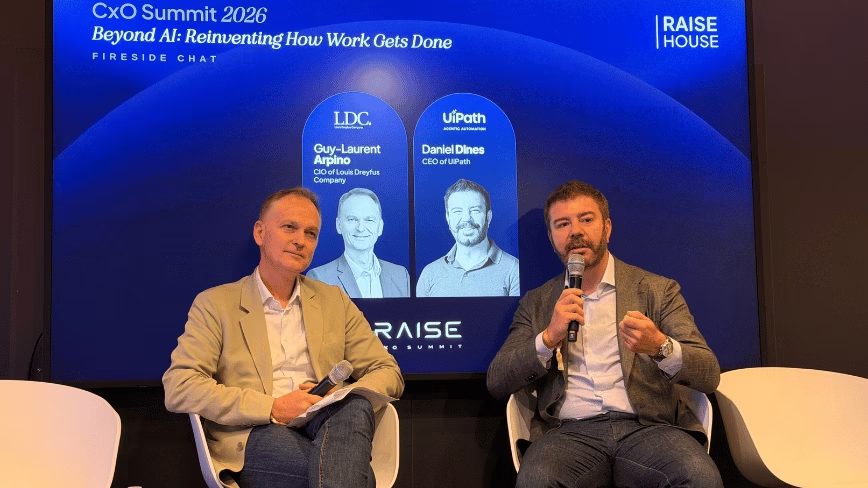
Tech executives at a Paris summit warned that enterprise AI investments are failing to reach production because companies are skipping the unglamorous work of mapping their internal workflows.
At the RAISE CxO Summit in Paris this week, UiPath chief executive Daniel Dines and Louis Dreyfus Company chief information officer Guy-Laurent Arpino delivered a blunt assessment of the enterprise AI landscape. Most artificial intelligence agents, they said, remain trapped in pilot phases and never make it into live production.
Dines attributed this failure to the industry’s own hype. The idea that companies can plug an AI into their systems and replace human workers is “a big disservice to the entire AI industry”. He argued that AI will not become human-like or develop its own initiative, meaning enterprises must design a new division of labour.
He proposed a strict triad: AI proposes, humans decide, and automation executes. Pilots stall because AI currently generates either trivial or buggy proposals, forcing humans to spend more time fixing errors than doing the actual work.
The root cause is a lack of documented corporate knowledge. Workers learn through scattered clues, emails, tickets, conversations, that no company centrally records. To bridge this gap, Dines suggested companies employ “cartographers” to draw a “map of work” that defines business entities, available actions, and accountability for AI decisions.
Arpino echoed these concerns, noting that the hardest part of adopting AI is organisational, not technical. The commodity-trading firm spent years codifying institutional knowledge into graph databases and knowledge drives. “The worst enemy of AI agents is unreliability,” Arpino said, calling this structured data “a true IP of our company”.
Louis Dreyfus Company is now using this foundation to rebuild its end-to-end “contract-to-cash” flow, blending older UiPath automation with new AI agents where appropriate. Without this groundwork, agents cannot reliably navigate complex logistics or payment processes. This illustrates the heavy data preparation required before AI can deliver the productivity gains European policymakers expect.
Both executives warned that this structural shift carries human resources risks. Dines criticised the sharp slowdown in junior recruitment over the past 18 months, arguing it starves companies of future leaders. “I don’t really see AI coming with the will of itself,” he said, predicting a future of “less passengers and more drivers”.
The executives identified middle managers as a particular bottleneck, caught between enthusiastic senior leaders and fast-adapting junior staff. Louis Dreyfus Company runs a “champions” programme to arm young employees with new tools and push innovation upward, a recognition that the technology will only work if the workforce can keep pace.