Mistral CEO frames open-source AI as European security need
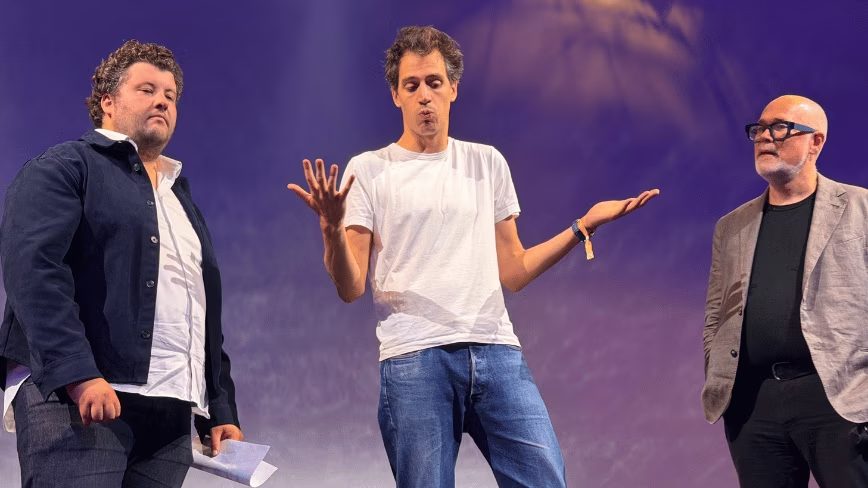
A stage blackout at the RAISE Summit inadvertently highlighted Mistral and Mozilla leaders' warnings that Europe must adopt open-source AI to avoid technological dependence on the United States.
A power cut interrupted a keynote on the Master Stage at the RAISE Summit just as Mozilla president Mark Surman declared that open-source artificial intelligence is something "they can't shut the lights off" on. Mistral chief executive Arthur Mensch joined Surman in the dark to continue their fireside chat without microphones, slides, or grid power.
The unplanned blackout provided a fitting backdrop for a discussion centered on technological resilience. Resilience is a concept that is easy to slogan but notoriously difficult to prove in enterprise technology. For a few minutes, two of open-source AI's most prominent advocates had to demonstrate their point by keeping the conversation going entirely off the grid.
Stripping away the irony, the executives presented a serious business case for why European companies should reject closed AI systems. Mensch argued that open models allow businesses to truly own their artificial intelligence, fork the code, and avoid sitting at the mercy of a single vendor.
The central concern for the European economy is market concentration. Mensch warned that closed models hand a small number of providers immense leverage over every company that builds applications on top of their infrastructure. Surman characterized a future where a handful of American laboratories control the entire technology stack as an "empire," casting open-source alternatives as the "rebel alliance."
Both leaders framed this technological choice as a fundamental issue of economic security. Mensch compared artificial intelligence directly to energy, arguing it is a matter of national security that Europe cannot afford to import wholesale. Surman tied the issue directly to trade dependence, highlighting Europe's growing fear of leaning heavily on American AI providers.
The solution, they argued, is for Europe, Canada, and other allied nations to share an open platform that each country can independently adapt and control. Both executives pointed to recent European and Canadian policy strategies that explicitly name open-source technology as a strategic lever for maintaining sovereignty.
The overarching argument is that open-source models are rapidly becoming the default building blocks of artificial intelligence, following the same trajectory as Linux and the web. For European investors and enterprises, the outage underscored a stark choice between adopting controllable, shared infrastructure or remaining locked into a dependent relationship with a concentrated handful of foreign tech giants.