Delivery apps suspend French drivers in red heat alerts without pay
Uber Eats and Deliveroo will halt French deliveries during extreme heat alerts, exposing the precarious financial position of the country's largely undocumented gig workforce.
Uber Eats and Deliveroo will block their apps for delivery drivers in France between 2:00 pm and 6:00 pm during red heatwave alerts. The measure comes as temperatures in parts of the country, including the southwestern city of Bordeaux where the mercury hit 40.7C on Tuesday, soar during France's third heatwave since May. While no areas on the French mainland were under a red alert on Wednesday or expected to be on Thursday, the platforms are establishing the rule in anticipation of worsening conditions.
Uber Eats explicitly framed the suspension window as a way "to strike a balance between the overriding priority of delivery drivers' safety and limiting the impact on revenue". However, when asked if the company would provide compensation to drivers for the forced downtime, Uber Eats implied it would not. Deliveroo did not reply to a request for comment regarding financial support during app suspensions.
Instead, the platforms are relying on logistical adjustments to mitigate health risks. Deliveroo said it had provided its drivers with a map of water taps and had sought to limit the physical distance of deliveries during the heatwave, while Uber Eats noted it had sent workers reminders to stay hydrated and facilitated their access to drinking water via partner restaurants.
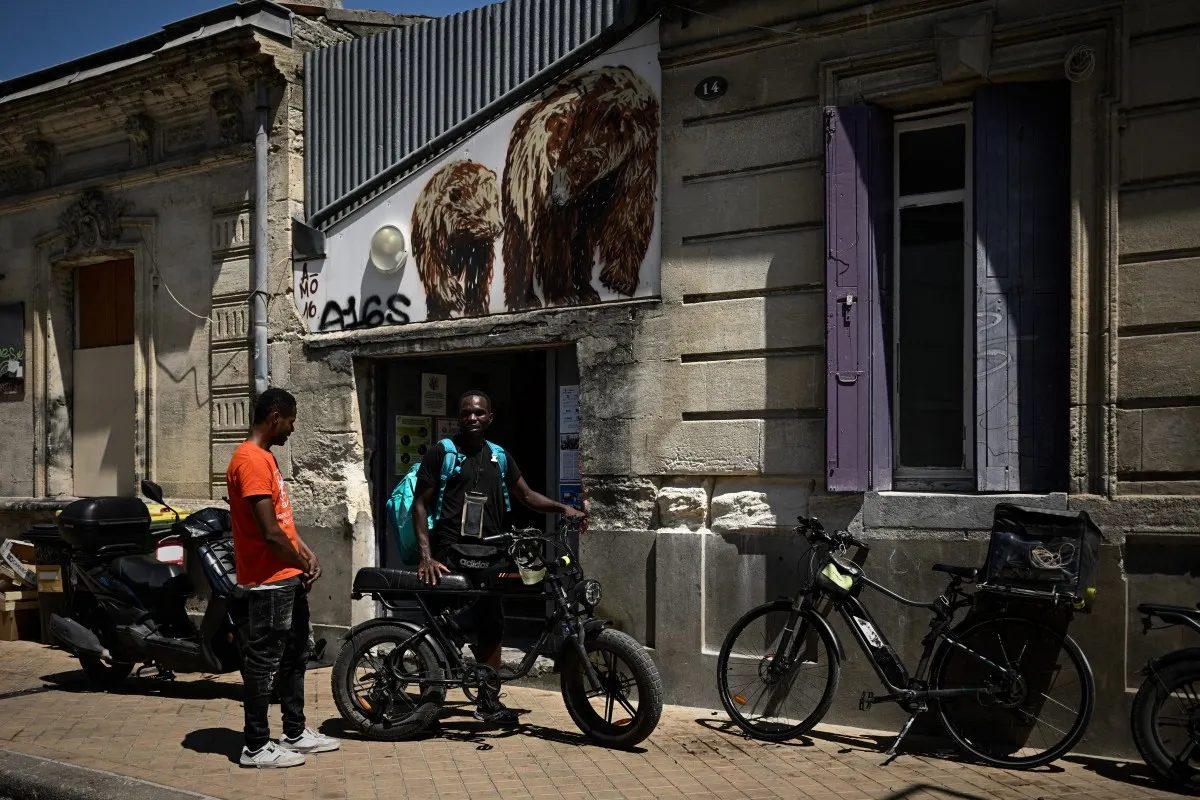
For the workforce, however, a technological shutdown translates directly into a loss of livelihood. "We're suffering but we have no choice," said Aboubacar, a 26-year-old Uber Eats driver waiting outside a fast-food restaurant in the sizzling afternoon heat. "If you don't make deliveries, you won't have anything, you won't be paid," he said, declining to give his surname for fear of reprisals.
A fragile workforce
The situation underscores a critical flaw in the European gig economy model, where climate disruptions instantly become a personal financial crisis for the contractor. According to La Maison des Livreurs, a non-governmental organisation providing support to riders, some 130,000 meal delivery personnel are registered to work on apps in France.
This workforce is distinctly marginalized, with 98 percent born abroad and 64 percent undocumented. Without standard employment contracts, these workers do not have access to paid leave or furlough schemes when environmental conditions make their labour too dangerous to perform. Labour activist Ludovic Rioux of the CGT union noted that the apps' decision ultimately makes "these vulnerable workers even more vulnerable" in the absence of any replacement income.