VW workers protest as board weighs 100,000 job cuts and plant closures
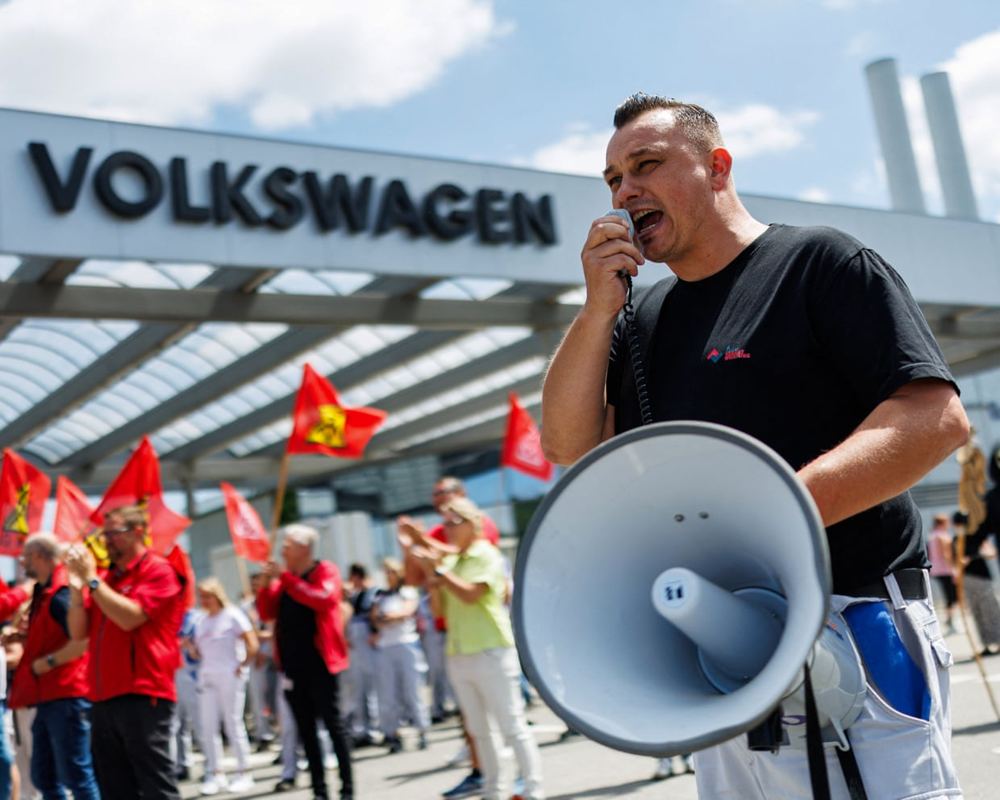
Volkswagen's radical restructuring plan faced fierce union resistance on Thursday as workers protested across Germany, testing the limits of the country's co-determination laws amid a broader crisis in the European auto industry.
IG Metall coordinated demonstrations at 18 Volkswagen sites on Thursday, including its Wolfsburg headquarters, as the supervisory board met to review a radical transformation plan. Workers at plants producing VW, Audi, Porsche and Man vehicles downed tools between 11.20am and 2pm to oppose proposals that could see up to 100,000 jobs slashed.
Chief executive Oliver Blume’s plan targets four German plants for potential closure: Hanover, Emden, Zwickau and Audi’s Neckarsulm site. Up to 50,000 additional job cuts are tied to the restructuring, which also includes a potential carve-out or spin-off of VW’s core brand division and components technology business to simplify its sprawling structure.
Christiane Benner, chair of IG Metall, warned Blume that he could not “pass the buck for failures of recent years on to the workforce”. At the Osnabrück plant, which employs about 2,000 people, local union leader Stephan Soldanski said workers were demanding straight answers. “We need a future for our site from Wolfsburg,” he told local media. “But also for all the other sites.”
A VW spokesperson defended the measures as a fight for the company's long-term survival, noting that both the executive and supervisory boards share workforce concerns. The spokesperson said management had “drawn up a comprehensive plan for the future, which is now being discussed by the supervisory board”.
A test for Germany's industrial model
The showdown at VW carries outsized weight for the German economy. The carmaker employs more than 650,000 people across the country, while the wider automotive sector supports roughly 3 million jobs directly and indirectly. The VDA, Germany's car trade body, recently warned of a potential employment collapse across the continent unless the industry makes “bold decisions”, including selling unviable plants to foreign companies.
VW’s unique governance structure under the Volkswagen Act makes Blume’s task immensely difficult. Closures at plants covered by the 1960s law require a two-thirds supervisory board majority. Labour currently holds 10 of the 19 occupied seats, while shareholder representatives hold nine, making approval virtually impossible against union opposition.
Zwickau and Neckarsulm are not covered by the Volkswagen Act, meaning their closure would not need board approval. However, bypassing the union through this legal loophole would almost certainly trigger massive resistance, local political backlash and costly strikes. Months of tense negotiations with unions are expected to follow whatever the board decides.