Record June heat fuels wildfires, exposes European adaptation gaps
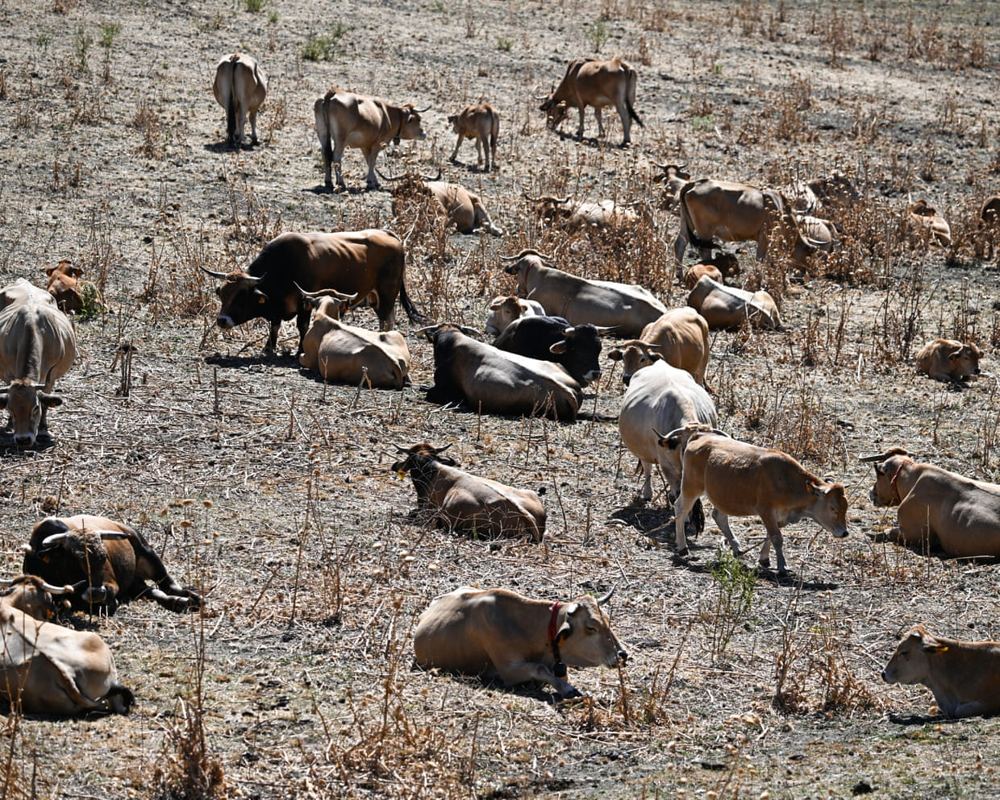
Western Europe’s record-breaking June heat has sparked devastating wildfires and mass disruptions, exposing critical infrastructure gaps that are leaving populations dangerously exposed to rising temperatures.
Western Europe has endured its hottest June on record, with surface air temperatures hitting 3.06C above the region's recent average. Globally, June 2026 was 0.56C hotter than the 1991-2020 baseline, marking the second-warmest June ever recorded as ocean temperatures reached unprecedented highs.
The heat has ignited a crisis for land and emergency services. EU wildfires have burned 56% more land than usual, with France and Spain particularly hard hit. In France, 35,400 hectares have burned, four times the average for this time of year, while Spain has seen 55,128 hectares destroyed, double its norm. The devastation has forced the EU to deploy water-bearing planes to assist overwhelmed national services.
The operational strain has already proved fatal. A 22-year-old firefighter died tackling a blaze in the French Alps, and Barcelona set a new temperature record of 40.5C. In the UK, the third heatwave in six weeks is expected to bring 10 days of 34C temperatures, compounding an "extreme" marine heatwave. “Together, these records reflect a climate system continuing to accumulate heat,” said Samantha Burgess, a climate scientist at Copernicus. “The result is increasingly intense heatwaves, a persistently warm ocean, and growing risks for people, ecosystems and infrastructure.”
The sustained heat is exposing severe deficits in European urban adaptation. UK cities are notably lagging behind continental peers in basic heat mitigation, averaging just 18% tree cover compared to a 30% European average. Analysis by the Energy and Climate Intelligence Unit (ECIU) shows 45 of 47 UK urban areas fall below the continental benchmark. While Nice boasts 39% cover and Barcelona 31%, Burnley manages just 11%.
This lack of green infrastructure has direct economic and public health consequences. Previous research indicates deprived neighborhoods with low canopy cover can be up to 4C hotter during a heatwave. “Planting trees can over time help to bring down temperatures in the buildings they shade, and give more vulnerable people hope of being able to leave their homes into less risky temperatures to do things like shop and visit the GP,” said Tom Cantillon, an analyst at the ECIU. “The UK is way behind.”
The broader public health burden is mounting. The World Health Organization estimates 200,000 people have died from heat in Europe over the last four years, labelling most of these deaths “entirely preventable”. Experts argue that saving lives and maintaining economic productivity will require significant capital investment in air-conditioning for vulnerable groups, external shutters, and public cooling centres.