Cities bet on swimmable rivers as essential climate infrastructure
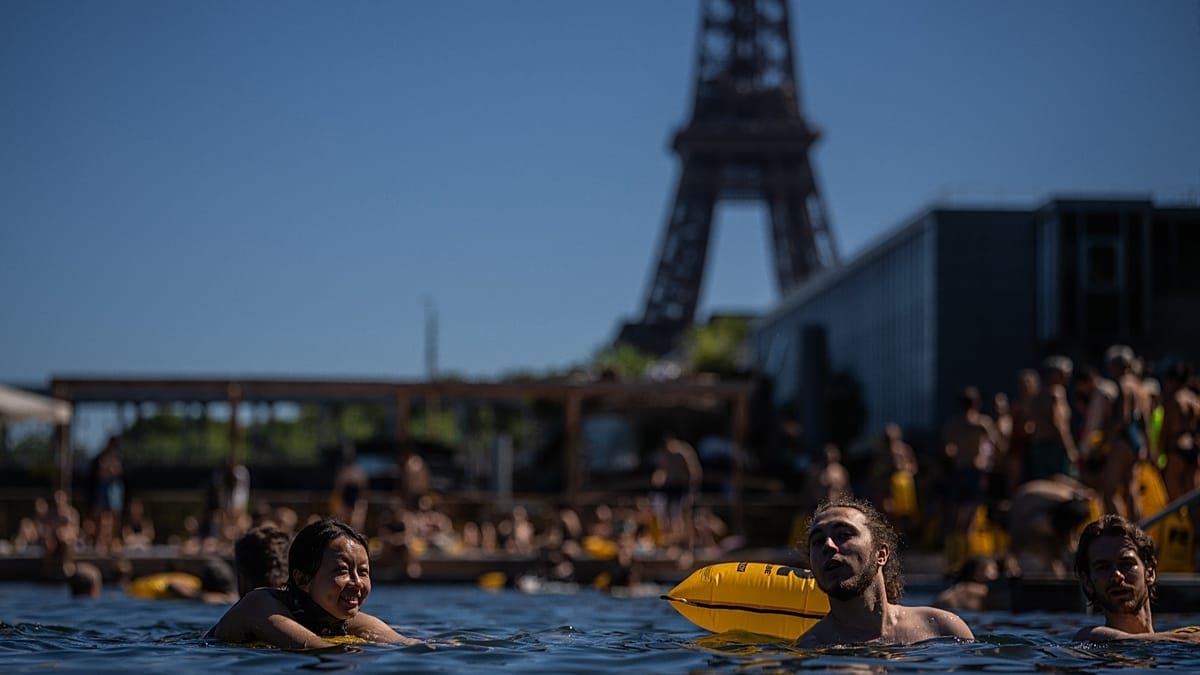
European cities are investing heavily to clean up polluted rivers for public swimming, a direct response to rising temperatures that is forcing costly upgrades to ageing water infrastructure.
Paris, Berlin and Copenhagen are reopening their rivers to swimmers, transforming once-polluted waterways into essential public infrastructure rather than hidden engineering problems.
The push is a direct response to intensifying summer heatwaves. Restored rivers offer natural cooling, reduce the urban heat island effect and provide immediate public relief, while also delivering economic benefits through revitalised neighbourhoods.
The continent's water quality is generally improving. According to Trine Christiansen of the European Environment Agency, 85% of bathing sites now hold an excellent rating and 96% meet minimum standards, with poor-quality sites dropping from 2.4% to 1.5% under the revised Bathing Water Directive.
However, inland rivers remain a challenge. France, the Netherlands and Estonia currently register some of the EU's highest shares of poor-quality bathing waters, precisely where cities now want to open swimming sites.
The main barrier is Europe's ageing sewer systems. Eline Boelee, a water expert at Dutch research institute Deltares, notes that combined systems carrying both rainwater and sewage overflow during heavy downpours. “The systems are built for an average, and when heavy rainfall comes, the capacity is sometimes surpassed and that water is flushed into surface water,” she explains, releasing pathogens and chemical pollutants like PFAS.
Despite the cost, Vassileios Latinos, head of resilience at ICLEI Europe, argues the investment is justified. “European cities definitely are increasingly investing in the rivers and also the canals that are connecting the rivers, because they can provide multiple benefits at once,” he says, pointing to flood management, biodiversity and local economic boosts.
The actual bottleneck is coordination. “It’s not that when someone makes a decision, this can be done within months,” Latinos says. Rivers cross multiple jurisdictions, and restoration requires balancing the interests of utilities, businesses and residents, alongside patching together diverse funding sources.
For cities that navigate these hurdles, the payoff is cooler, more livable urban centres. As Christiansen notes, “safe and well-managed river bathing waters are increasingly important for the quality of urban life, public health and water resilience.”