World Cup penalty data defies captain choices
A striking World Cup trend where teams kicking second keep winning is highlighting a disconnect between emerging data and on-pitch decision-making.
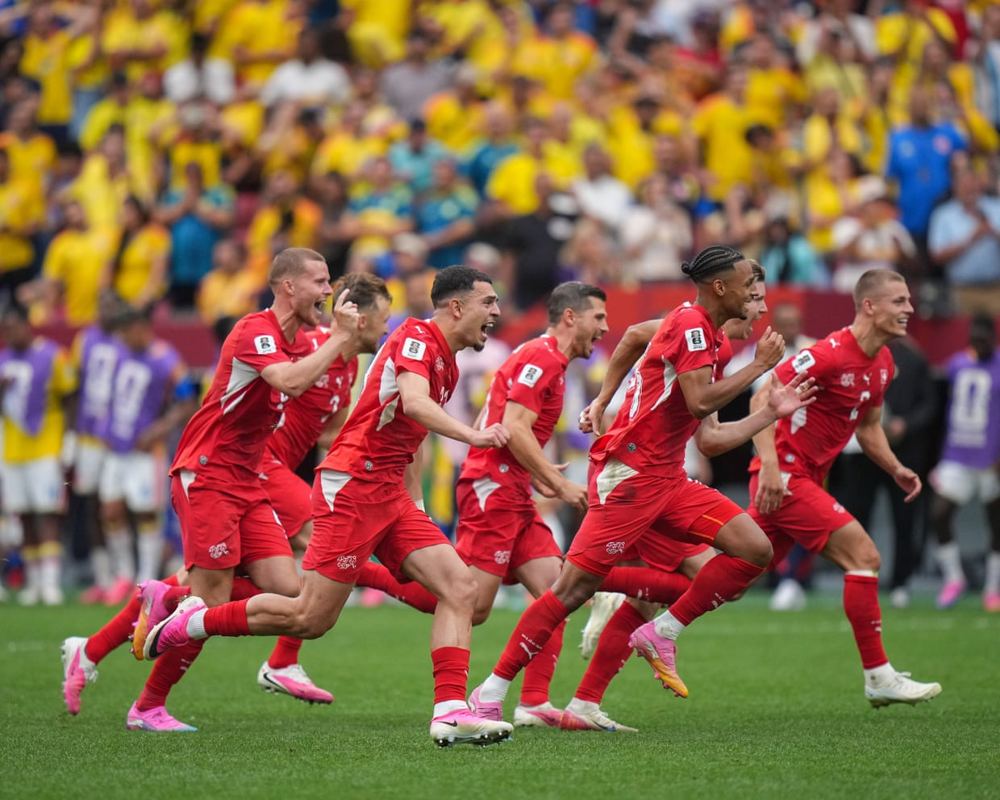
Switzerland’s last-16 victory over Colombia, secured by Rubén Vargas, extended a striking anomaly at the current World Cup. All four shootouts at the tournament so far have been won by the team that kicked second.
This continues a dramatic recent shift, with 13 of the last 15 World Cup shootouts (86.7%) won by the side going second. The only exceptions came in 2022, when Morocco beat Spain and Croatia eliminated Brazil. Early misses heavily skew these recent results, as the team taking the first penalty missed in seven of those 15 shootouts and lost every time.
Historically, missing the first kick is almost fatal. Of the 12 instances of a missed first penalty in World Cup history, only two teams recovered to win: Sweden in 1994 and Ukraine in 2006. Despite this recent cluster, the broader historical data suggests no genuine structural advantage across 39 total World Cup shootouts, where the second-kick team has won 56.4% of the time.
European competition data reinforces the idea that the advantage is marginal. Of the 25 shootouts in European Championship history, 48% were won by the team going second. In 207 League Cup shootouts since 2013, excluding four trials of the ABBA format, the team going second has won exactly 50.2% of the time.
European Cup history actually leans the other way, with only 16 of 42 shootouts (38.1%) won by the team kicking second. Paris Saint-Germain’s first-kick victory over Arsenal in the final fits that older pattern. The FA Cup mirrors the recent World Cup trend more closely, with 57.3% of shootouts since 2013 won by the side going second, a rate that jumped to 70.6% last season.
The most significant takeaway for managers may be the psychological disconnect between perception and action. Despite the mounting recent evidence at this World Cup, only Egypt’s Mohamed Salah has actively chosen to go second after winning the coin toss. The other three winning captains chose to go first and lost.
There may be a placebo effect at play, where teams believing they have an advantage by going second perform more calmly under pressure. However, the aggregate data points to a near 50-50 split over a long timeline, meaning the quality of the penalty takers and the goalkeeper remains far more important than the order of the kicks.