OpenAI's Sol release exposes US regulatory vacuum
OpenAI is releasing a powerful new AI model despite an opaque, ad hoc US government safety process that leaves European regulators and investors flying blind.
OpenAI is rolling out Sol, a large language model that matches the capabilities of Anthropic’s Fable, a system so potent it was briefly banned from public access by the US government. Yet the mechanism that deemed Sol safe for public release remains entirely opaque.
"Frankly, I don’t have visibility into those exact processes," said Mina Narayanan, a senior research analyst at Georgetown’s Center for Security and Emerging Technology. "Nobody knows what the requirements are to get licensed," added Dean W. Ball, a former Trump policy advisor who now works for OpenAI.
For European businesses and investors, this US regulatory vacuum has direct consequences. While European firms operate under a strict, codified regulatory framework, the American frontier labs exporting models into Europe rely on informal government chats. This asymmetry creates market uncertainty, as European companies cannot independently verify the safety claims of the US models they integrate into their own systems.
Eighteen months into the Trump administration, there is still no formal US framework for evaluating frontier AI. An executive order last month laid out a roadmap, but former White House AI advisor Sriram Krishnan told the Financial Times: "There will not be an FDA for AI." The Department of Commerce is currently taking the lead, with six cabinet agencies instructed to determine a final process by early August.
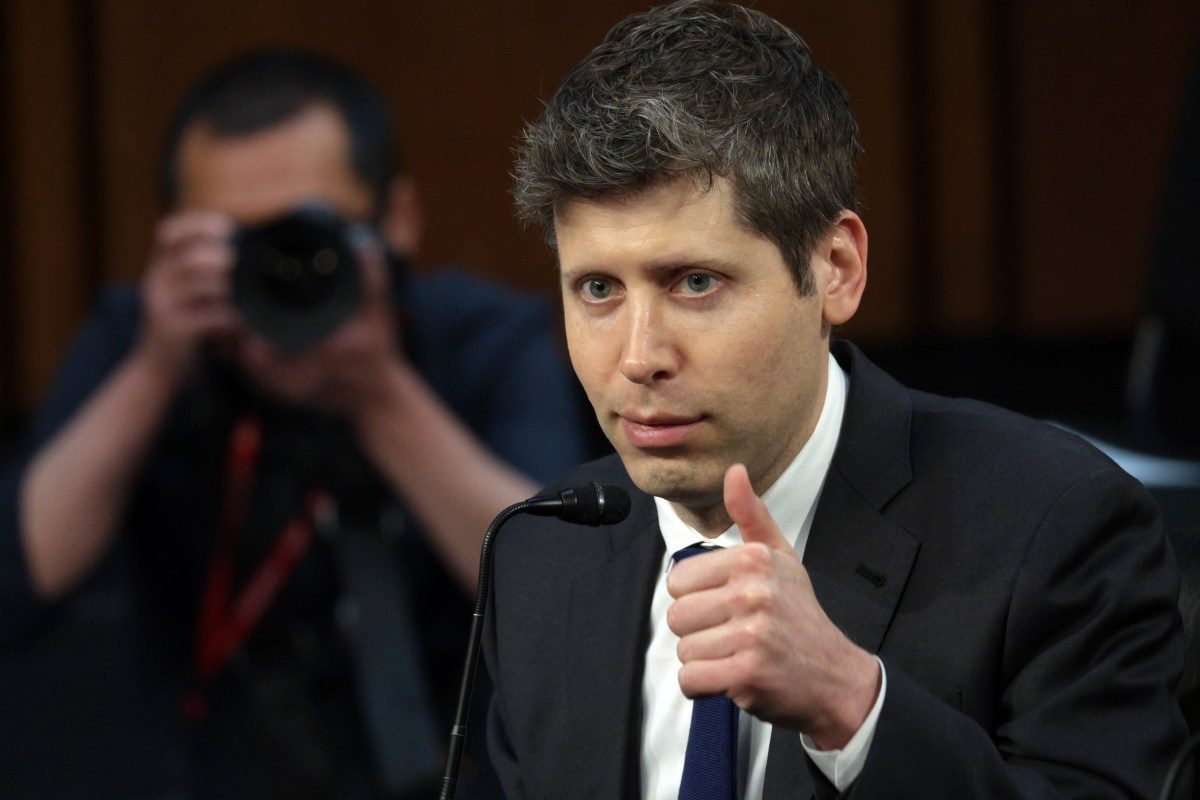
The lack of clear rules raises questions about the role of political connections. Sam Altman cited conversations with Commerce Secretary Howard Lutnick and other officials, but OpenAI declined to detail the government’s testing process. This occurs alongside reports that Altman offered up to 5% of OpenAI’s equity for the administration’s "Trump Accounts," and that OpenAI president Greg Brockman is the largest publicly known donor to Trump’s mid-term political operation. Anthropic’s Fable, conversely, faced a brief export ban and restrictions on foreign nationals, partly due to clashes with the administration.
Industry figures warn this informal gatekeeping is unsustainable. Andy Konwinski, a computer scientist who co-founded Databricks and Perplexity, called it "existentially a problem." He noted that genuine technical experts are sidelined in favor of political connections. "Safety or not, it’s about who has the power to make decisions, who gatekeeps and decides on permissions?" he said.
OpenAI pointed to external evaluations by organizations like the UK AISI to vouch for Sol’s safety. Yet the company itself acknowledged in a June blog post that "we don’t believe this kind of government access process should become the long-term default." As David Siegel, founder of quantitative hedge fund Two Sigma, recently warned, the current reality is one where a few firms control the technology, the government evaluates it in secret, and the public is excluded. "It seems like we don’t need to imagine it," he said.