Spanish underground lab proposed to test radiation and aging
Researchers want to use a deep underground laboratory in Spain to isolate cells from cosmic radiation, an experiment that could reshape the longevity sector's understanding of biological aging and inform Europe's space economy ambitions.
A perspective paper published in the journal Aging and Disease has proposed using the Laboratorio Subterráneo de Canfranc (LSC) in Spain to study how ambient cosmic radiation affects the biological clocks of human cells.
The biotech and longevity industries invest heavily in interventions to slow or reverse epigenetic aging. However, researchers remain divided on what actually drives the cascading failure of bodily systems, particularly since two-thirds to nine-tenths of epigenomic damage appears to be stochastic, or random.
A major suspected cause of this random damage is constant exposure to muons, fundamental particles produced when cosmic rays collide with the atmosphere. Shielding biological samples from muons is impossible on the Earth's surface, complicating traditional laboratory research.
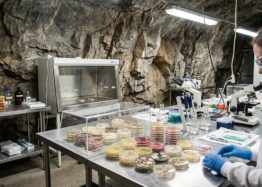
Physics researchers have long solved this issue by conducting sensitive experiments in deep underground laboratories, where thick rock barriers block almost all muons. The LSC is the second-largest such facility in Europe and one of only 14 deep underground laboratories in the world.
The proposed experiment would grow identical cell cultures underground at the LSC and in an above-ground lab, measuring factors like repair signaling, senescence, and inflammation. As the authors note, “this framework enables us to quantitatively test the muon-depletion hypothesis instead of presuming its mechanism.”
The commercial implications for the longevity sector are significant. If a measurable portion of age-related damage is proven to come from ambient muons, pharmaceutical companies would gain a new, clearly defined environmental target for drug development.
However, the results could also disrupt current industry assumptions. Previous underground research on Drosophila fruit flies found that removing natural background radiation severely impaired their cellular repair mechanisms.
The paper suggests a baseline level of background radiation might actually be required for biological maintenance. Without muons to eliminate deviant cell lineages, aging metrics could become “increasingly governed by residual internal biases and long-lived states rather than by a simple narrowing of diffusion around an unchanged programmed drift.”
Beyond terrestrial medicine, resolving this question has direct ramifications for the emerging space economy. Astronauts face constant bombardment from cosmic radiation, and any private or public programme planning long-term human occupation of the Moon or Mars must find ways to mitigate these exact epigenetic and genetic damages.